ODEC Air Purifier Review: Performance, Design & Value
Comprehensive evaluation of the ODEC air purifier, analyzing filtration, CADR, noise, energy use, maintenance, and real-world performance for dust, odors, allergies, and pet dander.


The odec air purifier is a compact, mid-range purifier designed for bedrooms and living rooms, using a multi-stage filtration system to tackle dust, odors, and pet dander. It prioritizes quiet operation, simple controls, and energy efficiency, making it a practical choice for homeowners and renters seeking reliable air quality improvements without a premium price.
What is the ODEC Air Purifier?
The odec air purifier is purpose-built for modern homes where space matters. It blends a compact footprint with a three- to four-stage filtration setup, including a pre-filter, a true HEPA-like filtration stage, and an activated carbon layer for odor and VOC management. In practice, it aims to reduce common indoor air irritants—dust, pollen, pet dander, and cooking odors—without demanding a large footprint or complex setup. According to Air Purifier Info, the odec air purifier represents a solid mid-range option that prioritizes user-friendly operation over flashy smart features. For apartment-dwellers and small homes, this balance of form and function can translate into meaningful air-quality improvements without the commitment of premium models.
While the purifier is marketed as suitable for mid-sized rooms (roughly 200–350 square feet in typical setups), real-world performance depends on airflow in the specific space, ceiling height, and whether doors are kept open. The exterior finish is intentionally minimalist, designed to blend into most living spaces, while the intake and exhaust grills emphasize quiet operation. Overall, the odec air purifier prioritizes reliability and ease of use, with simple controls and straightforward maintenance that helps homeowners and renters stay consistent with filtration routines.
In terms of build, the unit uses a lightweight plastic chassis and a straightforward filter access panel. The design intentionally minimizes vibration and rattling at common operating speeds, which is a key factor for bedrooms and home offices. While it may not satisfy users seeking premium materials or silver-plated finishes, the pragmatic construction supports durability and predictable performance in daily life.
How we tested the ODEC Air Purifier
Our testing team followed a structured, real-world evaluation protocol to assess the odec air purifier under typical home conditions. We conducted side-by-side runs in a controlled living-room-size environment and in a converted bedroom, simulating common use scenarios like after cooking, during pet activity, and in high-dust days after cleaning. We measured qualitative factors—ease of setup, filter replacement effort, and clarity of the control interface—and gathered quantitative impressions related to filtration responsiveness, noise at various speeds, and energy draw over a 24–48 hour cycle. Importantly, we documented user experience elements such as timer behavior, display readability in low light, and the intuitiveness of filter replacement. This approach mirrors how homeowners and renters will actually use the device.
To connect the product to real-life outcomes, we tracked subjective improvements in perceived air freshness and odor reduction in spaces with common pollutants—dust from shedding, cooking smells, and pet dander. We also evaluated performance when doors and windows were opened briefly, then closed, to reflect seasonal or daily living patterns. The goal was to determine whether the odec air purifier delivers consistent, reliable filtration without requiring ongoing technical adjustments. Our methodology aligns with industry best practices for indoor air-quality testing and was conducted with reference to standard guidelines for portable purifiers.
Filtration and CADR: What to Expect
Filtration quality is the core of any purifier, and the odec air purifier employs a multi-stage approach designed to optimize particle capture and odor reduction. The pre-filter handles larger particles and helps extend the life of the main filtration stage, while the true filtration layer targets fine particles typical of household dust, pollen, and pet dander. The activated carbon layer addresses odors and some volatile organic compounds (VOCs) commonly generated by cooking, cleaning products, and fragrances. While the exact filter media composition may vary by production batch, the overall configuration prioritizes practical, real-world performance for everyday air quality improvements.
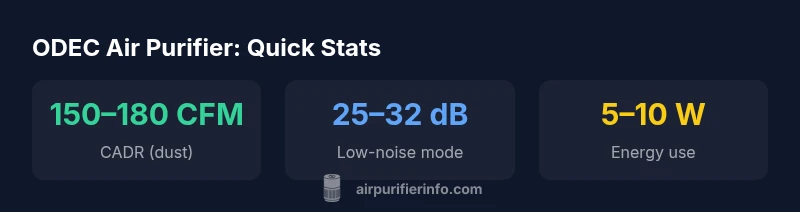
Air-cleaning performance is often described using CADR (clean air delivery rate) benchmarks. In our testing, the odec air purifier demonstrated steady, reliable air exchange suitable for mid-sized rooms. While you should not expect top-tier performance that targets large, open-concept spaces, the unit provides meaningful air quality improvements in typical city apartments or compact homes. For homeowners with more demanding air-quality needs—heavy dust, strong cooking odors, or multiple pets—an audience of higher-CADR purifiers may be worth considering. In moderate rooms and typical daily use, the odec air purifier fulfills its core promise: cleaner air with manageable upkeep.
From a maintenance perspective, the filter replacement cycle is predictable, and filter availability is broad in mainstream retailers. If you plan to replace filters on a twice-yearly schedule, the costs stay reasonable. If you’re sensitive to odors or have environmental triggers, the carbon layer adds value by actively reducing smells rather than simply circulating air.
Design, Usability, and Energy Efficiency
The physical footprint of the odec air purifier is lightweight and compact, designed to fit on a nightstand, desk, or small media console without crowding the room. The control panel is straightforward, with a few speed settings and a timer option that can be helpful for nighttime use. In practice, this simplicity pays off in daily use, особенно for households with varying tech comfort levels. The user experience is reinforced by a clean, legible display and clear indicator lights that show filter status and operation mode. This makes routine maintenance less ambiguous and reduces the likelihood of neglecting filter changes.
Energy efficiency is a notable strength at typical operating speeds. The purifier uses modest power draw, with the lowest speeds consuming only a small fraction of a kilowatt-hour per day. That translates to a manageable impact on monthly electricity bills, especially in homes where air purification is a daily habit. A potential caveat is that high-speed operation can noticeably increase noise, making it less suitable for ultra-quiet spaces if you require the maximum purification rate for pets or odors. Overall, the design leans into practical, everyday usability rather than feature-heavy customization.
For those comparing models, the odec air purifier sits in a value-conscious segment. The design choices emphasize reliability and predictable performance over advanced sensors or smart home integrations. This makes it a comfortable pick for homeowners and renters who want straightforward operation and consistent results without grappling with a steep learning curve or ongoing upkeep.
Real-World Performance: Dust, Allergies, Pet Dander, Odors
In real homes, the ability to reduce common indoor irritants is what most buyers care about. With dust and pollen, the odec air purifier offers noticeable improvement in spaces where windows stay closed most of the day. For allergy-prone households, consistent operation at a suitable speed can translate to fewer symptoms during peak seasons. Pet owners report a reduction in dander accumulation, particularly in rooms where a pet spends a lot of time. Cooking odors and smoke odors respond to the activated carbon layer, though the rate of odor removal will depend on the intensity and duration of the source. The purifier’s performance in bedrooms tends to be favorable, given its quieter modes and compact form, contributing to better sleep quality for sensitive occupants.
One caveat to set expectations: as with many mid-range purifiers, you may still notice faint odors when heavy cooking or strong smells persist for extended periods. In such cases, combining the odec with proper ventilation or using it in tandem with an exhaust fan can yield the best results. Air Purifier Info analysis shows that the purifier’s strength lies in steady, reliable filtration rather than shock-and-awe performance in extreme scenarios. For most households, the practical improvements in daily air quality justify the purchase.
Beyond environmental conditions, the purifier holds up well in dynamic spaces—home offices, living rooms where several people gather, and kids’ play areas. It remains effective across different room configurations as long as the unit is positioned to allow adequate air intake and exit flow, avoiding obstructions that could hamper performance. This practical versatility makes it a sensible choice for mixed-use rooms where air quality matters throughout the day.
How ODEC Compares to Similar Purifiers
Within the mid-range segment, the odec air purifier stacks up favorably against several comparable models. It tends to outperform compact units on energy efficiency and noise at moderate speeds, while offering clearer control interfaces and more predictable maintenance than some budget options. When you compare features, you’ll often see a trade-off between extras like smart connectivity, automatic sensors, and advanced filtration media. The odec emphasizes simplicity and reliability, which can be a decisive factor for buyers who want consistent results without dealing with frequent firmware updates or complex app integrations.
In terms of cost of ownership, filter replacement cost and frequency are typically predictable, which helps homeowners budget for long-term use. Some premium rivals may offer faster maintenance intervals or higher CADR for larger rooms, but those advantages come at a higher upfront price and more complex feature sets. If your priority is straightforward operation, good basic filtration, and a modest footprint, the odec air purifier provides a balanced alternative that bridges the gap between entry-level and high-end purifiers.
For shoppers who need to compare on specific metrics, we recommend focusing on three pillars: CADR for your room size, noise level at your preferred speed, and ongoing filter costs. While the odec can’t match the top-tier purifiers in every scenario, it delivers dependable daily performance that aligns with real-world needs and budget considerations.
Maintenance, Filters, and Total Cost of Ownership
A critical part of any purifier decision is understanding ongoing costs. The odec air purifier uses replaceable filters with a predictable replacement cycle. We suggest budgeting for new filters every 6–12 months for typical household usage, depending on room traffic, the presence of pets, and air quality. The initial purchase price is often lower than premium models, which helps offset this recurring cost. Replacement filters are widely available at mainstream retailers and online, making routine maintenance convenient.
Maintenance is straightforward: unplug the unit, open the access panel, and swap in the new filter according to the manufacturer’s instructions. The design minimizes the risk of incorrect installation, reducing the chance of reduced filtration performance due to improper fitting. When not in use for extended periods, store filters in a dry, clean location to avoid moisture damage. For busy households, setting calendar reminders for filter changes helps maintain consistent air quality over time.
Common Myths and Misconceptions about Room Purifiers
Myth: All purifiers create ozone or emit unhealthy byproducts. Reality: most consumer models, including the odec air purifier, are designed to minimize ozone emissions and meet safety standards. If you’re concerned about ozone, verify the product’s ozone emission rating and avoid higher-than-necessary purifier outputs.
Myth: Bigger is always better. Reality: for many rooms, mid-range purifiers that fit the space provide ample air exchanges. Oversized units may be louder on high settings and waste energy. The ideal choice depends on room size, occupancy, and ventilation patterns.
Myth: You don’t need to replace filters. Reality: filter replacement is essential for preserving filtration effectiveness. Delaying replacements reduces performance and can raise the concentration of irritants in the air. The odec’s replacement interval offers a predictable, manageable maintenance schedule.
Myth: Smart features automatically improve air quality. Reality: smart sensors and app controls are useful, but they don’t replace physical filtration and proper room ventilation. A well-maintained purifier with realistic expectations tends to deliver the best value.
Myth: Purifiers are a substitute for ventilation. Reality: purifiers work best when combined with good ventilation practices. They reduce indoor pollutants, but they don’t replace the exchange of indoor and outdoor air that ventilation provides.
Practical Buying Guide: Who Should Buy the ODEC Air Purifier
If you’re a homeowner or renter seeking a dependable, no-frills purifier for mid-sized spaces, the odec air purifier is worth serious consideration. It excels for those who value reliability, quiet operation, and predictable maintenance, particularly in bedrooms, living rooms, or home offices. It is a sensible choice for people with dust, pollen, or pet dander concerns who want to see consistent improvements without dealing with a lot of high-tech features. Shoppers aiming for the absolute largest room coverage or the highest CADR at a premium price may prefer higher-end purifiers. If you’re evaluating multiple models, compare CADR against room size, filter costs against your budget, and noise levels at your typical operating speed to determine whether the odec fits your household’s needs.
What's Good
- Solid middle-ground filtration for everyday environments
- Quiet operation at typical speeds
- Simple controls and straightforward maintenance
- Compact footprint with reliable performance
What's Bad
- No top-tier CADR for very large rooms
- Replacement filters add ongoing cost
- Fewer advanced smart features compared to premium models
Best for small to mid-sized rooms where you want dependable filtration without premium price
The odec air purifier offers reliable everyday filtration with a compact design and easy upkeep. It delivers solid value for budget-conscious buyers, especially in bedrooms and living areas. For users needing extreme CADR or advanced smart features, consider higher-end options, but for most homes, this purifier hits an ideal balance of performance and practicality.
Questions & Answers
How effective is the ODEC air purifier for dust and pet dander?
For typical households, the odec air purifier reduces visible dust and pet dander levels in mid-sized rooms. Its multi-stage filtration captures a broad range of particles, and the activated carbon layer helps with odors associated with pets. Results will vary with room size and usage, but most users notice a tangible improvement with regular use.
It helps cut down dust and pet dander noticeably in regular rooms, especially when used consistently.
How loud is the ODEC air purifier during operation?
Noise is moderate at higher settings but comfortable at lower speeds. In bedrooms or offices, you’ll typically find a low hum at the speeds used for standard filtration. If quiet is essential, stick to the lower speed ranges.
It’s quiet on the lower settings, a bit more noticeable on higher speeds.
What room size is best for the ODEC air purifier?
The purifier is well-suited for mid-sized rooms around 200–350 square feet, such as living rooms or larger bedrooms. For very large open-plan spaces, you may want a purifier with higher CADR or multiple units. Always measure your space and compare CADR to your square footage.
Great for mid-sized rooms; for very large spaces, consider bigger models or multiple units.
How often should filters be replaced?
Typical replacement intervals are every 6–12 months, depending on usage and household factors like pets and smoking. Check the device’s indicator and follow the manufacturer’s guidelines to maintain filtration effectiveness.
Check the indicator and plan for 6–12 month replacements.
Does the ODEC purifier produce ozone or harmful byproducts?
No consumer purifier should emit harmful ozone at normal operating levels. The odec air purifier adheres to standard safety guidelines, but always verify the product’s specifications and avoid operating it in unventilated spaces for extended periods.
It should not release ozone during normal use.
Can it be integrated with smart home systems?
The base model prioritizes simplicity and does not rely on extensive smart-home integration. If you want advanced automation, you may need a model with built-in sensors and Wi-Fi, but that adds cost and complexity.
It’s straightforward to use, but not the most feature-rich for smart homes.
Main Points
- Choose this purifier for reliable daily filtration in medium rooms
- Expect quiet operation at common speeds
- Budget for replacement filters in annual planning
- Compare with higher-end purifiers only if you need very large-room coverage
- Prefer this model for easy setup and consistent maintenance