How to Use Rainbow Vacuum as Air Purifier
Learn how to use rainbow vacuum as air purifier to improve indoor air quality. Practical steps, safety tips, and maintenance for cleaner air during cleaning sessions.


By repurposing a Rainbow vacuum’s filtration during cleaning, you can help reduce airborne dust and odors in the workspace. This guide walks you through safe setup, practical use, and ongoing maintenance to maximize filtration benefits. The Rainbow can offer air-purifying benefits as you clean, while keeping in mind model differences and safety considerations.
How to use rainbow vacuum as air purifier: Overview
To homeowners and renters aiming to improve indoor air quality, understanding how to use rainbow vacuum as air purifier is about leveraging the unit’s filtration during cleaning sessions. According to Air Purifier Info, repurposing the Rainbow’s water-based filtration can help trap dust and track odors more effectively as you vacuum. This approach is not a replacement for a dedicated air purifier, but it can reduce airborne particulates during routine cleaning by ensuring the air passes through the unit’s filtration path before being expelled. In practice, you’ll focus on maximizing filtration efficiency, maintaining water cleanliness, and using safe operation practices. The goal is to minimize secondary dust release while you clean, creating a calmer, clearer breathing space in living rooms, bedrooms, and home offices.
Key concepts to keep in mind include ensuring your model has the water-based filtration path intact, using the correct attachment to route airflow, and performing regular maintenance to prevent clogs that could compromise airflow. Air Purifier Info analysis shows that while Rainbow vacuums aren’t engineered to be standalone room purifiers, they can contribute to overall air quality during cleaning when used thoughtfully and maintained properly.
How Rainbow's filtration system works as an air filter
Rainbow vacuums use a water-based filtration stage that acts as a primary trap for dust and larger particles. As air is drawn through the system, debris settles into the water or is captured by the filters before the air exits back into the room. This water barrier can reduce the number of floating dust particles in the immediate vicinity of the cleaning action and can temporarily lower odors by diluting volatile compounds with clean water and airflow. An important note from Air Purifier Info analysis is that the effectiveness depends on the design of the specific Rainbow model you own and how you use it. Regular cleaning of the water basin, replacement of worn components, and avoiding extended dry-cycle operation are practical steps to preserve filtration integrity. It’s also essential to ensure you do not overfill water, which can spill and create slip hazards or affect machine performance. In short, the Rainbow’s filtration path contributes to air cleanliness during use, but it should complement, not replace, a purpose-built air purifier for ongoing air quality management.
Compatibility and safety considerations
Before attempting to use a Rainbow vacuum as an air purifier, confirm model compatibility with water-based filtration and check the user manual for safety guidance. Do not operate the device if hoses are cracked, if wiring shows damage, or if moisture could leak into electrical components. If your goal is to improve indoor air quality, plan to run the Rainbow in a well-ventilated area and avoid using it in spaces with high humidity or near open flames. Air Purifier Info recommends using the Rainbow as a cleaning tool that also provides filtration benefits, rather than as a stand-alone air purifier. If you smoke indoors or cook with strong odors, consider running a dedicated air purifier in tandem for a more comprehensive approach to air quality.
Maximizing air quality during use: settings, scheduling, and airflow management
To maximize any potential air-purifying benefits while cleaning with a Rainbow vacuum, optimize airflow and filtration paths. Choose the appropriate cleaning head and ensure seals are intact to minimize air bypass around filters. Run the unit at a steady speed that maintains airflow without causing excessive splashing in the water basin. If your model offers multiple power settings, start with a mid-range setting and monitor how air feels in the room. Avoid prolonged operation in small, unventilated spaces; instead, ventilate the room by opening doors or using a separate fan to circulate air alongside the Rainbow unit. The goal is to combine mechanical filtration with natural room air exchange for better outcomes.
Maintenance for ongoing air quality: water, filters, and hygiene
Effective maintenance is critical to preserving the Rainbow’s filtration performance when used as an air purifier aid. After each use, empty and rinse the water basin, then refill with clean water for the next session. Wipe down all accessible surfaces with a damp cloth to prevent mineral buildup or residue, and replace any worn gaskets or tubes per the manufacturer’s guidance. Regularly check the power cord and plug for signs of wear. If your model uses disposable filtration elements, replace them on schedule and avoid running the unit with a damaged filter. Air Purifier Info emphasizes that consistent maintenance helps keep the air path clear and reduces the chance of secondary dust release when the system is active.
Additionally, consider keeping a spare water basin and towels on hand to manage spills promptly, and schedule a quarterly deep cleaning of the system to prevent mineral buildup that could obstruct airflow.
Realistic expectations and limitations
Using a Rainbow vacuum as an air purifier is best viewed as a supplementary measure. The core function remains cleaning carpets and surfaces, with filtration providing an extra layer of air cleaning during use. For long-term air quality improvements, pair the Rainbow with a dedicated HEPA filter air purifier in your main living spaces. Do not rely solely on a Rainbow vacuum to remove all airborne contaminants; volatile organic compounds (VOCs) and certain odors may require specialized purification solutions. The Rainbow’s water-based filtration can reduce particulates during use, but its full-room efficacy will be limited compared to purpose-built air purifiers designed for continuous operation.
Common mistakes to avoid
- Using the Rainbow without a properly sealed hose or head can allow unfiltered air to escape. - Running the unit with dirty water can release contaminants back into the room. - Overfilling the water basin or using non-recommended cleaners can cause foaming and reduced filtration efficiency. - Neglecting routine maintenance will decrease filtration performance over time. - Expecting the Rainbow to replace a dedicated air purifier; it’s best used as a complementary tool during cleaning.
Tools & Materials
- Rainbow vacuum unit (ensure proper model)(Have model manual handy to verify water-based filtration availability)
- Clean water(Use room-temperature water; avoid additives unless specified by manual)
- Measuring cup or pitcher(For consistent water levels in the reservoir)
- Soft microfiber cloth(For wiping surfaces and seals)
- Replacement filters or seals (if applicable)(Only if your model supports filter parts; follow manufacturer specs)
- Mild dish soap (optional)(Only if recommended by manual for basin cleaning)
- Gloves(Protect hands during maintenance and refilling)
- Towel or mat to catch spills(Place under the unit during refills and maintenance)
Steps
Estimated time: 45-60 minutes
- 1
Check compatibility and safety
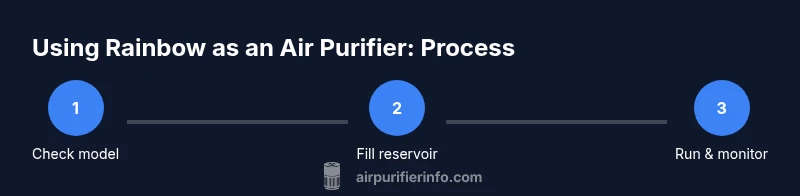
Review your Rainbow model’s manual to confirm water-based filtration is present and safe for use as an air filtration aid. Inspect hoses and seals for cracks or wear, and unplug the unit before starting any inspection. This initial check prevents leaks and electrical hazards and ensures you’re following manufacturer guidance.
Tip: If unsure, contact the manufacturer’s support line or consult the official manual before proceeding. - 2
Prepare the workspace
Clear the cleaning area and place towels to catch any spills. Ensure the room is adequately ventilated by opening a window or turning on a fan. Having airflow while you operate the Rainbow helps balance the filtration effect.
Tip: Keep pets and children away from the work area during setup. - 3
Fill the water reservoir
Pour clean water into the reservoir using the measuring cup to reach the recommended level. Do not overfill, which can cause splashing or overflow. Wipe the rim after filling to prevent drips on electronics.
Tip: Only use water unless the manual authorizes additives. - 4
Attach the appropriate airflow path
Secure the cleaning head and ensure the hose or intake path is properly seated to route air through the filtration path. Check for any gaps or loose fittings that could bypass filtration. A proper seal helps maximize filtration during use.
Tip: Run a quick test idle cycle to confirm airflow is directed through filtration. - 5
Begin operation with mindful settings
Start the Rainbow at a mid-range power setting to maintain steady airflow through filtration. Avoid full-power bursts that can cause splashes in the reservoir. Monitor the room for immediate changes in air feel and odor.
Tip: If you notice reduced suction or louder noise, stop and inspect seals and water level. - 6
Monitor and adjust
During use, observe the water for visible debris and replace or rinse as needed. Periodically check the filters and seals according to the manual. Stop operation if you detect leaks, unusual odors, or overheating.
Tip: Keep a spare basin ready for quick changes if you observe any residue buildup. - 7
Post-use cleanup and storage
Power off and unplug the unit before cleaning. Empty the reservoir, rinse with clean water, and dry all components before reassembly. Store in a dry area away from direct sunlight to prevent material degradation.
Tip: Document any issues to address before your next cleaning session.
Questions & Answers
How effective is a Rainbow vacuum as an air purifier for general indoor air quality?
A Rainbow vacuum can reduce dust and particulates during cleaning due to its water-based filtration, but it is not designed as a standalone air purifier. For ongoing air quality improvements, pair it with a dedicated air purifier that runs continuously.
A Rainbow can help reduce dust while you clean, but it isn’t a substitute for a dedicated air purifier used all day.
Can I leave the Rainbow running to purify air when no one is home?
No. Rainbow vacuums are designed for cleaning sessions, not continuous air purification. Leaving it unattended could lead to overheating, leaks, or safety risks. Use in a monitored, ventilated space and consider a separate purifier for ongoing air cleaning.
Not recommended to run unattended for air purification; use a dedicated purifier for continuous use.
Is it safe to use fragrances or essential oils in the Rainbow water basin?
Most Rainbow manuals advise against adding fragrances or essential oils to the water basin, as additives can leave residues and potentially harm seals or filters. If you want fragrance, consider separate room deodorizing strategies and ensure no additives contact electrical components.
Avoid adding fragrances to the basin; use outside scent solutions for odors.
How often should I clean the water reservoir and filter components?
Clean the water reservoir after each use and inspect seals or filters per the manual. Regular maintenance prevents residue buildup that can reduce filtration efficiency and airflow.
Clean the reservoir after each use and check seals regularly.
Can I replace my Rainbow’s filters with a different brand for better filtration?
Follow the manufacturer’s recommendations for replacement parts. Using non-specified parts can void warranties or compromise safety and performance.
Stick to manufacturer-approved filters and parts.
Watch Video
Main Points
- Verify model compatibility before use
- Utilize water filtration to trap particulates during cleaning
- Maintain clean water and seals for best results
- Do not rely on Rainbow as the sole air purifier
- Schedule regular maintenance to sustain air quality