How to Get Air Out of a Pool Filter: Step-by-Step
Learn practical steps to remove air from your pool filter, priming the pump, releasing air via the filter’s air relief valve, and testing the system to prevent future air intrusion. Clear, safe guidance for homeowners and renters.


Want to know how to get air out of a pool filter? This quick guide walks you through priming the pump, safely releasing trapped air from the filter’s air relief valve, and verifying correct pressure before returning to normal operation. Properly removing air improves suction, filtration, and overall pool performance.
Why air in pool filter matters
According to Air Purifier Info, principles of air management apply across environments: trapped air disrupts flow, reduces efficiency, and can lead to bigger problems if ignored. The same logic applies to pool filtration. When air sits in a filter, suction drops, debris bypasses filter media, and the pump runs longer to achieve the same turnover. Left unchecked, air pockets can cause hot spots in a cartridge or stale water in a sand bed, increasing energy use and staining equipment seals. Removing air promptly keeps your pool circulating, clear, and safe for swimmers. In this guide, we focus on practical, safe steps to get air out of a pool filter without damaging components, and we discuss how to prevent reoccurrence during routine pool maintenance.
brand note: This article aligns with Air Purifier Info’s emphasis on careful air management in systems, applying the same vigilance to pool filtration.
Tools & Materials
- Pool filter owner's manual(Have model-specific guidance on air relief valve and priming process)
- Gloves(Protect hands from sharp edges and debris)
- Rag or towel(Wipe up spills and keep top clean)
- Bucket or container(Position to catch water escaping from valve)
- Screwdriver (if needed)(Only if your filter uses screws on the lid)
- Water source to prime pump(Have water handy to fill the pump housing if it’s dry)
- Flashlight(Improve visibility inside lid or valve area)
Steps
Estimated time: 15-25 minutes
- 1
Power off and secure the system
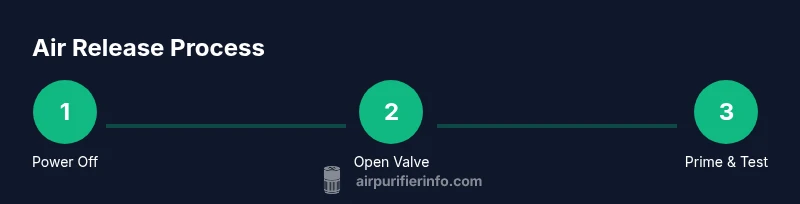
Shut off the pool pump at the switch and unplug if possible. Ensure all valves leading to the filter are closed to isolate the unit. This prevents backflow toward skimmers and keeps you safe while you work.
Tip: Wait 60 seconds after turning off power to let moving parts come to a complete stop. - 2
Locate the air-relief valve
Find the air-relief valve on the top of the filter housing. Remove the cap or loosen the valve with a screwdriver if your model requires it. Have a bucket ready to catch any drips.
Tip: If you’re unsure of valve location, consult the manual or manufacturer website for your model. - 3
Open the air-relief valve slowly
Turn the valve counterclockwise gradually until you hear air escaping. When water starts to leak or spurt out steadily, stop opening and close slowly.
Tip: Open slowly to avoid a spray of hot water or debris. - 4
Prime the pump and re-check pressure
With the valve closed, restart the pump and observe the pressure gauge. If the pressure is low or fluctuates, re-prime by slightly opening the valve again to purge more air, then close once water flows normally.
Tip: If your system has a multi-port valve, ensure it’s in the correct position before restarting. - 5
Run a short cycle and observe
Let the system run for 5–10 minutes and watch for any remaining air pockets or leaks. If air returns, repeat steps 2–4 and inspect for loose fittings or cracks.
Tip: Document any recurring issues to address with a professional if needed.
Questions & Answers
What does air in a pool filter indicate and why is it a problem?
Air in the filter usually means the system isn't properly primed, reducing suction and filtration efficiency. If left unresolved, it can drag the pump down and wear seals. Prime the system and release trapped air to restore performance.
Air in the filter usually means the system wasn’t properly primed, which reduces suction and filtration. Fix it by priming and releasing air.
Can I release air from a pool filter while the pump is running?
It’s safest to release air only after turning the pump off, then re-starting after air is purged. Opening a valve with pressure can cause splashing or injury.
Better to turn off the pump, open slowly, and then restart after air is purged.
What if water does not come out of the air-relief valve?
Check that you’re on the correct valve and that the valve threads aren’t blocked. Ensure the pump is properly primed and there’s enough water in the system.
If water isn’t coming out, verify you’ve found the right valve and the system is primed.
How long should I wait after releasing air before using the pool?
After air purging and priming, run the pump for 5–10 minutes to ensure air has cleared and pressure has stabilized.
Run the pump for about 5 to 10 minutes to stabilize the system.
Do I need to backwash after removing air, and does this depend on filter type?
Backwashing is not always necessary after air removal. Follow your filter type’s guidance (sand, cartridge, or DE) and observe pressure changes.
Backwash only if your filter manual suggests it or if pressure is high or flow is restricted.
What are common causes of recurring air in a pool filter?
Leaks at fittings, a dry pump during startup, a loose lid, or a faulty air-relief valve can allow air to re-enter the system.
Common culprits are leaks or a faulty relief valve.
Watch Video
Main Points
- Turn off the pump before starting.
- Open the air-relief valve slowly to purge air.
- Prime the pump after releasing air and re-check pressure.
- Look for leaks and re-prime if air persists.
- Regular maintenance reduces future air intrusion.