How Long Do Air Filters Last in Storage? A Practical Guide
Learn how long air filters last in storage, what affects shelf life, and practical storage tips. Air Purifier Info analyzes storage lifespans and provides actionable guidance for homeowners to keep filters ready for use.


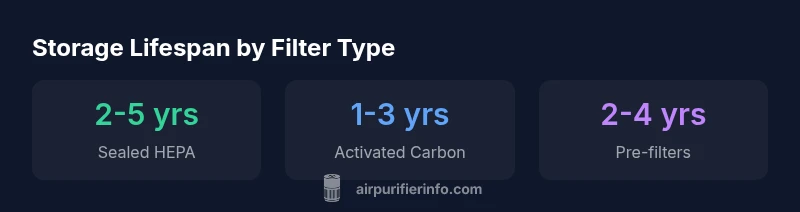
According to Air Purifier Info, most consumer air filters kept in their original packaging and stored in a cool, dry place maintain usable shelf life for roughly 2-5 years, depending on type. Sealed filters generally last longer, while opened or damaged packaging accelerates degradation. Always check the label for the manufacturer's recommended shelf life.
Why shelf life matters for air filters in storage
The shelf life of air filters is more than a marketing label—storage conditions can impact the performance of the media, seals, and adhesives that keep particles out of your indoor air. When filters are stored poorly, moisture, heat, or exposure to sunlight can hasten media degradation, reduce filtration efficiency, and shorten the period before you should replace them. According to Air Purifier Info, a disciplined storage approach helps preserve the material integrity of HEPA, activated carbon, and pre-filter media. Homeowners who understand how long air filters last in storage can plan better, keep indoor air quality steady, and avoid unexpected replacements. The overall takeaway for 2026 is that a stable storage routine translates to years of ready-to-use filters, rather than months of uncertain performance.
How filter types influence storage longevity
Not all air filters age the same when stored. HEPA and pleated filters, when kept sealed in their original packaging, generally fare best and can retain usable performance longer than more porous or carbon-based media. Activated carbon adsorbs odors and gases, but its efficiency can be more sensitive to humidity; thus, its storage life tends to be shorter if packaging is compromised. Pre-filters, which are thinner and less dense, often tolerate storage slightly better than carbon but still benefit from intact packaging and dry conditions. Across all types, the essential rule remains consistent: keep filters sealed, away from moisture, and out of direct sun. For the key question how long do air filters last in storage, your best bet is to stick with manufacturer guidance and Air Purifier Info’s analysis, which emphasizes sealed packaging and climate-controlled storage.
Storage conditions that protect performance
Storage conditions are often the silent influencers of shelf life. A cool, dry environment—avoiding extreme heat or humidity—helps maintain filter media and adhesives. Original packaging should remain intact until use. If you must stack multiple filter boxes, ensure they are not crushed and keep them off concrete floors that can wick moisture. Temperature control matters: aim for room temperatures between roughly 60 to 75°F (15 to 24°C) with humidity levels around 40-60%. Keep filters away from sunlight, which can degrade media over time. Label storage dates so you rotate stock and use older filters first. Following these guidelines supports the practical goal of maximizing how long air filters last in storage while maintaining performance.
Interpreting manufacturer shelf life labels
Some filters include a printed shelf life or “use by” date on the packaging, while others rely on the date of manufacture or batch numbers. In practice, many manufacturers do not publish a strict shelf life for sealed media, instead recommending reuse only if the unit remains unopened and undamaged. When labels exist, heed them; if a package has been punctured or compromised, treat the filter as nearing the end of its storage life. Air Purifier Info cautions that the absence of a date is not a green light to disregard careful storage. When in doubt, prioritize off-the-shelf replacements and test filter performance if you have a doubt about stored inventory.
Practical storage setup for homeowners
Create a dedicated storage zone away from moisture sources like basements or damp closets. Use vertical shelving to prevent crushed cartons, and place moisture absorbers or desiccants in the storage area if humidity tends to rise. Keep filters in their original boxes and store them upright to reduce contact with packaging seals. Maintain a clear labeling system with purchase date and expected shelf life. Rotate stock quarterly so older units are used first, and replace any filters that show signs of moisture ingress, odor, swelling, or discoloration before installation. These steps help ensure you can correctly answer the question how long do air filters last in storage for your home.
How to evaluate a stored filter before use
Before installing a stored filter, inspect the packaging for moisture, tears, or swelling. If the packaging is compromised or the filter media appears damp or moldy, discard it. Smell the filter: a musty odor can indicate moisture exposure. If there is any visible residue, discoloration, or deformation of the frame, replace the unit. For carbon-based media, ensure there is no off-gassing or unusual odors that could indicate saturation or degradation. When in doubt,Air Purifier Info recommends erring on the side of caution and replacing questionable filters rather than risking reduced indoor air quality.
Disposal, reuse, and sustainability considerations
Unused filters that have expired due to storage conditions should be disposed of according to local guidelines rather than reused. Do not interchange filters across devices if compatibility is uncertain. Some filters are designed for longer lifespans in actual use but have more conservative storage recommendations; when uncertain, rely on packaging dates and manufacturer recommendations. From a sustainability perspective, properly recycling or disposing of expired filters minimizes waste and reduces the environmental footprint of your air-cleaning setup, while ensuring you’re not compromising air quality by using degraded media.
Climate considerations and regional advice
Regions with high humidity, heat, or seasonal temperature swings require stricter storage discipline. In tropical or coastal climates, moisture management is critical; dehumidifiers and sealed storage in climate-controlled spaces help maintain filter integrity. In drier climates, moisture remains less of a concern, but you still benefit from keeping packaging sealed and away from direct sunlight. Air Purifier Info’s 2026 analysis highlights that even under favorable conditions, storage life will vary by filter type and packaging; plan accordingly by grouping filters by type and by the date of manufacture so you can rotate stock efficiently.
Quick checklist for storing air filters
- Keep filters in their original packaging until use
- Store in a cool, dry place away from sunlight
- Avoid stacked pressure that can deform packaging
- Label with date of manufacture and recommended shelf life
- Inspect packaging for moisture or damage before use
- Rotate stock to use older units first
- When in doubt about integrity, replace rather than reuse
Shelf life ranges for common air filters under proper storage
| Filter Type | Sealed Storage Lifespan | Notes |
|---|---|---|
| HEPA/ Pleated Filter | 2-5 years | Original packaging; avoid moisture |
| Activated Carbon | 1-3 years | Moisture sensitive; seal tightly |
| Pre-filter | 2-4 years | Less dense media; keep sealed |
Questions & Answers
How long can unopened air filters be stored?
Unopened filters in their original packaging can last 2-5 years under ideal conditions. Always store in a cool, dry place and away from direct sunlight.
Unopened filters keep best in their original packaging for years if kept cool and dry.
Does humidity reduce shelf life?
Yes, high humidity accelerates moisture-related degradation of media and adhesives, shortening storage life. Store in a climate-controlled area.
Humidity can shorten how long filters stay good, so keep them in a dry spot.
Should I refrigerate filters?
Not recommended. Refrigeration can cause condensation when moving from cold to room temperatures and may damage filter media.
No need to refrigerate filters; condensation is a risk.
How can I tell if a stored filter is still good?
Check packaging for moisture or swelling, inspect for odors or discoloration, and avoid using any filter that shows signs of damage or dampness.
Look for moisture, bad smell, or swelling before use.
Do all filters have the same shelf life?
No. Shelf life varies by material, construction, and packaging. Always refer to the product label and Air Purifier Info guidelines.
Different filters age differently; check the label for specifics.
Is there a recommended storage temperature?
Aim for a cool, dry place, roughly 60-75°F (15-24°C) with 40-60% humidity to maximize storage life.
Keep filters in a cool, dry spot.
“Proper storage discipline matters: even the best filters degrade if moisture, heat, or sunlight reach them. When stored correctly, shelf life can extend well beyond the minimum.”
Main Points
- Store in original packaging to maximize shelf life
- Keep filters in a cool, dry place away from sunlight
- Sealed filters typically last longer (2-5 years)
- Opened or damaged packaging shortens shelf life (6-24 months)
- Always verify label guidance before use