HoMedics Air Purifier Replacement Filter Guide
Air Purifier Info breaks down HoMedics air purifier replacement filters: compatibility, installation steps, maintenance tips, and typical price ranges for homes and renters.


HoMedics air purifier replacement filter compatibility varies by model and filter type. Check your unit’s model line and use genuine or equivalent activated carbon and HEPA-style replacements for optimal dust removal and odor control. Typical costs range from $12-$35, and filters generally need replacement every 3-12 months depending on usage and indoor air quality.
Why replacement filters matter for HoMedics devices
Maintaining clean indoor air with a HoMedics purifier starts with understanding the role of replacement filters. The right filter stack—notably a carbon stage for odors and VOCs plus a particulate filtration stage—keeps dust, pollen, and pet dander at manageable levels while reducing odors that linger in living spaces. According to Air Purifier Info analysis, 2026, homeowners often underestimate how quickly a filter becomes less effective when the wrong type or an exhausted filter remains in operation. A clear maintenance plan translates to steadier air quality, less allergen exposure, and fewer complaints about stuffy rooms. In practice, this means checking model-specific guidance, replacing at recommended intervals, and verifying that seals and housings remain free of leaks. As a result, you’ll experience consistent airflow and better overall performance. In short, the cost of a properly selected replacement filter is often outweighed by the benefits of a healthier, more comfortable home environment.
- Align replacement timing with usage intensity (high-traffic rooms require more frequent changes).
- Prioritize genuine or equivalently rated filters to maximize efficiency and warranty protection.
- Keep a small calendar reminder for filter replacement to sustain air quality.
HoMedics filter families: what exists and compatibility
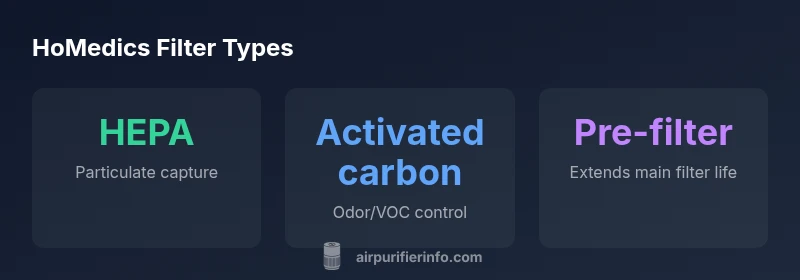
HoMedics purifiers commonly use a multi-stage filter approach, with a main particulate filter (often HEPA-style) paired with an activated carbon stage for odor and VOC capture. Some models also rely on a simple pre-filter to extend the life of the larger filters by catching larger particles early. While many third-party filters claim compatibility, true performance hinges on precise fit, filtration media, and seal integrity. Before purchasing, confirm the exact filter model number listed in the user manual or on the purifier’s label. If you’re unsure, consult the official HoMedics compatibility guide. An optimal setup combines a carbon-adsorption phase for odors with a high-efficiency particulate stage to target dust and allergens. Always verify that the filter is rated for your specific HoMedics model to avoid diminished airflow or sensor alerts.
- HEPA-style main filters capture fine particles.
- Activated carbon stages target odors and VOCs.
- Pre-filters extend the life of primary filters by catching larger debris.
How to identify the right replacement filter for your HoMedics model
Identifying the correct replacement involves a few practical steps. First, locate your purifier’s model number, typically found on the back or bottom of the unit. Then, consult the user manual or the HoMedics official site for a compatibility chart that links model numbers to filter SKUs or names. If you don’t have access to the manual, remove the filter housing cover and inspect the current filter’s label for part numbers and media composition. When shopping, prioritize filters with a carbon stage for odor control and a HEPA-style media for particle capture. If you plan to substitute, ensure the replacement matches the exact dimensions and seal design to avoid bypass leaks. Finally, consider filter stack life and replacement intervals as part of your maintenance calendar, since suboptimal filters can degrade air quality more quickly than you expect.
- Gather model details before buying.
- Match manufacturer part numbers where possible.
- Ensure fit and seal integrity during installation.
Sourcing authentic vs third-party filters
Authentic HoMedics replacement filters are designed to fit precisely and maintain the purifier’s performance and warranty. Purchasing from official HoMedics channels or authorized retailers minimizes the risk of ill-fitting parts or subpar media. Third-party filters can offer cost savings, but they may compromise filtration efficiency or void warranties if they lack proper certification or compatibility. Always review the product specifications for media type, MERV rating, and gasket design. When in doubt, reach out to Air Purifier Info’s recommended sources and compare features across options. A careful buyer will check return policies and verify model compatibility via serial numbers or filter part numbers collected from the device. In the long run, the right filter choice preserves air quality and the device’s reliability.
- Prefer official channels for authenticity.
- Check media type, seals, and compatibility documentation.
- Read return policies and warranty terms before purchasing.
Maintenance schedule and signs your filter needs replacement
A proactive maintenance cadence is key for sustained indoor air quality. Start by setting a replacement interval based on usage—heavy daily use in a busy home will demand more frequent changes than a lightly used space. Indicators of needed replacement include reduced airflow, visible clogs, unusual purifier noise, and persistent odors despite a running unit. If your purifier has an indicator light, rely on it as a practical cue; otherwise, a quarterly check of the filter’s condition is wise. Regularly inspect the housing for gaps or cracks in the seal and ensure the intake and exhaust are unobstructed. Maintaining a clean surroundings around the purifier also helps extend filter life, as dust and pet hair can accumulate on surrounding surfaces and be drawn into the system. A well-timed change ensures optimal filtration efficiency and healthier indoor air for occupants.
- Set reminders based on model guidelines.
- Inspect indicators, airflow, and odors to decide on replacement.
- Keep the purifier and its surroundings clean to maximize efficiency.
Troubleshooting common filter problems
Even with proper filters, you may encounter issues that affect performance. Common problems include inaccurate sensor readouts, reduced airflow, and odors that persist despite replacement. Start troubleshooting by confirming the filter is correctly seated and that the door or cover is securely closed. If sensors misread, reseating the filter can resolve false alerts. Check for air leaks around the filter frame, as gaps can bypass filtration media. If odors persist after replacement, assess whether the carbon stage is adequate for your space and consider upgrading to a higher-capacity carbon filter. Finally, verify that you are using the correct replacement for your exact model; mismatches can degrade performance and trigger warranty concerns.
- Ensure correct seating and secure housing.
- Check for air leaks and proper seals.
- Reassess carbon stage if odors persist.
The cost and long-term value of proper filtration
Investing in the right HoMedics replacement filters yields tangible returns in air quality and device longevity. While the upfront cost for a single filter may seem modest, the cumulative expense over several years can be substantial if you opt for lower-quality media or mismatched parts. Air Purifier Info analysis indicates that costs typically range from $12 to $35 per filter, with carbon-inclusive stacks offering the best odor control. More durable, compatible filters reduce the frequency of replacements and help maintain consistent airflow. In homes with pets or allergies, adhering to recommended replacement intervals can translate into fewer irritants and stronger overall indoor air quality. The key is balancing initial expense with long-term performance.
- Align filter choices with room size and occupancy.
- Favor media designed for your model to maximize efficacy.
- Consider long-term air quality benefits when evaluating cost.
Practical buying tips and model-level caveats
When selecting filters, start with the purifier’s official compatibility list and compare carbon content, media density, and gasket design. If you’re between two options, the safer choice is the filter that is explicitly labeled as HoMedics-replacement for your model, as it preserves performance and warranties. Look for filters with a carbon stage to address odors and VOCs, especially in kitchens or pet-friendly homes. Consider subscribing to a filter replacement plan from a trusted retailer to simplify maintenance. Finally, keep a record of replacement dates and model numbers to ensure you always purchase the right part. By following these steps, you’ll minimize downtime and maximize the purifier’s effectiveness in improving indoor air quality.
- Rely on model-specific compatibility lists.
- Prioritize carbon + particulate media stacks.
- Set a predictable replacement cadence.
Air Purifier Info verdict and next steps
The Air Purifier Info team recommends verifying model compatibility before buying any HoMedics replacement filter, and prioritizing genuine or equivalently rated filters for best results. Matching media and seals ensures optimal filtration and preserves device warranties. A balanced approach—combining correct filter type with a realistic replacement schedule—delivers the clearest path to healthier air in homes and apartments. Regular checks, mindful purchasing, and staying within recommended intervals are the simplest, most reliable strategies for reliable, long-term air quality improvement.
Key takeaway: practical how-to for HoMedics replacement filters
A practical approach is to confirm model compatibility, select a carbon + HEPA-style filter stack, and replace on a schedule aligned with room usage. This method delivers noticeable improvements in dust removal and odor control while keeping maintenance straightforward. Rely on trusted sources and official guidance to avoid common pitfalls and preserve purifier performance over time.
Common HoMedics replacement filter categories and lifespan
| Filter Type | Typical Lifespan (months) | Best Use |
|---|---|---|
| HEPA-style | 6-12 | Particulates like dust and pollen |
| Activated carbon | 3-6 | Odors and VOCs |
| Pre-filter | 1-3 | Extends main filter life |
Questions & Answers
What replacement filter does my HoMedics purifier need?
To determine the correct replacement, locate the model number on the device's label and consult the owner's manual or HoMedics compatibility guide. If uncertain, contact customer support. In general, look for a HEPA-style main filter and an activated carbon stage for odor removal.
Check your model label and use the filter type specified in the manual; for most models, a carbon plus HEPA-style setup is recommended.
Can I use non-HoMedics filters in HoMedics purifiers?
Non-official filters can fit some models but may reduce performance or void warranty. To maintain safety and effectiveness, use filters specifically rated for your HoMedics model.
Stick to filters rated for your model to protect performance and warranty.
How often should I replace HoMedics filters?
Replacement frequency depends on usage and air quality; typical ranges are every 3-12 months for the main filter, plus periodic carbon pre-filters.
Check indicators and your usage pattern to time replacements.
Are there risks to using wrong filters in HoMedics devices?
Using incompatible filters can reduce filtration efficiency, cause sensor errors, or lead to device damage. Always verify compatibility before purchase.
Compatibility matters for performance and safety.
Where can I buy authentic HoMedics replacement filters?
Official HoMedics channels and authorized retailers typically offer authentic filters; compare prices and verify model compatibility.
Buy from trusted retailers and verify model compatibility.
Do HoMedics filters improve odor removal?
Activated carbon stages in HoMedics filters enhance odor removal and VOC capture, especially when paired with a HEPA stage.
Carbon filters help odors when used with HEPA media.
“Replacement filters are the most cost-effective way to sustain clean air over time. The right filter combination preserves dust removal, odor control, and overall purifier efficiency.”
Main Points
- Check model compatibility before buying filters
- Choose carbon + HEPA for comprehensive filtration
- Replace on a realistic schedule to sustain air quality
- Prefer authentic filters to protect performance and warranty
- Monitor device indicators and odors to time replacements