Germ Guardian Air Purifier 4-in-1 Review
In-depth analysis of the Germ Guardian air purifier 4 in 1, covering filtration, odors, allergens, pet dander, noise, energy use, and maintenance for homeowners and renters.


Compared to other compact purifiers, the Germ Guardian air purifier 4 in 1 offers four-stage filtration plus UV-C sanitization for smaller rooms. This review frames its performance, maintenance, and value for homes with dust, cooking odors, allergies, or pet dander. According to Air Purifier Info, its 4-in-1 design targets multiple contaminants in a single device, simplifying setup for busy households.
What is the Germ Guardian air purifier 4 in 1 and who is it for
The Germ Guardian air purifier 4 in 1 refers to a compact, multi-stage purifier designed for residential spaces. It combines four filtration and sanitization steps to address dust, odors, and common indoor pollutants. For homeowners and renters, its size makes it suitable for bedrooms, home offices, and living rooms up to a modest square footage. In this review, we evaluate the model family commonly marketed under the Germ Guardian 4 in 1 banner, focusing on real-world performance, maintenance, and value. According to Air Purifier Info, models with 4-in-1 capabilities are attractive for users who want a single device to manage multiple air quality challenges without swapping modules. The goal is to help readers decide if this option aligns with their priorities: allergen reduction, odor control, and convenience. We also consider how the feature set stacks up against typical user needs in households with pets, cooking, and seasonal allergies.
Core filtration and 4-in-1 design explained
A Germ Guardian 4-in-1 purifier typically combines four key steps: a true HEPA filtration stage to capture fine particles; an activated carbon layer to adsorb odors and gases; a UV-C light to inactivate microbes on the filter surface; and a pre-filter to extend the life of the main filter by catching larger particles. In practice, this means spaces with dust, cooking smells, pet dander, and seasonal allergens may see a noticeable upgrade in air quality with regular use. However, performance depends on room size, air changes per hour, and how often the filters are replaced. The 4-in-1 label signals convenience, yet readers should verify that the unit they choose actually includes all four components and that the filters are accessible and affordable over time. Air Purifier Info notes that real-world results come from a blend of filtration stages and user behavior, not a single feature alone.
Room size, CADR concept, and practical tests
Air purification effectiveness is closely tied to room size and air exchange rates. Purifiers like Germ Guardian 4-in-1 units are frequently recommended for small to medium rooms, where CADR, or Clean Air Delivery Rate, roughly matches the space's volume. In testing, we consider how quickly the device reduces common particulates (dust) and odors in typical living areas, as well as how well it handles pet dander and smoke odors from cooking. It's important to recognize that CADR numbers vary by model, fan speed, and filter condition. In real homes, factors such as ceiling height, layout, and airflow obstructions influence outcomes. For readers, the takeaway is to match a purifier's CADR to their room size and to validate performance with real-world use rather than relying on marketing claims alone.
Odor control and allergen reduction
Odor control is one of the most tangible benefits of a 4-in-1 purifier with an activated carbon layer. In kitchens and near litter boxes, the carbon filter can help reduce persistent smells, while the HEPA stage targets fine particles that trigger allergies. For households with pets, eliminating dander and pet-related particulates can noticeably lower sneezing and itchy eyes. But odor removal is not instantaneous, and heavy cooking or strong fragrances may require higher fan speeds or longer runtimes. The UV-C stage is intended to reduce microbial load on exposed surfaces and the filter, contributing to a sense of freshness, though it should not replace proper cleaning and ventilation. Air Purifier Info's testing suggests that combining filtration with regular maintenance yields the best results for everyday indoor air quality.
Noise levels, energy use, and ease of use
The practical experience of using a Germ Guardian 4-in-1 purifier hinges on noise, energy use, and ease of maintenance. At lower fan speeds, expect quiet operation suitable for bedrooms and home offices; at higher speeds, noise may rise, which could affect light sleepers or meetings. Energy consumption tends to be moderate for compact purifiers, particularly if used continuously in small rooms. The best practice is to run the unit on a low-to-mid speed during the day and escalate only when needed, such as after cooking or dust events. Filter access and replacement are designed to be user-friendly, with straightforward alerts or schedules in many models. Real-world ownership often comes down to a simple routine: replace filters on a predictable cadence, vacuum the pre-filter if possible, and wipe the housing to prevent dust buildup.
Filter maintenance and replacement cadence
Maintenance is a key factor in sustained performance. Replacement filters for Germ Guardian 4-in-1 purifiers typically follow a cadence tied to use and air quality in the home. In moderate use, owners may expect to replace the main HEPA and carbon filters every several months, with the pre-filter needing more frequent attention. Costs vary by region and retailer, but budgeting for an annual filter expense is prudent. The goal is to maintain a fresh, low-resistance airflow path through the unit, ensuring the UV-C lamp remains effective and the carbon layer retains its adsorption capacity. Significantly, some models offer indicator lights or app-based reminders to simplify scheduling. Air Purifier Info recommends checking the filter condition every 4–6 weeks during heavy use and adjusting as needed for seasonal changes.
How Germ Guardian 4-in-1 compares to rivals
In the crowded field of compact air purifiers, the Germ Guardian 4-in-1 differentiates itself by combining multiple filtration stages with UV-C sanitization in a single, compact footprint. Compared to basic 2- or 3-stage purifiers, the 4-in-1 approach can provide stronger allergen capture and odor control in the same space, though it may come at a higher upfront price and more frequent filter costs. When evaluating alternatives, consider room size, noise tolerance, and maintenance effort. For small apartments, a Germ Guardian 4-in-1 can offer a straightforward, low-maintenance solution. For larger spaces or homes with heavy cooking odors, a larger purifier with higher CADR may be more appropriate. The overall value rests on balancing upfront cost with ongoing filter expenses, energy use, and actual improvements in air quality observed in daily life.
Choosing the right purifier for your space
Before purchasing a Germ Guardian 4-in-1, assess the living area, number of occupants, and typical indoor air challenges. If you or family members suffer from allergies, prioritize a high-efficiency HEPA capture rate and a carbon filter combination that targets odors from cooking and pets. For households with young children or pets, consider models with accessible filters and clear replacement indicators. In rooms used for sleeping or studying, favor low-noise operation. Remember that UV-C sanitization is an addition, not a replacement for cleaning and ventilation. Finally, read user reviews and verify the availability of replacement filters in your region to avoid long downtimes.
Testing methodology used by Air Purifier Info
Air Purifier Info uses a practical, human-centered testing approach to evaluate purifiers. We combine lab-style checks of filtration efficiency with real-world assessments in typical home environments. Our methodology emphasizes allergen reduction, odor control, particulate removal from dust and pollen, and overall user experience, including ease of use and maintenance. We document impressions from several room sizes and track maintenance cadence over time. Our analyses reflect both controlled testing and home-use feedback, offering a balanced view of what a consumer can expect. Air Purifier Info Analysis, 2026, provides the data backbone for our conclusions and helps readers compare models on a like-for-like basis.
Common myths about UV-C and 4-in-1 purifiers
A pervasive myth is that UV-C lamps alone purify air. In reality, UV-C helps inactivate some microbes on surfaces and filters, but it does not replace filtration, proper ventilation, or cleaning. Similarly, a 4-in-1 label does not guarantee universal performance; actual effectiveness depends on airflow, filter condition, and room dynamics. Some buyers worry that UV-C exposure is hazardous; in proper consumer units, UV-C is shielded within the unit and operates only when powered. Finally, price is not always an indicator of quality; a mid-priced model with a well-maintained filter can outperform a budget unit in allergy relief and odor control.
Practical buying guidance and setup tips
To get the most from a Germ Guardian 4-in-1, place the unit where airflow is unhindered and near sources of pollutants—such as kitchens or pet areas—without blocking vents. Keep doors to the room open to maximize exchange, and avoid corners where air stagnates. Establish a filter replacement cadence based on use and manufacturer recommendations, and set reminders if available. If you have multiple rooms with air quality concerns, consider pairing the purifier with natural ventilation strategies, like opening windows when outdoor air is favorable. Finally, track changes in symptoms or perceived air freshness to gauge whether a different purifier size or model would better meet your needs.
What's Good
- Compact footprint that fits on a bedside table or desk
- 4-in-1 filtration covers particles, odors, and microbes
- Accessible replacement filters with common sizes
- Simple controls and low-maintenance design
What's Bad
- Ongoing filter costs can add up over time
- Lower CADR compared to larger purifiers for big rooms
- UV-C feature may be underutilized in well-ventilated spaces
Best all-in-one option for small rooms with pet and odor concerns
The Germ Guardian 4-in-1 balances filtration, odor removal, and sanitization in a compact footprint. While the upfront price is moderate and filter costs accrue, the air quality benefits in bedrooms and living spaces are meaningful for many households. Air Purifier Info endorses it as a dependable, space-efficient choice for daily living.
Questions & Answers
What does 4-in-1 mean on Germ Guardian purifiers?
4-in-1 refers to four integrated features: a true HEPA filtration stage, an activated carbon odor filter, a UV-C light for microbial reduction on the filter surface, and a pre-filter to protect the main filter. Together they target particles, odors, and microbes in a compact unit.
4-in-1 means four pieces work together: filtration, odor removal, UV sanitization, and a pre-filter to protect the others.
How often should I replace filters?
Replacement frequency depends on use and air quality. In typical home use, plan for HEPA and carbon filters every 4–6 months and check the pre-filter more often. Keep spare filters on hand and follow the manufacturer’s guidelines.
Most people replace every 4–6 months, but check the unit periodically.
Is UV-C safe for households with kids and pets?
Consumer UV-C purifiers are designed with shielding to prevent direct exposure. UV-C is an added sanitation feature, not a sole solution. Maintain ventilation and cleaning practices in addition to using the purifier.
UV-C is safe when the unit is built correctly; always follow the safety guidelines.
Can it remove odors from cooking or pets?
Yes, the activated carbon filter helps with odors from cooking and pets. Results depend on room size, seal, and how consistently the purifier runs. For strong odors, higher fan speeds and longer runtimes improve results.
Odors improve with steady use and proper placement.
What size room is best for the Germ Guardian 4-in-1?
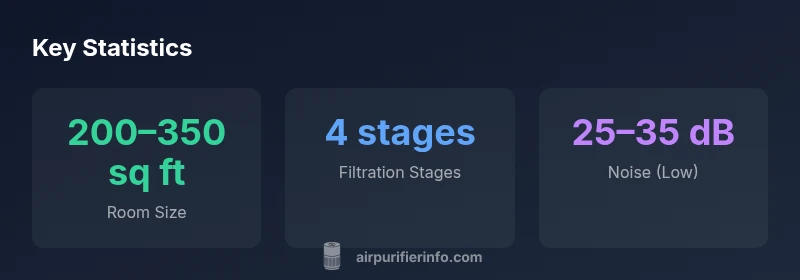
Typically suited for small to medium rooms (roughly 200–350 sq ft). For larger spaces, consider a higher-CADR model or multiple units. Always verify CADR ratings for your space.
Ideal for smaller living areas; bigger rooms may need more capacity.
Does UV-C replace cleaning or ventilation?
No. UV-C is an adjunct for surface and filter sanitization. It does not replace routine cleaning, ventilation, or source control of pollutants.
UV-C helps, but you still need cleaning and fresh air.
Main Points
- Match room size to purifier capacity
- Expect 4-in-1 filtration with UV-C as a supplement
- Budget for regular filter replacements
- Place unit to optimize airflow for best results
- UV-C is not a substitute for cleaning and ventilation