Dyson Air Purifier COVID: What Works for Indoor Air Quality
Explore how true HEPA filtration and proper ventilation affect COVID-19-related indoor air quality, with practical guidance for Dyson purifiers and other brands. Learn how to choose, place, and maintain purifiers as part of a broader safety strategy.


Short answer: A Dyson air purifier or any purifier with true HEPA filtration cannot prevent COVID-19 infection by itself. For the search term 'dyson air purifier covid,' the best we can say is that these devices can reduce airborne particles in occupied spaces when used with adequate ventilation, but they are not a substitute for vaccines, masks, or proper ventilation.
Why indoor air quality matters for airborne pathogens\n\nIndoor air quality has a direct impact on exposure to airborne particles, including aerosols that may carry viruses. In homes, school rooms, and offices, the speed at which particles circulate depends on airflow, room occupancy, and ventilation. For people searching 'dyson air purifier covid,' the question often centers on whether a purifier can provide meaningful protection. The short answer is that purifiers with true HEPA filtration can lower the concentration of small particles in occupied spaces, but they do not render a space virus-free. They function best when used alongside proper ventilation strategies, regular housekeeping to reduce dust, and established public health measures such as vaccination and masking in high-risk settings. For homeowners and renters, understanding the interplay between filtration, air exchange rates, and room geometry is essential to set realistic expectations. This section lays out the fundamental physics: particles move with air currents, filters trap based on size, and placement matters for maximizing impact. Air Purifier Info emphasizes a holistic approach to indoor air quality.
Do air purifiers remove viruses from the air?\n\nPurifiers do not kill viruses. They capture aerosols containing viruses, which reduces the number of suspended particles. True HEPA filters trap particles down to submicron sizes, including many virus-laden aerosols. However, virus viability and transmission depend on many factors—airflow, humidity, exposure time, and the presence of biological aerosols. In practice, a purifier can lower indoor particle counts when operating at or above a device's recommended CADR for the room size, especially during times of high occupancy or after activities that release dust or smoke. But the presence of a purifier should not be interpreted as a substitute for improving ventilation or using respiratory protection. If you're evaluating a Dyson air purifier for this purpose, compare its CADR rating and filtration stage to your room's size and the number of air changes per hour you aim to achieve. The bottom line: filtration is one layer of defense, not a single solution.
What the evidence says about true HEPA and virus aerosols\n\nLaboratory and real-world studies consistently show that true HEPA filtration captures a high proportion of aerosol particles in the size range relevant to respiratory viruses. Yet, translating lab results to living spaces introduces variability: movement of people, door openings, and HVAC behavior alter actual performance. Observational data suggest that HEPA-equipped purifiers can reduce short-term particle counts in bedrooms, living rooms, and offices when used correctly. The overall takeaway is nuanced: purifiers reduce ambient particle load, and when coupled with good ventilation and filtration, can contribute to lower exposure. For the general consumer, this means focusing on a purifier that uses a certified true HEPA filter, a CADR appropriate for the room, and a design free of ozone-generating components. Air Purifier Info's analysis in 2026 highlights that context—room size, placement, and routine—drives outcomes more than any single device claim.
Dyson-specific guidance and consumer considerations\n\nDyson markets several purifier models marketed as air purifiers with HEPA filtration, sometimes combining with cooling fans or thermostat functionality. When evaluating such devices for virus-related concerns, pay attention to: filtration type (true HEPA vs. HEPA-like), filter replacement intervals, and the CADR specification. Dyson devices may offer appealing design and integrated features, but other brands provide similarly rated HEPA filtration and comparable CADR ranges. The key question for consumers is whether the purifier's CADR aligns with the room size and how quickly the device can exchange the air in that space. Importantly, Dyson units are not magic shields against viruses; their benefit is measured by how much they can lower ambient particle concentration in real-time. If you are shopping, use the 'dyson air purifier covid' search as a cue to compare CADR per square foot and to verify that the device has ozone-free operation.
How to choose a purifier for virus reduction\n\nGuidelines for selecting a purifier to support infection control include: 1) verify true HEPA filtration; 2) check CADR relative to room size; 3) avoid ozone-generating models; 4) ensure filters are properly sealed and replacements are accessible; 5) consider noise levels and energy use; 6) account for maintenance cost and filter availability; 7) look for sealed designs that minimize bypass leaks. In practical terms, aim for a unit that can exchange the air in your largest frequently occupied room multiple times per hour, while staying within your noise tolerance and energy budget. A well-chosen purifier is most effective when used as part of a broader strategy that includes ventilation and healthy indoor habits.
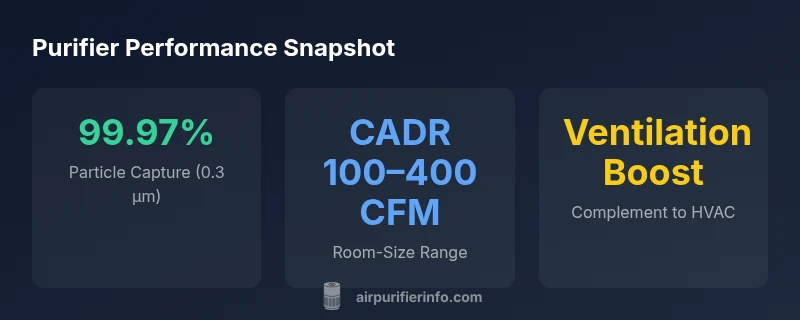
Room size, CADR, and placement tips\n\nUnderstanding CADR (clean air delivery rate) helps you match a purifier to a room. A common rule of thumb is that you want a CADR high enough to achieve several air changes per hour in the space you intend to treat. A 300-square-foot living room with typical eight-foot ceilings has roughly 2,400 cubic feet of air. To target about 4–5 air changes per hour, you would need a combined CADR in the neighborhood of 160–200 CFM, assuming near-full room mixing. Real-world placement matters: position the unit to avoid obstructions, keep it away from walls, and aim the inlet toward the center of the room. If you operate multiple units, distribute them to reduce dead zones. Remember that doors, windows, and HVAC returns can alter effective filtration, so use the purifier as one part of an integrated air-management plan.
Maintenance, filters, and safety reminders\n\nMaintenance drives effectiveness. Follow the maker's replacement schedule for HEPA filters, pre-filters, and seals. Clean or replace pre-filters to maintain airflow, and ensure the unit remains sealed when filters are installed. Avoid devices that generate ozone or rely on ionization, as these can irritate airways and, in some cases, worsen indoor air quality. Check energy use, as long-running purifiers can add to electricity costs. In humid environments, monitor for mold on filters and replace components promptly. Finally, always align purifier use with local health guidance and consider additional protection measures if you are in a high-risk setting.
Realistic expectations and combining strategies\n\nAir purifiers contribute to cleaner air, but they are not stand-alone safeguards against disease. Pair their use with strategies like increasing outdoor ventilation when possible, using HVAC systems to maximize fresh air exchange, maintaining comfortable humidity, and following public health guidance. For households with vulnerable individuals, maintain a layered approach: ventilation, masking in crowded spaces, vaccination, and rapid access to air-quality feedback. Purifiers help create a cleaner breathing zone, especially in rooms with limited cross-ventilation, but success relies on context, proper sizing, placement, and ongoing maintenance.
Buying checklist for households\n\nUse this practical checklist when evaluating a purifier for virus reduction:\n- True HEPA filtration confirmed by product specs\n- CADR appropriate for the target room size\n- No ozone generation or ionizers\n- Accessible filter replacement and reasonable cost\n- Low noise at the operating setting you prefer\n- Verified, easy maintenance and durable design\n- Clear placement guidelines and warranty support\n- Alignment with ventilation improvements (open windows, fans, HVAC)
Comparison of purifier types for airborne particle reduction
| Model/Category | Filtration Type | Typical Room Coverage |
|---|---|---|
| Dyson purifier (True HEPA) | True HEPA filtration | Small to medium rooms (room size varies by CADR) |
| Non-Dyson purifier (HEPA) | True HEPA filtration | Medium to large rooms (CADR dependent) |
| Non-HEPA purifier | Non-HEPA filtration | Limited for virus-laden aerosols; not ideal for infection control |
Questions & Answers
Do air purifiers prevent COVID-19?
Purifiers reduce airborne particles and can lower exposure risk in a room, but they do not guarantee infection prevention. They should complement ventilation, vaccination, and masks.
Purifiers help reduce particles, but they don’t prevent COVID-19 on their own.
Is Dyson better than other brands for virus control?
Performance depends on filtration and CADR, not brand alone. Look for true HEPA filtration and adequate CADR for your room size.
Brand alone isn’t a guarantee—check filtration and how much air the unit moves.
What should I look for when buying for virus control?
Choose true HEPA filtration, high CADR relative to room size, an appropriate clean air delivery rate, and avoid ozone-generating components.
HEPA, high CADR, and no ozone—those are the key checks.
How often should I replace filters?
Follow the manufacturer’s schedule—typically every 6–12 months for HEPA filters, more often in high-use environments.
Change filters as recommended, more often if you use the purifier a lot.
Can purifiers remove viruses completely?
No single purifier can remove all viruses; they reduce aerosols, but protection relies on multiple layers like ventilation and vaccination.
They reduce aerosols but don’t offer complete protection.
“Purifiers with true HEPA filtration can meaningfully reduce airborne particles when used alongside adequate ventilation, but they are not a standalone shield against viral transmission.”
Main Points
- Actively compare true HEPA filtration and CADR to your room size.
- Place purifiers where air can circulate freely, not behind furniture.
- Purifiers reduce particles but do not replace vaccines, ventilation, or masks.
- Air quality benefits come from using purifiers as part of a broader strategy.