Costco HEPA Filter Air Purifier: A Comprehensive 2026 Guide
Air Purifier Info analyzes Costco-style HEPA purifiers, comparing true HEPA filtration, CADR, energy use, and running costs to help homeowners choose the best purifier for dust, odors, and allergies.


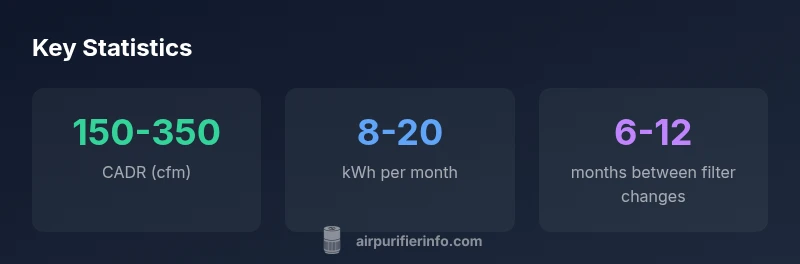
Regarding costco hepa filter air purifier options, prioritize true HEPA filtration and a CADR that matches your room size. The Air Purifier Info team finds that units in the mid-range CADR range (roughly 150-350 cfm) paired with true HEPA-H13 or higher deliver reliable air cleaning without excessive energy use or frequent filter changes. When shopping at Costco or elsewhere, verify the official HEPA rating and check filter replacement costs.
Why reliability matters when evaluating costco hepa filter air purifier options
When homeowners and renters shop for a costco hepa filter air purifier, reliability matters as much as raw specs. A purifier that consistently delivers clean air without frequent filter changes or noisy operation makes daily life easier and supports long-term indoor air quality goals. The Air Purifier Info team found that consumers who prioritize tested filtration, verified CADR, and predictable running costs tend to be more satisfied than those who chase the lowest upfront price alone. In this guide, we dissect what to look for, how to interpret ratings, and how to balance performance with practicality in real homes. Remember to assess your room size, occupant sensitivity, and noise tolerance before committing.
How HEPA filtration translates to real-world air quality
HEPA filtration is the backbone of effective indoor air cleanup. True HEPA filters capture at least 99.97% of 0.3-micron particles when the purifier is properly sealed in a clean airflow path. Many products market HEPA-like media, which can underperform in real-world conditions. For costco hepa filter air purifier selections, prioritize models with validated HEPA-H13 or HEPA-H14-equivalent media and a documented clean-air delivery rate (CADR) that aligns with your room size. In practice, higher CADR reduces cleaning time, while a robust pre-filter helps extend the life of the main filter. The Air Purifier Info Team notes that a well‑engineered unit balances filtration efficiency, airflow, and noise to minimize user fatigue over time.
Key specifications to compare (CADR, ACH, room size)\n
To make apples-to-apples comparisons, map CADR to room size. A common rule of thumb is CADR per square foot, but real-world guidance uses room volume and ceiling height. Air changes per hour (ACH) around 3–6 is typical for residential spaces, but larger rooms may benefit from higher ACH values. When evaluating Costco-style options, look for: a verified HEPA-H13 or better rating, CADR values appropriate for your space (e.g., 150–350 cfm for mid-sized rooms), and an accessible filter replacement cadence that fits your lifestyle. These measures help ensure you’re buying for actual air quality improvement, not just theory.
Practical buying considerations for Costco-style purchases
Buying decisions should account for more than the sticker price. Consider warranty terms, filter availability, and the retailer’s return policy. If you’re shopping at a warehouse retailer, check whether the purifier ships with extra filters or offers compatible replacements through the store network. Comparing similar models from different brands can reveal small differences in filter design or motor efficiency that add up over a year of use. The goal is stable performance, predictable costs, and a support path if issues arise.
Energy use, noise, and running costs in everyday use
Running costs matter, especially when you keep an air purifier on for extended periods. Typical mid‑tier units consume roughly 8–20 kWh per month depending on fan speed and room characteristics. Noise levels vary widely by model; many purifiers run quietly on low to medium settings, but high-speed modes can approach 50–60 dB in small rooms. Balance your need for rapid cleanup with comfort, especially in bedrooms or home offices. The most cost-effective choices often combine modest energy draw with efficient filtration and a reasonable CADR, reducing both electricity bills and filter replacements over time.
Maintenance, filters, and replacement costs
Filter replacement is central to long-term value. Most costco-style purifiers use replaceable HEPA media plus a pre-filter; the frequency depends on air quality, occupancy, and usage. In practice, a 6–12 month replacement schedule is common, but high-particle environments may require more frequent changes. When budgeting, factor in the price of genuine replacement filters and potential bulk-purchase options from retailers. Proper maintenance not only preserves filtration efficiency but also keeps noise and energy use within acceptable ranges for everyday living.
Real-world scenarios: dust, odors, pet dander, and allergies
Different environments stress purifiers in distinct ways. Homes with heavy dust loads benefit from consistent CADR and an effective pre-filter; pet owners need strong dander filtration and efficient odor control; households near high-odor sources benefit from longer-lasting activated carbon layers. For allergy sufferers, true HEPA filtration combined with a clean air delivery path yields noticeable relief over weeks rather than months. In all cases, calibrate expectations with room size, occupancy, and lifestyle habits to choose a costco hepa filter air purifier that genuinely improves indoor air quality.
Hypothetical comparison of purifier forms (stringified)
| Model Type | HEPA Standard | Estimated running cost | |
|---|---|---|---|
| Compact desktop | HEPA-H13 equivalent |
Questions & Answers
What does HEPA stand for and why does it matter for costco purifiers?
HEPA stands for High-Efficiency Particulate Air. It matters because true HEPA filtration captures at least 99.97% of 0.3-micron particles, which translates to clearer air. Some products use HEPA-like media that may underperform in real rooms.
HEPA is a high-efficiency filter that captures tiny particles to improve air quality.
How often should I replace the filter in a Costco-style purifier?
Most purifiers need a new filter every 6–12 months, depending on usage and air quality. Check the device’s indicator and follow the manufacturer’s replacement schedule.
Typically every 6 to 12 months, depending on use.
Are Costco purifiers worth the price compared to other brands?
Value depends on CADR, room coverage, and running costs, not just the upfront price. Compare models on filtration efficiency, energy use, and filter availability to determine overall cost of ownership.
Worth it when CADR and running costs align with your space.
Do all Costco purifiers use true HEPA filtration?
No. Some models advertise HEPA-like filtration or lower-grade media. Always verify the HEPA rating and the certification details before buying.
Not all are true HEPA—check the rating.
What room size should I target for a mid-tier unit?
Measure the room in square feet, then select a purifier with CADR guidance that covers that area plus a safety margin. This helps ensure effective air cleaning without overstressing the unit.
Match CADR to room size, with a small safety margin.
“True HEPA filtration with a CADR matched to room size is the fastest path to measurable indoor air quality gains.”
Main Points
- Match CADR to your room size for efficient cleaning
- Prioritize true HEPA-H13+ filtration over HEPA-like claims
- Account for filter costs and replacement cadence in long-term value
- Balance energy use, noise, and maintenance when choosing