Can You Put Fabric Softener in an Air Purifier? Safety Guide
Learn why fabric softener should never go in an air purifier, the risks involved, and safe alternatives for odor control and clean indoor air.


No. Fabric softener is not designed for air purifiers and can damage filters, leave sticky residues, and create unsafe aerosols when chemicals volatilize. If you’re trying to reduce odors, stick to manufacturer‑approved methods and safe cleaners. For fresh air, improve ventilation and use a dedicated air freshener or essential‑oil diffuser, only if your purifier’s manual permits it.
Why Fabric Softener Is Not Designed for Air Purifiers
Fabric softener is formulated for laundry processes, not indoor air systems. Air purifiers rely on sealed housings, precise intake paths, and filtration media designed to trap particles and gases. Introducing a liquid like fabric softener risks saturating filters, seeping into seals, and dispersing chemical vapors through the unit. According to Air Purifier Info, fabric softeners are not compatible with purifier design and may void warranties while potentially compromising indoor air quality. This is not a risk worth taking for a few scented minutes.
Safer goals include reducing household odors using proven, purifier-safe methods and maintaining the device as the manufacturer intended. Readers should treat the purifier as a mechanical system that requires dry operation, clean filters, and proper ventilation rather than a solvent or fragrance delivery device.
What Happens If Liquids Are Added to the Device
Liquids inside an air purifier can create multiple failure modes. First, moisture may reach electrical components, causing corrosion or short circuits. Second, liquid residue can coat filtration media, increasing resistance, reducing airflow, and diminishing filtration efficiency. Finally, many fabric softeners introduce oily, sticky compounds that can cling to fibers and vents, making odors worse over time and promoting microbial growth if moisture persists. The risk is not only to the purifier but also to indoor air quality.
Effects on Filters and Internal Components
Filter media rely on well‑distributed airflow and clean surface area to capture particles effectively. Liquid exposure can clog pores, alter fiber structure, and reduce the filter’s capacity. Odor‑neutralizing additives in fabric softeners may bond with carbon or fiber surfaces, creating irreversible fouling. Moisture can reach fans, motors, and sensor boards, potentially triggering malfunctions or inaccurate readings. Replacing or repairing affected components often exceeds the cost of a new unit and can be a safety concern.
Safety and Warranty Implications
Most manufacturers explicitly prohibit liquids inside the purifier chamber, and many warranties become void if liquid damage is detected. Regulations vary by model and region, but the principle is clear: liquids should stay out. If you suspect damage after a spill or accidental exposure, unplug the device immediately, allow it to dry completely, and contact the manufacturer or a certified repair technician. Always consult the user manual for model‑specific guidance.
Odor Control Without Liquids: Safe Alternatives
To manage odors safely, focus on approaches that keep the purifier dry and effective. Improve room ventilation, use activated carbon or multi‑stage filters designed for odor capture, and ensure that your space is well‑circulated. Regularly cleaning hard surfaces and laundering fabrics that trap odors can also help reduce overall scent levels. Use fragrance sources only if the purifier’s manual explicitly allows them, and never pour liquids into the device.
Using Scents Safely: Essential Oils and Diffusers
Some purifiers offer fragrance options through dedicated scent pads or external diffusers, but these features are model‑specific. Never apply essential oils directly to internal components or filter media unless the manual confirms compatibility. If your unit supports scented accessories, follow the manufacturer’s directions for placement and quantity. When in doubt, use an independent, room‑safe diffuser away from the purifier.
Practical Maintenance to Keep Filtration Efficient
Maintenance matters as much as the model you choose. Regularly replace or clean filters per the manufacturer’s schedule, wipe the exterior with a dry or lightly damp cloth, and monitor for reduced airflow or strange odors. Keep humidity in check and address any visible mold or dust buildup promptly. A well‑maintained purifier works better and lasts longer without risky liquids involved.
Making an Informed Decision: When to Replace or Upgrade
If odors persist after thorough cleaning and filter replacement, assess whether your current purifier meets your space’s needs. Consider models with higher CADR, better activated carbon filtration, or larger surface areas for dust and VOCs. Upgrading to a purifier that aligns with your room size, humidity levels, and odor sources can dramatically improve indoor air quality without compromising safety.
Tools & Materials
- User manual for the air purifier(Verify liquid-use policy and maintenance steps specific to your model)
- Soft lint-free cloth(For exterior cleaning; avoid abrasive materials)
- Mild cleaning solution (water + gentle soap)(Only for exterior surfaces or detachable parts as permitted)
- Replacement filters recommended by manufacturer(Use genuine or approved equivalents)
- Gloves(Protect hands while handling dirty components)
Steps
Estimated time: 15-25 minutes
- 1
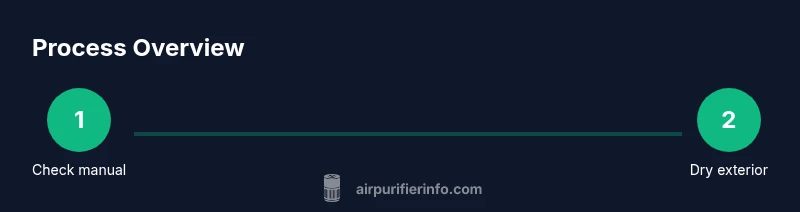
Read the manual
Open the user manual and locate the section on liquids, maintenance, and permissible cleaning methods. This clarifies whether any scent features are supported and confirms that liquids should not be introduced into the device.
Tip: Never start cleaning or handling the internals without confirming policy first. - 2
Unplug the purifier
Before touching any components, unplug the unit to avoid electric shock or accidental operation while you inspect for liquid exposure.
Tip: Wait at least 30 seconds after unplugging to ensure residual power dissipates. - 3
Inspect for liquid exposure
Check the exterior and any accessible interior compartments for signs of moisture or condensation. Do not attempt to operate if moisture is visible.
Tip: If you see moisture, wipe with a dry cloth and let it dry completely before any further action. - 4
Clean exterior surfaces
Wipe the outside with a dry or lightly damp cloth using mild soap if the manual allows it. Avoid spraying liquids near openings or vents.
Tip: Avoid harsh cleaners that could degrade plastics or coatings. - 5
Check and replace filters
If the model supports filter replacement, inspect the current filter for signs of fouling or odor. Replace following the manufacturer’s schedule.
Tip: Do not bypass a needed filter; using the purifier without proper filtration reduces efficacy. - 6
Reassemble and test
Securely reattach any components, plug in, and run the purifier on a low setting to confirm operation without unusual noises or smells.
Tip: If the unit emits odd smells or lights indicate an error, power down and consult support. - 7
Evaluate odor management
If odors persist, consider room ventilation improvements or a model upgrade with better carbon filtration rather than introducing liquids.
Tip: Document space odors and purifier performance to guide future decisions.
Questions & Answers
Can I use fabric softener in an air purifier?
No. Fabric softener is not designed for air purifiers and can damage filters and internal components. Always follow the manual for safe maintenance and odor control.
No. Fabric softener is not designed for air purifiers and can damage filters and internal parts. Always follow the manual for safe maintenance.
What happens if liquid gets into the purifier?
Liquids can cause electrical shorts, mold growth, and irreversible damage to filters. This can compromise air quality and void warranties.
Liquids can cause short circuits and damage filters, compromising air quality.
Are there safe ways to deodorize air without liquids?
Yes. Improve ventilation, use activated carbon filters, and keep surfaces clean. Use odor-control methods only if approved by the purifier’s manual.
Yes—ventilation and carbon filters can help without liquids.
Do all purifiers allow essential oils?
Not all models permit essential oils. Check the manual. If allowed, use only approved diffuser options designed for your unit.
Not all allow essential oils; check the manual and use only approved methods.
How often should I replace filters?
Follow the manufacturer’s schedule and monitor for reduced airflow or odors. Replace filters promptly when performance declines.
Follow the manual’s schedule and replace when performance drops.
What if I spill liquid near the purifier?
Unplug immediately, wipe dry, and inspect for moisture. Do not operate until completely dry and review manual for spill guidance.
Unplug, dry, and check for moisture before restarting.
Watch Video
Main Points
- Avoid pouring fabric softener into purifiers.
- Liquids can damage filters and electronics, and may void warranties.
- Use safe odor-control methods and proper maintenance instead.
- If using scents, ensure compatibility with your model.
- Regular filter replacement and cleaning sustain performance.