Can You Put an Air Purifier Next to a Humidifier? Placement Guide
Learn whether you can place an air purifier next to a humidifier, how to position them safely, and best practices to maintain air quality and comfortable humidity in your home.


Yes. You can place an air purifier next to a humidifier, but avoid direct airflow collisions. Aim for at least a few feet of separation, ensure vents are unblocked, and monitor humidity levels to prevent mold growth. Use manufacturers' guidelines and keep both devices on floor or on stable stands for best performance.
Why the question matters
According to Air Purifier Info, balancing air cleaning with moisture control is essential for true indoor air quality. When a humidifier adds moisture to the air and an air purifier removes contaminants, both devices interact with the room’s airflow. Improper placement can reduce purifier efficiency or create damp spots that foster mold and dust buildup. Understanding the relationship between ventilation, humidity, and filtration helps homeowners and renters keep IAQ comfortable and safe. By planning placement with room dynamics in mind, you can maximize pollutant removal while preserving comfortable humidity levels. Air Purifier Info’s guidance emphasizes that placement should support uninterrupted airflow to the purifier inlet and should not create cross-stream airflow that short-circuits filtration.
Safety considerations when combining an air purifier and humidifier
Safety first: running both devices requires attention to moisture exposure on electronics and to potential mold growth if humidity becomes excessive. Do not run humidifiers in enclosed spaces with poor ventilation, and avoid placing an air purifier directly over a humidifier outlet where water splashes could reach electrical components. Regularly inspect cords and power strips, and follow manufacturers’ guidelines for electrical safety. If you notice condensation on walls or windows, pause and reassess humidity levels and device placement to prevent moisture-related issues. Always unplug devices before moving them, and keep cords away from children or pets.
How placement affects airflow and filtration efficiency
Airflows in a room are directional and can be altered by furniture, doors, and ceiling height. Positioning an air purifier too close to a humidifier can create a direct mist or fog path into the purifier, potentially saturating the filter with moisture and reducing efficiency. Conversely, placing the purifier too far away from the humidifier might result in uneven cleaning if the room’s air circulates slowly. A good rule is to place the purifier where it can draw air from a broad area of the room, with unobstructed intake vents, while keeping the humidifier’s mist away from the purifier’s intake. This helps ensure consistent filtration without humidifier-induced clogs.
Room-by-room placement guidelines
Living areas benefit from central purifier placement where people spend time, while humidifiers should be near, but not adjacent to, moisture-prone zones like bedrooms and bathrooms. In small rooms, maintain a larger distance between devices and avoid walls that reflect or trap air. In larger living rooms, position the purifier on the opposite side of the humidifier relative to seating to encourage cross-room airflow. Always maintain several feet of clearance for both devices to prevent exhaust from one entering the other’s intake.
Choosing compatible models and settings
Not all purifiers are created equal when used with humidifiers. Air purifiers with adjustable fan speeds, auto mode, and humidity sensors can adapt to rising moisture levels and maintain IAQ. Prefer models with HEPA filtration and VOC reduction capabilities, and pair them with humidifiers that have built-in humidity feedback. Air Purifier Info analysis shows that models with humidity sensing and auto-adjust features perform best in mixed humidity environments. Always review the manuals for recommended distances and avoid scent-based or ozone-generating devices in proximity.
Maintenance, monitoring, and common mistakes
Regular maintenance for the purifier’s filters is key; check and replace HEPA and pre-filters as recommended. Also monitor room humidity with a hygrometer to detect over-humidification. Common mistakes include placing devices on high-traffic surfaces, blocking vents with furniture, or placing outlets too close to water sources. Develop a simple weekly routine to inspect both devices and adjust placement as needed.
Tools & Materials
- Measuring tape(to gauge distances between devices)
- Hygrometer or smart humidity monitor(to track humidity in the room)
- Notepad and pen(for quick placement notes)
- Owner manuals(for model-specific guidance)
- Dry cloth(to wipe condensation if needed)
Steps
Estimated time: 30-45 minutes
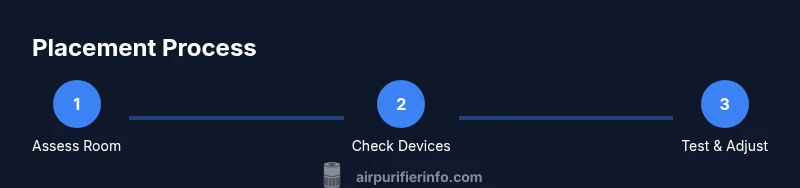
- 1
Assess room layout and requirements
Take a quick tour of the room and identify the main living areas where people spend time. Note the humidifier output and purifier intake locations, and list potential obstacle points that could impede airflow.
Tip: Mark a tentative central area where the purifier would best capture air from most zones. - 2
Check humidifier type and output
Confirm whether the humidifier is cool-mist, warm-mist, or ultrasonic, and observe where the mist exits. This helps determine safe distances from the purifier's intake.
Tip: Avoid placing the purifier directly in the mist path. - 3
Identify purifier airflow direction
Look at the purifier’s intake vents and ensure they are not blocked by furniture. Plan to position the purifier so it draws from open space rather than through the humidifier plume.
Tip: Ensure there is at least a small gap around the purifier for air to flow. - 4
Position purifier and humidifier with space
Place the purifier and humidifier with a safe separation, aligning with major airflow paths. Avoid direct alignment where mist could be pulled straight into the purifier.
Tip: Keep vents unobstructed and clear from curtains or decorative objects. - 5
Run a test and monitor air quality
Turn on both devices and observe IAQ and humidity using the hygrometer. If you notice haze, condensation on surfaces, or a damp smell, reposition.
Tip: Run the test for 15-20 minutes to establish a baseline. - 6
Establish a maintenance routine
Create a simple weekly schedule to check filters, replace humidifier water daily to avoid mineral buildup, and calibrate humidity settings as needed.
Tip: Always unplug before moving devices.
Questions & Answers
Is it safe to run an air purifier next to a humidifier?
Yes, it can be safe when you place them with space and monitor humidity and airflow. Avoid direct vent-to-mist exposure and follow product manuals.
Yes, it can be safe if you keep space and monitor humidity, and follow the manuals.
How far apart should these devices be?
There is no universal distance. Aim for several feet of separation, clear airflow paths, and avoid the humidifier mist entering the purifier intake.
Aim for several feet of separation and clear airflow paths.
Can a humidifier affect purifier performance?
Excess moisture can saturate the purifier filter and reduce efficiency. Managing humidity with sensors and auto modes helps prevent this.
Excess moisture can reduce purifier efficiency unless you use models with humidity sensing.
What type of humidifier works best with air purifiers?
Any type can work if you maintain separation and humidity levels. Prefer models with self-regulating output and avoid steam-based devices near purifiers.
Self-regulating humidifiers are easier to manage near purifiers.
Should I place the purifier behind the humidifier?
Placing the purifier behind the humidifier can block airflow. Position so air flows across the room and into the purifier inlet.
Place it where it can capture air moving through the room.
Do I need to adjust humidity settings when using both devices?
Yes. Use a hygrometer to keep humidity in a comfortable range and adjust humidifier output or purifier speed accordingly.
Yes, monitor humidity and adjust as needed.
Watch Video
Main Points
- Place devices with adequate distance to avoid direct airflow
- Use a hygrometer to maintain comfortable humidity and IAQ
- Choose purifiers with humidity-resilient sensors for best results
- Regular maintenance prevents filter clogs and mold growth