Can You Change Air Filter While Your AC is Running? Safe Steps
Discover whether you can safely replace your HVAC air filter while the AC is running. This guide covers safety, proper technique, filter selection, and maintenance to improve indoor air quality.


Yes, you can replace some return filters while the AC runs, but safety experts recommend powering down first to prevent the blower from starting unexpectedly. If you must proceed with the system on, ensure the access panel is secure and you avoid touching moving parts. For most homeowners, turning off power at the thermostat or breaker is the safer choice.
Can You Change Air Filter While the AC is Running? A Practical Answer
The short answer is: you can, in some scenarios, but safety comes first. The Air Purifier Info Team notes that the safest approach is to power down the system before you touch the filter. If you must replace while the unit is running, proceed with extreme caution, keep hands away from the blower vent, and avoid disturbing exposed wiring or fans. In many homes, turning off the thermostat and cutting power at the breaker minimizes the risk of the blower starting during the replacement. The question can you change air filter while ac runs? is often answered with a cautious yes, but only when you follow strict safety steps and manufacturer guidelines. Air Purifier Info analysis shows that safer replacements correlate with reduced dust release and lower injury risk. Remember: always prioritize personal safety and system manufacturer instructions over convenience.
How HVAC Filters Work and Why Access Time Matters
HVAC filters protect indoor air by capturing dust, pollen, and other particulates before they circulate. The filter sits in a return-air path, and its efficiency depends on the MERV rating, face velocity, and filtration area. Accessing the filter panel without compromising the housing is essential—if the panel is loose or misaligned, unfiltered air can bypass the filter, reducing performance. When you ask can you change air filter while ac is running, the most important concept is that the filter must be seated correctly with no gaps. Air Purifier Info's guidance emphasizes choosing a filter with an appropriate MERV rating for your space and equipment to maintain air quality while minimizing strain on the blower.
Safety First: Power Down and Access Points
Before touching any filter, turn the thermostat to OFF and, if possible, switch off the circuit breaker that powers the HVAC unit. This reduces the risk of the blower turning on mid-change and protects you from moving parts. If you’re dealing with a wall-return grille or a top-access panel, inspect for sharp edges and dust debris. Wearing protective gloves and using a flashlight helps you see clearly and prevents accidental cuts or contact with dusty surfaces. Never bypass safety steps; even simple changes can trigger sensor or switch warnings if power is still on.
Planning Your Change: What You Need Before You Start
Start with the basics: a filter of the correct size and MERV rating, the right orientation arrows, and a clean workspace. Check the old filter for size markings and compare with the new one. Keep a trash bag handy to contain dust and a microfiber cloth to wipe the surrounding frame. If your system uses a panel held by screws, have a screwdriver ready. If you’re unsure about panel removal, consult your unit’s manual. The goal is to minimize dust exposure and preserve seal integrity around the filter frame. The can you change air filter while ac is running question becomes about technique and safeguards—never rush a change and never force a misaligned filter.
Choosing the Right Filter for Your System
Filters come in varying sizes, thicknesses, and MERV ratings. For most homes, a 1-inch or 2-inch pleated filter with a MERV rating between 8 and 13 provides a good balance of efficiency and airflow. If you have pets or allergies, you might opt for a higher efficiency filter, but ensure your HVAC fan and duct design can handle the reduced airflow. Always verify the filter’s orientation with the arrows pointing toward the blower. If you’re unsure, refer to the owner’s manual or contact a technician. Can you change air filter while ac runs? If you do, do it with a known, compatible filter and avoid improvising with odd shapes or sizes.
Step-By-Step Care: Practical Scenarios and Tips
Different systems have different access points. In many central-air setups, the filter is in the return duct near a grille on a wall or ceiling. If the unit is running, you should ideally pause the airflow momentarily and proceed with caution, ensuring you keep hands clear of fans. After placing the new filter, check that it seats evenly and that the gasket or seal is intact. If you observe any odd noises or reduced airflow after a change, power down again and re-check the filter seat and orientation. Proper maintenance reduces stress on the blower and improves air quality in the home.
Maintenance Calendar and Troubleshooting
Routine replacement is part of a healthy indoor air quality strategy. How often you replace depends on usage, pet presence, and environmental conditions. In high-dust environments or homes with shedding pets, monthly replacement may be advisable; in calmer environments, every 3 months could suffice. Troubleshooting tips include checking for gaps around the filter frame, verifying that the filter matches the slot, and inspecting the duct return for dust buildup. If you notice persistent poor airflow after a change, consult a professional to inspect the blower, seals, and ductwork. The can you change air filter while ac is running question is best answered with a plan and safe practices, not trial-and-error attempts.
Common Mistakes to Avoid
Avoid using the wrong size filter or bypassing the return grille entirely. Don’t force a filter into a slot or use a non-pleated simple pad that offers inadequate filtration. Resist the urge to shake out dusty filters outdoors, which spreads particles into the air. If you see water leaks or signs of mold around the filter housing, stop and call a professional. Most importantly, never operate the HVAC with a missing or mis-seated filter; that can cause damage and poor indoor air quality.
Tools & Materials
- HVAC return air filter (correct size)(Check the frame size and orientation arrows; ensure compatibility with your system.)
- protective gloves(Keep hands clean and reduce skin contact with accumulated dust.)
- flashlight(Illuminate the return path and filter housing for a clear view.)
- screwdriver (if needed)(Only if your access panel is secured with screws.)
- microfiber cloth or brush(Wipe the frame and seals to remove dust before reseating the new filter.)
- trash bag or container(Contain and transport the old filter without dispersing dust.)
Steps
Estimated time: 15-25 minutes
- 1
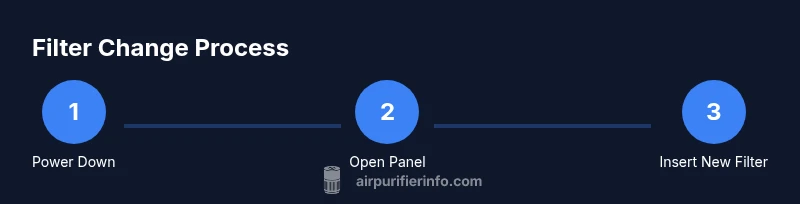
Power down the unit
Set the thermostat to OFF and, if possible, switch off the circuit breaker powering the HVAC. This prevents the blower from starting during the change and reduces the risk of injury from moving parts.
Tip: If you can’t access the breaker, at least turn the thermostat OFF and wait 60 seconds for the fan to stop before proceeding. - 2
Locate the filter access
Find the return-air filter panel, usually at the furnace or in the wall grille. Use a flashlight to inspect for screws or latches that secure the panel.
Tip: Take a quick photo of the old filter position to replicate orientation when inserting the new one. - 3
Open the access panel
Carefully remove any fasteners or open the latch to expose the filter. Do not touch exposed wiring or any metal edges beyond the filter housing.
Tip: If it’s stiff, apply a gentle wiggle rather than forcing the panel open. - 4
Remove the old filter
Slide the old filter straight out, keeping the dust contained in the bag. Note its orientation so you can insert the new one correctly.
Tip: Check for any visible signs of mold or moisture before disposal. - 5
Insert the new filter
Slide the new filter into the housing with the arrows on the filter pointing toward the blower. Confirm the filter sits flush and the seals are intact.
Tip: Do not bend or crimp the filter; a misfit can let unfiltered air bypass the system. - 6
Close panel and restore power
Re-seat the panel, secure any screws, and turn the system back ON. Briefly observe airflow through the return grille to ensure proper function.
Tip: If airflow seems weak or hissing sounds appear, power down again and recheck the filter seating.
Questions & Answers
Is it safe to replace an air filter while the AC is running?
Generally not recommended. The safest approach is to power down the system to prevent the blower from starting unexpectedly. If you choose to proceed with the unit running, follow strict safety steps and ensure you don’t touch moving parts.
It's best to turn the system off, but if you must replace the filter while it's on, do so with extreme caution and follow safety steps.
Should I turn off power at the breaker before changing the filter?
Yes. Turning off the breaker reduces the risk of the blower engaging during replacement and minimizes the chance of electrical mishaps.
Turn off the breaker before you start to change the filter.
Can I replace a filter without removing the front panel?
Most systems require accessing the filter by removing a panel or grille. If you cannot access the filter, consult the manual or contact a professional.
Usually you need to access the filter through a panel; check your manual.
What size filter do I need for my HVAC system?
Check the old filter for size markings or measure the opening. Use the size printed on the frame, not just the cardboard packaging.
Look at the current filter for its size, or measure the slot if needed.
How often should I replace an air filter?
In general, replace every one to three months depending on usage, pets, and environmental conditions. More frequent changes may be needed in dusty homes.
Most homes do every one to three months; adjust for pets and dust.
What signs indicate a dirty filter
Visible dirt, reduced airflow, and higher energy use can indicate a clogged filter. If airflow is weak, inspect and replace as needed.
Look for reduced airflow and visible dirt to decide on replacement.
Watch Video
Main Points
- Turn off power before changing the filter whenever possible.
- Use the correct filter size and orientation for optimal performance.
- Check for secure seating to avoid air bypass and reduced efficiency.
- Replace filters regularly to improve indoor air quality.
- Consult manufacturer guidance for your specific system.