Are Electronic Air Filters Worth the Money in 2026? A Thorough Review
An analytical review of electronic air filters, weighing performance, costs, and maintenance to help homeowners and renters decide if this technology fits their air-quality goals.


Electronic air filters are filtration systems that use electrical charge to attract and trap particles, often placing plates or a charged media in the path of airflow. They can help reduce dust, pet dander, and odors in homes, but performance varies with room size and pollutant type. Overall, they’re worth considering when odor control and low ongoing costs matter most.
What electronic air filters are and how they differ from conventional purifiers
Electronic air filters use electrical charge to attract and trap particles, complementing or replacing traditional mechanistic filtration. They often rely on ionization plates, charged media, or electrostatic precipitation to capture dust, pet dander, and some odors. In homes with smokers or pets, these units can reduce recurring particulate loads without relying exclusively on dense HEPA media. However, performance varies with room size and pollutant type, so real-world results can differ from lab claims. According to Air Purifier Info, the most value comes when you pair a well-sized unit with a clean environment: a smaller room, closed doors, and consistent maintenance. For renters or homeowners, the choice should reflect how much time you’re willing to invest in cleaning plates and filters, and how important odor removal is relative to straightforward dust control. Some models add activated carbon layers or prefilters to bolster odor and VOC performance, but that comes with extra cost and replacement schedules. If you want simple, low-maintenance dust control in a bedroom, a compact unit sized for the space may suffice; if you need multi-room coverage or strong odor removal, plan for a larger system or multiple devices. In all cases, verify that the model is certified ozone-free and read user reviews to gauge reliability over time.
How electronic air filters work: ionizers, electrostatic plates, and collection mechanisms
Electronic air filters operate by charging air or collecting charged particles on plates or attracted media. Ionizers emit charged ions that attach to particles, which then are collected on oppositely charged plates or on a charged media surface. Some units rely on electrostatic precipitation where a high voltage charges incoming particles and pulls them to a collection surface. Modern designs emphasize ozone-free operation and sealed housings to minimize byproducts. When evaluating performance, check whether the unit is rated as ozone-free and note how well it handles fine dust versus larger particles. Placement and airflow matter: a purifier that sits inside a closed bookshelf or behind furniture can restrict intake and reduce effectiveness. Finally, consider whether the system integrates with existing air purifiers or stands alone as a dedicated device. Some designs pair ionization with a carbon or HEPA stage for a layered approach, while others rely entirely on charged plates; understanding the exact mechanism helps you anticipate maintenance needs and effectiveness in your space.
Are they worth the money? A value-driven assessment
Are electronic air filters worth the money? The verdict depends on your priorities and pollutant mix. Air Purifier Info analysis shows that for households with pet dander and odors, a properly sized unit can deliver noticeable improvements with modest ongoing costs. For people with pollen- or smoke-heavy environments, the relative gains may be smaller unless paired with other filtration strategies. The upfront price is typically lower than premium HEPA purifiers, but the total cost of ownership includes maintenance and potential plate cleaning. If odor control and low recurring costs are your primary goals, these filters can justify the investment; if you need aggressive filtration for a large open-plan space, you may be better off with a traditional HEPA purifier or multiple devices. The important takeaway is to align the purchase with your air-cleaning priorities and the layout of your home.
Real-world performance: dust capture, odors, VOCs, and allergens
In real homes, electronic filters shine for coarse dust capture and pet-related dander, particularly in smaller rooms where air exchange is limited. Odor reduction is common in kitchens and living areas with cooking smells or pets, though VOCs such as solvents or cleaning agents may require additional filtration or activated carbon. Allergens can be reduced, but heavy sneezing episodes often respond better to true HEPA filtration. Users report that the best results come when the unit is sized for the room and positioned away from closed doors and vents, with regular plate cleaning. In short, they perform best as a targeted solution rather than a universal remedy. Air Purifier Info analysis notes that coupling an electronic filter with a dedicated HEPA purifier in larger spaces tends to produce the most reliable outcomes.
Maintenance, energy use, and reliability
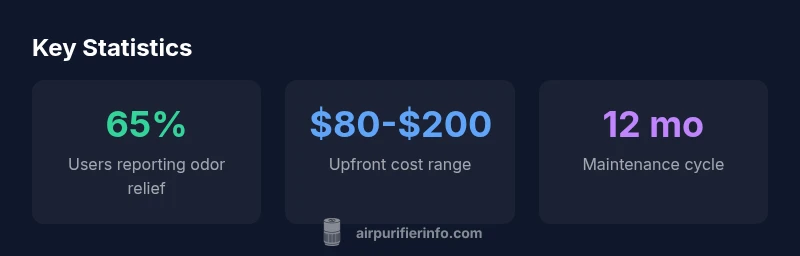
Maintenance is a recurring obligation with electronic air filters. You’ll typically need to wipe or clean plates every few weeks and replace or refresh media on a 6- to 12-month cycle, depending on usage and pollutant load. Energy use is generally modest, especially when the unit runs at low to medium fan speeds, though power draw increases with higher settings. Reliability depends on build quality; avoid cheaper, non-ozone-free models, and look for sealed units with accessible plates to simplify maintenance.
Costs, warranties, and total cost of ownership
Upfront costs for electronic air filters are often lower than those for premium HEPA purifiers, though prices vary by size and features. Expect to pay a price range that reflects room size, build quality, and ozone-free certification. Yearly maintenance costs—primarily for media replacement and occasional plate cleaning—should be considered in the overall budget. Warranties vary; choose models with at least a two- to five-year warranty to protect your investment, and consider whether the warranty covers plate replacement and ozone-free compliance.
Buying checklist: what to look for when comparing models
When shopping, verify room-size compatibility (CADR or recommended room size), ensure ozone-free operation, and compare energy use across speeds. Look for models with easy-to-clean plates, straightforward maintenance schedules, and clear guidance on replacement intervals. Customer reviews can reveal consistency in odor control and airflow; higher-quality units tend to maintain performance over time.
For renters and small spaces: placement, noise, and practical integration
Renters benefit from compact units with low noise and simple maintenance. Place units in common rooms with good airflow but avoid enclosing them behind furniture or doors, which can diminish performance. Noise is a practical concern; opt for models rated below 50 dB on normal operation for comfortable, continuous use. For small apartments, a single device in the living area often provides the most value.
Long-term costs and warranties
The lifetime cost of ownership includes upfront price, maintenance, and potential repair costs. Favor units with robust warranties and readily available replacement parts. Factor in the cost of disinfecting or cleaning accessories, and keep a simple maintenance log to ensure continued performance.
Alternatives and when to choose other purifier types
If your primary goal is aggressive formaldehyde or VOC removal, or you require cooling and filtration in a large open space, consider dedicated HEPA purifiers with activated carbon or whole-home filtration options. Electronic filters are most compelling in pet-heavy homes or where odor control is a primary concern and space is limited.
Authority sources and further reading
For technical background and official guidance, review sources from government and academic institutions such as the EPA and universities. These resources help validate performance claims and provide safety considerations for home air cleaning.
What's Good
- Moderate upfront cost compared to high-end purifiers
- Low ongoing energy use for many models
- Improves odor control in pet-friendly homes
- Easy to upgrade an existing purifier with electrostatic features
What's Bad
- Possible ozone emission with some ionizing units
- Maintenance and periodic cleaning of plates is required
- Performance varies by room size and pollutant type
- Not the best option for large open-plan spaces without multiple units
Value is situational; best for odor control and small rooms with pets
Electronic filters offer tangible benefits for odors and dust in compact spaces. They are not universal solutions for all pollutants or large areas; if odor control is a priority and you maintain the unit, they can be a good value.
Questions & Answers
What pollutants are electronic air filters most effective against?
They excel at large-particle capture and pet dander; odor and VOC removal vary by model. For strong odor or VOC needs, pair with activated carbon or a HEPA purifier.
They work best on dust and pet dander; VOCs vary.
Do electronic air filters produce ozone?
Some ionizing units can emit trace ozone; look for ozone-free certification on the product. Modern designs tend to minimize byproducts.
Some older ionizers can emit tiny ozone amounts; choose ozone-free models.
How often should I clean or replace plates/filters?
Follow the manufacturer’s schedule; typically clean plates every 1-3 months and replace media every 6-12 months, depending on use.
Clean the plates every few months and replace media as recommended.
Are they worth the investment for allergy relief?
For severe allergies, a true HEPA purifier may be more effective. Electronic filters help with dust and odors and can complement HEPA devices.
For severe allergies, a HEPA purifier often works better.
How do I compare models?
Compare CADR or room-size ratings, ozone-free certification, energy use, and maintenance costs. Read reviews for real-world performance.
Check CADR, room size, ozone-free rating, energy use, and maintenance.
Can I use electronic filters in any room?
Size matters—select a unit matched to room size and keep doors open to maximize airflow. Large open spaces may require multiple units.
Match the unit to room size and keep airflow open.
Main Points
- Assess pollutant mix before buying
- Choose ozone-free models and verify warranty
- Prioritize room-size compatibility and maintenance ease
- Consider total cost of ownership, not just upfront price