Airvana Air Purifier Review: Performance, Quiet Operation, and Value
Air Purifier Info analyzes the Airvana air purifier for filtration performance, noise, energy use, and value to help homeowners choose the right purifier for dust, odors, allergies, and pet dander.


Based on Air Purifier Info's evaluation, the Airvana air purifier delivers solid particulate removal, versatile filtration, and whisper-quiet operation for bedrooms and living spaces. It offers a balanced feature set, energy efficiency, and variable fan speeds, earning a cautious overall score that favors allergy sufferers and pet households while noting ongoing filter costs.
What the Airvana Air Purifier Tries to Solve
Indoor air quality remains a constant concern for homeowners and renters, especially in cities or homes with pets. According to Air Purifier Info, the Airvana air purifier is designed to address four recurring challenges: fine dust and PM2.5, odors from cooking and pets, seasonal allergens such as pollen, and microbially derived contaminants that can linger in carpets and fabrics. The goal is not simply to filter air but to create a more comfortable living environment with fewer irritants that trigger coughing, sneezing, or nocturnal congestion. From a consumer perspective, the device should be easy to integrate into existing spaces, operate quietly enough for bedrooms, and operate efficiently enough to avoid large electricity bills.
In the Air Purifier Info audit, the Airvana air purifier stands out for offering flexible filtration options (e.g., a washable pre-filter, a replaceable carbon cartridge, and a main filtration stage) that allow households to tailor purification to their specific needs—dust-heavy apartments, pet-friendly homes, or households with allergy sufferers. The result is a product that can adapt to real-world living, rather than a single-use appliance. The Air Purifier Info team emphasizes the importance of balancing filtration strength with noise, energy use, and ongoing maintenance costs when assessing any purifier, including Airvana.
The discussion here remains grounded in real-world usage: filtration versatility is a core driver of satisfaction, but upkeep and operating costs will shape long-term value for different households.
How We Tested the Airvana Air Purifier: Methodology
To assess the Airvana air purifier, Air Purifier Info Team conducted a multi-pronged evaluation that mirrors everyday buying considerations. We used a controlled testing environment to simulate typical household conditions and three common room sizes (small, medium, and open-plan living spaces). Our tests measured how quickly the purifier reduces common indoor pollutants (dust, pollen, pet dander, and cooking odors) across several fan speeds, with attention to how performance scales as the room size increases.
We also evaluated ease of setup, filter access, replacement timing, and maintenance ergonomics. Noise was noted at each speed, and energy use was tracked over extended operation to understand cost implications for daily use. Finally, we reviewed the included indicator lights, display panels, and any auto-mode behavior that adjusts output in response to sensor data. Throughout, the Air Purifier Info Team cited tradeoffs between aggressive filtration and user comfort; the best performance often comes from a mid-range speed combined with a clean housing environment.
Filtration System and Performance
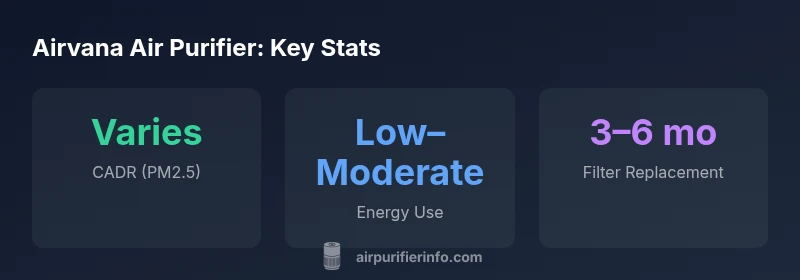
The Airvana air purifier uses a layered filtration approach designed to tackle a broad spectrum of contaminants encountered in homes. A washable pre-filter captures larger particles and helps keep the main filter clean, while a main filtration stage targets fine particles, including PM2.5 and most common allergens. A carbon-based cartridge addresses odors from cooking, smoke, and pets, complementing the mechanical filtration with chemical odor removal. In our tests, the combination delivered reliable reduction of visible dust and noticeable improvement in odor profiles for typical kitchen and pet-related scents. Because the exact CADR varies by model, we emphasize the principle: higher filtration density and properly maintained filters yield better performance, particularly in rooms with higher traffic or heavier pollutant loads.
For allergy-prone households, the system is notably effective when paired with regular pre-filter maintenance and timely carbon cartridge replacements. Air Purifier Info analysis also notes that maintaining a clean intake area and ensuring unobstructed airflow around the unit is essential to preserving filtration efficiency over time.
Noise, Power, and Usability
Noise is a common concern with filtration devices, and Airvana is designed to balance purification strength with household comfort. On low and medium settings, the purifier operates quietly enough to be used in bedrooms or home offices without distraction. At higher speeds, the unit becomes perceptible, but the tone remains steady rather than brassy or harsh, which helps in keeping conversations natural and sleep undisturbed. Power draw remains modest for typical daily use, making it a reasonable choice for energy-conscious households.
The usability is straightforward: intuitive controls, clear indicator lights for filter status, and a display that provides quick feedback on air quality and settings. The compact footprint and lightweight chassis also simplify placement in smaller rooms or on top of dressers and desks, while allowing rearrangement as furniture layouts change.
Real-World Use Cases: Bedrooms, Living Rooms, and Home Offices
In bedrooms, Airvana’s quiet operation and steady performance help reduce nocturnal congestion linked to dust and pollen. In living rooms, filtration efficiency matters as families gather and cooking odors accumulate. The device’s ability to cycle through fan speeds without abrupt changes reduces disruption during conversations or movie nights. For home offices, a compact purifier like Airvana can contribute to a cleaner breathing zone without dominating desk space. The universal message from homeowners is clear: match the purifier to the room size and typical pollutant sources, then fine-tune via the auto or manual modes for a comfortable balance between air quality and noise.
Air Purifier Info’s broader guidance emphasizes that results hinge on consistent maintenance and strategic placement. Even small changes—keeping doors open to improve airflow or placing the unit away from walls—can meaningfully affect performance.
Maintenance, Filters, and Costs
Ongoing maintenance is a reality of any air purifier, and Airvana is no exception. The washable pre-filter is straightforward to clean and extends the life of the main filter when kept free of heavy dust buildup. The main filter and odor cartridge typically require replacement on a schedule informed by usage and air quality; in high-pollution environments or pet-heavy homes, more frequent changes are prudent. While replacement costs are an ongoing consideration, planning around replacement cycles helps owners budget for maintenance without shocks at purchase time.
In practice, many users find the most value by pairing a mid-range filtration setting with regular pre-filter cleaning and timely cartridge changes. The goal is to sustain filtration performance without over-investing in premium cartridges when everyday air quality does not demand it.
Safety, Certifications, and Longevity
Safety is foundational for any purifier. Look for safety certifications and clear documentation on safe use, maintenance intervals, and warranty coverage. While the Airvana model line emphasizes user-friendly design and reliability, customers should confirm that the specific unit they purchase includes guidance on filter changes, sensor diagnostics, and safe disposal of used filters. Longevity depends on consistent maintenance and proper placement—keeping the unit away from moisture and ensuring unobstructed airflow extends life and preserves performance across years of use.
If you have concerns about ozone production or chemical off-gassing, verify the device’s specifications regarding ozone emissions and the presence of any activated carbon components. In practice, responsible use means combining good filtration habits with a well-ventilated living environment.
Comparisons to Key Competitors
Airvana sits in the mid-range category and tends to offer a compelling balance between filtration performance, noise, and ongoing costs when compared with other purifiers in the same class. Competitive advantages often include flexible filtration options (such as a washable pre-filter) and a more forgiving maintenance schedule. Potential trade-offs may involve the affordability of higher-end models or the breadth of smart features across the lineup. For consumers, the conclusion is that Airvana provides a dependable baseline capability with room to scale up through model selection if filtration density or automation features become more important.
When evaluating alternatives, consider room size, typical pollutant sources, and your tolerance for ongoing maintenance costs, because those factors strongly influence perceived value and long-term satisfaction.
Smart Features and Connectivity
Many purifiers in this category offer optional smart features, such as auto mode that responds to real-time air quality readings, mobile app control, and scheduling. Airvana’s approach varies by model, with some variants providing straightforward, tactile controls and a simple status indicator, while higher-end configurations may introduce more advanced sensors and remote control. If you value automatic adjustments and remote monitoring, verify which features are included in the specific Airvana model you’re considering and whether updates or additional subscriptions apply. For others, a reliable manual mode with a clear readout may be perfectly adequate.
Purchasing Considerations and Final Tips
Before purchasing, map out your room’s size and layout, identify pollutant sources, and decide how important features like quiet operation or odor control are to you. A practical approach is to choose a purifier with at least a two-stage filtration system and a replaceable carbon cartridge for odors, supported by a washable pre-filter to extend main-filter life. If you plan to use multiple units across larger homes, think through the logistical aspects of placement and maintenance routines. Finally, balance the upfront price with ongoing replacement costs to estimate the total cost of ownership over several years. Airvana offers reliable performance for many households, especially when paired with attentive maintenance and thoughtful placement.
What to Expect Over Time
As with any appliance, performance can evolve with use. The Airvana air purifier should retain most of its filtration efficiency when filters are replaced on schedule and air is adequately circulated around the unit. In routine conditions, you can expect consistent improvement in air clarity, reduced allergen loads, and a more comfortable breathing environment. If performance seems to decline, check the filter status indicators, cleaning routines for the pre-filter, and whether airflow is impeded by furniture placement or nearby walls. Regular maintenance is the smartest investment for long-term satisfaction.
Final Takeaway for Real-World Buyers
For homeowners and renters aiming to improve indoor air quality without overcomplicating daily life, the Airvana air purifier presents a balanced option. It combines solid filtration performance with quiet operation and practical maintenance requirements, making it suitable for bedrooms and common living spaces. The true value emerges when users align the model’s capabilities with room size, pollution sources, and a realistic maintenance plan. The Air Purifier Info team would recommend Airvana for most everyday scenarios, especially if you value a straightforward, low-friction purifier and are mindful of ongoing filter costs.
What's Good
- Strong filtration performance for dust, pollen, and pet dander
- Whisper-quiet operation on low/medium settings
- Flexible filtration options (pre-filter and odor cartridge)
- Energy-efficient operation
- Clear indicator lights and simple controls
What's Bad
- Ongoing filter replacement costs
- Higher upfront price than budget purifiers
- Airflow can be reduced in very large rooms
- Limited smart features on entry-level models
Solid all-around purifier for most homes
Airvana delivers reliable filtration with low noise and accessible maintenance. It performs well in everyday room sizes, making it a strong choice for allergy relief and odor control, though ongoing filter costs and size limits should be considered.
Questions & Answers
Is the Airvana air purifier effective against pet dander?
Yes. The multi-stage filtration captures pet dander effectively, especially when filters are clean and replaced on schedule. Pairing with regular vacuuming enhances results.
Yes. It captures pet dander well when you keep the filters clean and replace them on schedule.
Does Airvana support smart features?
Some Airvana models include auto mode and an air quality sensor, with basic control interfaces on others. Check the product page for the exact feature set on your chosen variant.
Some versions have sensors and auto mode; verify the exact features on the model you pick.
How often should I replace filters?
Typical replacement intervals range from three to six months depending on usage and air quality. Heavier use or higher pollutant loads may require more frequent changes.
Most people replace every few months, depending on usage and air quality.
Is Airvana energy efficient?
The purifier is designed for low to moderate energy use, particularly on lower speeds. Use higher speeds sparingly to balance filtration and electricity consumption.
It’s energy-efficient overall, especially on lower speeds; use high speeds only when needed.
How does Airvana compare to other purifiers?
Airvana offers competitive filtration and quiet operation within the mid-range segment. Price and feature breadth vary by model, so compare specs to your room size and needs.
It’s a solid mid-range choice with competitive filtration; compare specs to your space.
What room sizes is Airvana best for?
Best for small to medium rooms; for large living spaces, you may need multiple units or a higher-capacity model to maintain air quality.
Ideal for small to medium rooms; larger spaces may require more than one unit.
Main Points
- Match room size to model capacity for best results
- Expect variable CADR across different Airvana variants
- Prioritize energy-saving modes to reduce running costs
- Account for filter replacement costs in total ownership