Air Purifier or Humidifier for Stuffy Nose: Which Helps?
Explore when to use an air purifier or humidifier for stuffy nose, how they work, safety tips, and practical setups to improve indoor air quality with evidence-based guidance.


If your stuffy nose stems from dry indoor air, a humidifier can ease congestion by adding humidity. If allergens or dust trigger nasal blockage, an air purifier with a HEPA filter reduces irritants. For many homes, a mixed approach or a hybrid unit offers the best outcome; avoid over-humidifying to prevent mold.
How a Humidifier Can Help Stuffy Nose
When considering relief for nasal congestion, many homeowners ask if they should use an air purifier or humidifier for stuffy nose. The core idea is simple: humidifiers add moisture to dry air, which can soothe irritated nasal passages and thin mucus, while air purifiers remove irritants from the air that can inflame the nasal lining. Aim to keep indoor humidity in a comfortable range—typically around 40–60%. In colder months, windows closed and heaters run can dry the air, making a humidifier especially beneficial for nightly use. There are several humidifier types to choose from: cool-mist ultrasonics, evaporative models, and warm-mist devices. Each has tradeoffs in terms of noise, energy use, and ease of cleaning. A key caution is mineral dust from hard water; to minimize white dust and bacterial growth, use distilled water and clean your unit regularly. The keyword to keep in mind is the balance between moisture and cleanliness when selecting an approach for your space, especially if you’re evaluating the need for an air purifier or humidifier for stuffy nose in a home with family members who suffer from allergies or asthma.
Practical takeaways:
- Humidifiers are most effective when dryness is the main trigger for congestion.
- Use clean, distilled water to reduce mineral buildup.
- Regular cleaning prevents mold and bacteria that could worsen symptoms.
How an Air Purifier Helps Stuffy Nose
Air purifiers work by drawing room air through filters that capture particles and, in many cases, VOCs. The most important component for nasal comfort is a true HEPA filter, which can capture a high percentage of fine particles like pollen, dust, pet dander, and smoke-related particulates. In spaces with significant allergen exposure or household dust, an air purifier can reduce the irritants that aggravate the nasal passages and contribute to congestion. Some purifiers include activated carbon or other media to absorb odors and VOCs, which can also help with nasal irritants in kitchens or living rooms near cleaning products. While purifiers do not add moisture to the air, they can dramatically improve perceived air quality by reducing irritants that trigger sniffles. When evaluating models, look for a true HEPA core, an adequate CADR for your room size, and easy-to-clean components. The right device for your space should align with your goals for reducing congestion related to allergens, dust, and odors, rather than simply chasing a fashionable gadget. The choice between humidification and purification should be guided by symptom drivers and room conditions.
Key considerations:
- A HEPA-filtered purifier reduces irritants that can cause nasal congestion.
- Activated carbon helps with odors and some VOCs.
- Filter maintenance and CADR ratings matter for long-term effectiveness.
Distinguishing Symptoms: When to Use Each Device
A major nuance is recognizing the root cause of your stuffy nose. If symptoms surface primarily in dry indoor air—especially after turning on a heater or during winter—humidification is often the logical response. Conversely, if congestion worsens with exposure to pollen, pet dander, or dust, an air purifier can be more effective by removing the irritants from the air. In homes with both dryness and particulate irritants, a complementary approach may yield the best results. For example, running a humidifier in bedrooms at night while using a purifier in living or dining areas during the day can help balance comfort and air quality. The goal is not simply to pick one device but to address the dominant drivers of congestion while avoiding unintended consequences, such as mold growth from over-humidification or over-cleaned air that can leave you feeling dry.
Practical guidance:
- Track humidity with a hygrometer to stay within 40–60% RH.
- Identify rooms with high allergen exposure and consider targeted purification there.
- Use both devices in a phased approach if symptoms are persistent across different triggers.
Safe Humidification: Humidifier Types and Best Practices
Humidifiers come in several flavors, and choosing the right type is crucial for safe and effective use. Cool-mist models (including ultrasonic and evaporative) are common for bedroom use, while warm-mist devices can provide quick relief but carry a higher risk of burns and demand more careful cleaning. Regardless of type, mineral buildup from tap water can spread fine particles into the air; therefore, consider using distilled water and performing routine cleaning per the manufacturer’s directions. Empty and refill tanks daily, and let devices dry when not in use to prevent microbial growth. If you have allergies or asthma, discuss with a healthcare provider whether humidification should be part of your plan, especially for children or elderly individuals who may be more sensitive to humid air. The objective is to enhance nasal comfort without creating a damp environment conducive to mold.
Safety tips:
- Use distilled water to minimize mineral dust.
- Clean and dry components regularly.
- Avoid over-humidification; use a hygrometer to monitor humidity levels.
Filtration Power: Air Purifier Details to Look For
Choosing an air purifier requires careful attention to filtration and overall air-cleaning performance. The most important specification is a true HEPA filter, capable of capturing at least 99.97% of particles as small as 0.3 microns. CADR (clean air delivery rate) is a practical measure of how quickly the purifier can clean the air, and you should match it to your room size. A higher CADR isn’t always better if the unit is loud or expensive to operate; consider ACH (air changes per hour) targets for your space, especially bedrooms where quiet operation matters. Look for models with sealed filter compartments to prevent bypass, and verify filter replacement schedules and costs. Some purifiers also include activated carbon to reduce odors and VOCs, which can contribute to nasal irritation. Maintenance costs add up over time, so factor in the price of replacements alongside purchase price. Overall, the right purifier reduces irritants that contribute to congestion while maintaining a comfortable noise level and energy use.
What to verify:
- True HEPA filter and sealed housing
- CADR appropriate for room size
- Optional carbon filter for odors/VOC control
- Manageable filter replacement costs
Hybrid Solutions: Using Both in Your Home
For households facing multiple triggers of congestion—dry air and airborne irritants—a hybrid solution or coordinated use of both devices often makes sense. In winter, run the humidifier in sleeping areas to ease dryness, while maintaining a purifier in common living spaces to curb dust, pollen, and pet dander. Ensure that humidity remains within the 40–60% range to prevent mold growth. In larger homes, you might segment usage by zone, with purifiers in rooms with high irritants and humidifiers where dryness is most noticeable. If you opt for a single device with both capabilities, confirm safe operation and water management to avoid conditioning the air with impurities. Be mindful of energy use and cleaning needs when planning a combined approach. This balanced strategy addresses both dryness and irritants that can contribute to nasal congestion.
Implementation tips:
- Use a hygrometer to maintain target humidity.
- Place purifiers away from walls and at breathing height for effective filtration.
- Schedule regular maintenance checks to prevent microbial growth.
Room-by-Room Setup: Where to Place Devices
The effectiveness of humidifiers and purifiers is highly sensitive to placement. Place humidifiers a reasonable distance from the bed to minimize direct exposure to mist, and avoid placing them near walls or furniture where condensation can accumulate. Purifiers should be positioned to optimize airflow; typically, place them in central living areas or rooms where you spend the most time, with outlets unobstructed. In smaller apartments, you may consider a compact purifier in the bedroom and a larger unit in the living area during peak seasons. If pets or smokers are present, targeted purification in those zones can significantly reduce irritants. The key is to maintain even air movement, avoid creating stagnant pockets, and monitor humidity to prevent mold while improving nasal comfort.
Placement guidelines:
- Keep purifiers off the floor if possible to avoid disturbance by pets.
- Avoid corner placements that restrict airflow.
- Use one purifier per large room or treat smaller rooms with portable units.
Maintenance Tips to Keep Devices Working
Regular maintenance is essential for both humidifiers and air purifiers to remain effective and safe. Clean humidifier tanks daily and perform deeper cleanings weekly to prevent mold growth. Replace water frequently and use distilled water if possible. For purifiers, replace filters according to the manufacturer’s schedule and avoid running units with expired filters. A quick annual inspection of seals and hoses helps prevent leaks and inefficiencies. Document a simple rotation schedule so each device receives timely maintenance. This discipline ensures the devices operate as intended, which is particularly important for households dealing with allergies, asthma, or chronic nasal congestion. A well-maintained system reduces the risk of secondary problems such as mold in humidifiers and reduced filtration efficiency in purifiers.
Maintenance checklist:
- Daily rinse and dry humidifier components
- Weekly deep clean and mineral-free water
- Regular filter checks and replacements
- Periodic checks for air-drying after use
Choosing Based on Room Size: CADR, ACH, and Coverage
Room size is a critical determinant of device selection. For purifiers, CADR ratings must align with the room area to ensure adequate air cleaning. A common rule is to select a purifier with a CADR that can deliver multiple air changes per hour (ACH) in the intended space. For humidifiers, the key is to measure the room's volume and ensure the device can bring the humidity to target levels within a reasonable time. Larger rooms may require multiple units or higher-capacity devices. When evaluating options, consider factors including energy efficiency, noise level, and maintenance cost. By mathematically aligning CADR and humidity targets with room size, you can design a balanced system that minimizes nasal congestion due to both dry air and irritants.
Practical tip:
- Use a hygrometer and a simple room-area calculation to determine appropriate device specifications.
Budgeting and Cost of Ownership
Cost considerations go beyond the upfront price. Humidifiers typically range in a mid-to-low budget tier, with additional costs tied to water use and cleaning supplies. Air purifiers vary widely in price, reflecting CADR, filter type, and extra features like smart controls. Ongoing costs include replacement filters and occasional parts. In terms of value, purifiers that combine HEPA filtration with carbon filtration offer a broad approach to reducing nasal irritants and improving air quality, while humidifiers deliver relief from dryness that can cause congestion. For many households, a phased approach—starting with a purifier for central rooms and a humidity-control option for sleeping spaces—offers a practical balance between cost and benefit. Always compare energy use and maintenance requirements to gauge long-term value.
Real-World Scenarios: Case Studies (Hypothetical)
Case A: A family with a child who experiences morning congestion during dry winter air. A humidifier in the child’s bedroom reduces dryness-related symptoms, while a compact purifier in the living room minimizes exposure to pet dander during peak hours. Over weeks, nasal comfort improves in both spaces, with humidity kept at a safe level.
Case B: An allergy-prone household with high pollen seasons. An air purifier in the living room and a dedicated purifier in the bedroom filter pollen and dust, improving nasal comfort and reducing nighttime congestion. The humidifier is used sparingly in winter to prevent over-humidification. These combined actions illustrate a practical approach to managing stuffy nose caused by multiple triggers.
Critical Safety and Cleaning Checklist
- Maintain humidity between 40–60% to avoid mold growth.
- Clean humidifier tanks daily; use distilled water when possible.
- Replace purifier filters as recommended by the manufacturer.
- Avoid using high humidity with moisture-loving organisms or in rooms with poor ventilation.
- Regularly inspect for signs of mold or odor and address promptly.
- Keep devices away from direct sources of heat and open flames.
Quick Reference: Side-by-Side Tips for Everyday Use
- Dry air? Turn on humidifier in bedrooms.
- High particulate? Run purifier in living spaces.
- Combine both with careful humidity control for best results.
- Monitor humidity and air quality to prevent overreaction to symptoms.
- Maintain a clean, well-ventilated environment to support overall respiratory comfort.
Comparison
| Feature | Humidifier | Air Purifier |
|---|---|---|
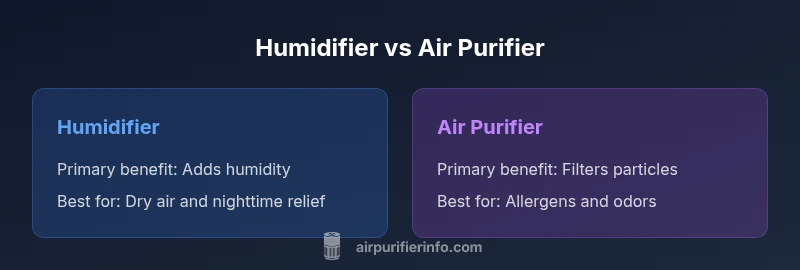
| Primary benefit | Adds humidity to air to ease dryness | Filters particles and odors to reduce irritants |
| Best use case | Dry-air congestion, nighttime relief in winter | Allergens, dust, pollen, pet dander, smoke odors |
| Maintenance & upkeep | Daily tank cleaning; mineral dust risk reduced with distilled water | Regular filter replacements; CADR/ACH considerations |
| Cost range | $30–$120 (basic models); higher for specialty units | $80–$500+ (basic to advanced with HEPA and features) |
| Potential risks | Over-humidification can promote mold; need humidity monitoring | Improper filtration or filter neglect reduces effectiveness |
What's Good
- Addresses root dryness in addition to air quality
- Reduces nasal irritation from dust and allergens
- Provides targeted relief in specific rooms
- Helps improve overall comfort and quality of sleep
What's Bad
- Humidifiers can grow mold if not cleaned regularly
- Over-humidification risks and mineral dust without distilled water
- Purifiers require ongoing filter purchases
- Noise or energy use in some models
Air purifier generally offers stronger relief for allergic congestion; humidifier excels when dryness is the primary trigger
If congestion is driven by allergens or dust, prioritize a purifier. If nasal passages are dry, a humidifier helps. For mixed symptoms, a hybrid approach or phased use in different rooms provides the best balance of relief and cost.
Questions & Answers
Should I buy a humidifier or air purifier first?
Start with the device that targets your primary symptom. If dryness is the main issue, a humidifier can provide relief. If nasal congestion is driven by allergens or particles, an air purifier offers more benefit. In many homes, a combination or staged approach yields the best overall relief.
Begin with the device that targets your main problem—dry air or airborne irritants—and add the other as needed.
Can using both devices cause humidity levels to get too high?
Yes, using both can raise ambient humidity. Monitor with a hygrometer and keep humidity within 40–60%. Adjust usage so humidity stays comfortable and minimizes mold risk.
Yes, monitor humidity and keep it between 40 and 60 percent to avoid mold.
What features matter most in an air purifier for stuffy nose?
Prioritize a true HEPA filter, adequate CADR for your room size, and a sealed housing. Consider an activated carbon filter for odors and VOCs, along with low noise operation for bedrooms.
Look for true HEPA, good CADR for your room, and low noise, plus odor control filters if odors bother you.
Are there health risks associated with humidifiers?
Risks include mold growth and bacteria in poorly cleaned tanks. Use distilled water, clean daily, and dry components when not in use. Avoid placing humidifiers where water can pool near sleeping areas.
The main risks are mold and bacteria; keep it clean and dry when not in use.
How should I place devices in a small apartment?
Place purifiers to optimize air flow in central areas and humidifiers in bedrooms or dry rooms. Avoid corners and ensure devices aren’t blocked by furniture. Use a hygrometer to fine-tune placement and humidity.
Put purifiers in living spaces and humidifiers in bedrooms, keeping airflow clear.
Can a single device do both humidification and filtration?
Some models combine humidification and filtration, but they are less common and can be more expensive. If you choose one, verify both capabilities and safety features, and manage humidity with an external hygrometer.
There are few dual-function devices; if you choose one, verify capabilities and humidity control.
Main Points
- Assess whether dryness or irritants drive congestion
- Prioritize true HEPA filtration for nasal comfort
- Monitor humidity to avoid mold and over-humidification
- Consider staged use or a hybrid setup for mixed symptoms
- Maintain devices regularly to sustain performance