Air Purifier for Cat Sneezing: A Complete How-To Guide
Learn how to reduce cat sneezing with the right air purifier. This guide covers filters, placement, maintenance, and pet-friendly considerations for cleaner indoor air.


An air purifier for cat sneezing is a device that filters the air to remove irritants like dust, dander, pollen, and odors that trigger sneezing in cats and people. For best results, prioritize a true HEPA filter combined with activated carbon, adequate CADR for your room size, and a pet-friendly design. Run it in rooms where your cat spends time and keep filters clean. According to Air Purifier Info, choosing a purifier with sealed housing and easy filter access helps ensure consistent performance in pet households.
Why Cat Sneezing Happens and How Air Purifiers Help
Cats sneeze for several reasons: seasonal allergies (like pollen), indoor irritants (dust, litter dust, dander), dry air, and occasionally infections. In homes with pets, repeated sneezing often signals airborne irritants rather than a serious illness, but persistent symptoms deserve a vet check. Air purifiers can help by reducing the concentration of airborne particles your cat is likely to encounter. A purifier with a true HEPA filter captures most microscopic particles, including cat dander and dust, while activated carbon adsorbs odors and VOCs produced by litter boxes, cleaning products, and cooking. This dual approach can lower the irritant load in the room, which may translate into fewer sneezes and calmer respiratory symptoms for both you and your cat. It’s important to note that purifiers are not a medical treatment; they’re a supportive tool that complements regular cleaning, litter box management, and pet grooming. For households with multiple rooms, consider one purifier per larger living area or use a compact unit in bedrooms where your cat sleeps most often.
Air Purifier Info’s analysis shows that households with pets benefit most when purifiers are run consistently during peak shedding seasons and placed in high-traffic areas where cats spend time. This coordinated approach improves overall indoor air quality and reduces triggers that commonly lead to sneezing episodes.
Key Features in an Air Purifier for Cat Sneezing
When selecting an air purifier for a cat-friendly home, focus on three core features: true HEPA filtration to capture fine particles (dust, dander, pollen), activated carbon to neutralize odors and some VOCs, and a room-appropriate CADR. Additionally, consider noise levels (you don’t want a unit that disturbs your cat or you at night), energy efficiency, and filter accessibility for easy maintenance. Look for models with sealed housings to prevent leaks, pet-safe exterior designs (no sharp edges or hinges your cat can snag), and straightforward indicator lights that remind you when to replace filters. Finally, ensure compatibility with your living space: a purifier that’s too large for a small bedroom is unnecessary, while one that’s undersized for a busy living room may underperform. Air Purifier Info recommends choosing a model that balances filtration efficacy with practical daily use in pet households.
Activated Carbon and Odor Control for Pet Rooms
Activated carbon filters play a critical role in neutralizing odors from litter boxes, meals, and general pet activity. In cat-friendly homes, odor control is as important as particle removal. A purifier with a dual-filter stack (true HEPA + activated carbon) can reduce both particulates and odors, leading to a more comfortable environment for you and your cat. Be mindful of filter replacement timing, as carbon efficacy declines over time, especially in rooms with strong odor sources. Some models combine carbon with additional media like potassium permanganate or zeolite for improved adsorption. While activated carbon helps with smells, it does not replace cleaning duties like regular litter box maintenance and vacuuming, which remain essential for minimizing sneezing triggers.
Room Sizing and CADR: Matching Purifier to Space
Room size dictates purifier capacity. A practical rule of thumb is to select a unit with a CADR that matches or slightly exceeds the room’s dimensions for the space where your cat spends the majority of time. If you have a large living area and a small bedroom, you may benefit from a purifier in each key room rather than one oversized device in a shared space. If you notice persistent sneezing, consider temporarily increasing filtration by running the purifier on a higher setting for several hours daily. Air Purifier Info suggests prioritizing CADR and clean air delivery over flashy features when pet health is the primary goal.
Placement and Installation Tips for Pet-Friendly Homes
Placement matters as much as the purifier’s specifications. Position the unit away from the cat’s favorite nap spots to avoid direct drafts that could disturb sleep. Avoid corners where airflow can become stagnant, and ensure at least a few inches of clearance from walls and furniture for optimal circulation. If you have multiple rooms used by a cat, a portable unit can be moved to different areas as needed. For pet safety, choose devices with stable bases and accessible filters. Routine checks that the unit is level and free of clutter help prevent accidental tipping and ensures the purifier operates efficiently.
Filter Maintenance and Odor Reduction
Filter maintenance is the neglected hero of indoor air quality. Replace HEPA filters on schedule (or earlier if you notice a drop in airflow), and refresh carbon filters according to the manufacturer’s guidance. Cleaning the pre-filter (if your model includes one) every few weeks helps extend the life of the main filter. Reset filter indicators after each change, and keep a simple log to track replacement cycles. Regular maintenance is essential in homes with pets, where dander and dust accumulate quickly. Clean, odor-reducing air is more likely to reduce sneezing episodes for both cats and humans.
Practical Setup: Day-to-Day Use and Monitoring Air Quality
Beyond setup, ongoing monitoring matters. Use built-in air quality indicators or external monitors to track PM2.5 and PM10 levels if available. Run the purifier continuously in rooms where your cat spends the most time, especially during shedding seasons or after using litter boxes. If noises become disruptive, try mid-range settings and schedule longer runs during the day. Keep windows open when outdoor air quality is good to help balance indoor air, but close them during pollution events to maintain the purifier’s effectiveness. Air Purifier Info recommends documenting sneezing frequency alongside purifier usage to assess real-world benefits over time.
Common Myths and Realities About Pet Air Purifiers
Myth: An air purifier eliminates all pet-related allergies. Reality: It reduces airborne allergens but does not cure allergies or replace veterinary care. Myth: Carbon filters alone are enough. Reality: A true HEPA filter is essential for capturing microscopic particles; carbon filters handle odors and VOCs. Myth: Purifiers are dangerous around pets because of ozone. Reality: Reputable units produce minimal to no ozone, while misleading models can emit ozone; always verify certifications and avoid ozone-generating devices.
Quick-start Setup Checklist
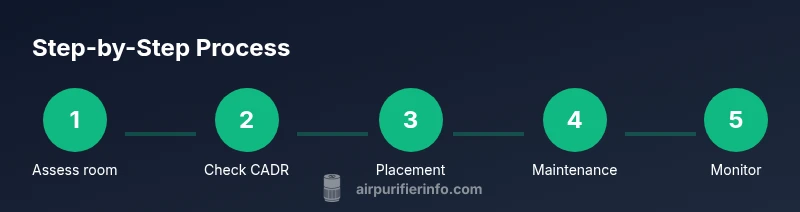
- Measure the primary room and confirm CADR suitability. 2) Choose a purifier with true HEPA + activated carbon. 3) Place the unit in the main living area or cat’s sleeping zone with proper clearance. 4) Install fresh filters and perform an initial run on a low setting. 5) Set maintenance reminders and monitor your cat’s sneezing patterns over the first two weeks.
Tools & Materials
- True HEPA air purifier(Look for sealed housing and H13/H14 equivalent performance.)
- Activated carbon filter(Ensure it is part of the filtration stack.)
- Replacement filters(Keep spare HEPA and carbon filters on hand.)
- Measuring tape or room dimensions(Accurate room size helps CADR matching.)
- Soft cloth and mild cleaner(For exterior cleaning and pre-filter care.)
- Power outlet and safe placement space(Avoid water exposure and ensure stable setup.)
Steps
Estimated time: 30-45 minutes
- 1
Assess the space
Identify the room(s) where your cat spends the most time and note typical activity patterns. Consider peak shedding periods and litter-box locations to inform purifier placement and usage timing.
Tip: Record room dimensions and current air quality to compare pre/post installation results. - 2
Check CADR and filter types
Verify the purifier uses a true HEPA filter in combination with activated carbon. Ensure the CADR is appropriate for the room size and that replacement filters are readily available.
Tip: Prioritize models with clear filter indicators and easy access for replacements. - 3
Choose placement
Place the purifier in a central location of the room or near the cat’s sleeping area, keeping at least a few inches from walls for optimal airflow. Avoid placing directly behind furniture or inside tight corners.
Tip: If you have multiple rooms, consider a secondary unit in the largest living area. - 4
Install filters and power up
Insert fresh HEPA and carbon filters following the manufacturer’s instructions. Plug in the unit and run it on a low to medium setting to begin, listening for odd noises or vibrations.
Tip: Reset the filter timer to track replacement intervals accurately. - 5
Set a maintenance schedule
Establish a routine for checking pre-filters and replacing HEPA and carbon filters when indicated. Clean exterior surfaces to prevent dust buildup that can bypass filtration.
Tip: Create calendar reminders for filter changes to maintain effectiveness. - 6
Monitor performance and cat response
Observe changes in your cat’s sneezing frequency and behavior over the first two weeks. If sneezing persists, reassess purifier placement, run times, or consider vet advice.
Tip: Note any correlations between environmental changes and sneezing patterns. - 7
Fine-tune settings and scale usage
If room air improves, you can adjust to energy-saving modes during non-peak hours and reserve higher settings for busy periods or larger spaces.
Tip: Balance air quality with noise preferences for a pet-friendly environment.
Questions & Answers
Does an air purifier remove cat dander?
Yes. A true HEPA filter captures fine particles like cat dander, reducing exposure in the home. Pair with routine cleaning for best results.
Yes. True HEPA purifiers capture cat dander, reducing exposure. Regular cleaning helps maximize results.
Can air purifiers help with cat allergies?
Air purifiers reduce airborne allergens and odors, which can lessen allergic symptoms for some people. They are not a cure and should complement veterinary advice.
They reduce airborne allergens but aren't a cure. Use them with veterinary guidance for best effect.
How often should I replace filters?
Replacement timing varies by usage and filter type, but HEPA filters typically last several months; carbon filters often need changing every few months. Follow the manufacturer’s schedule and indicators.
Replacement timing depends on use and filter type; follow the purifier's indicators and guide.
Are air purifiers safe around pets?
Most purifiers designed for homes are safe for pets when used as directed. Avoid ozone-generating units and ensure proper placement to prevent direct drafts on your cat.
Generally safe if used as directed; avoid ozone-generating devices and direct drafts on your cat.
Is CADR the only metric to consider?
CADR matters for particle removal, but also consider room size, noise, energy usage, and filter quality. A balanced choice often yields the best pet-friendly results.
CADR matters, but also consider size, noise, energy use, and filter quality.
Will an air purifier fix sneezing caused by litter?
Purifiers help by reducing airborne particles from litter, but managing litter box placement and cleaning remains essential for best outcomes.
They help, but good litter management is still crucial.
Watch Video
Main Points
- Match purifier capacity to room size and pet activity.
- True HEPA plus activated carbon is essential.
- Maintenance cadence drives long-term effectiveness.
- Placement significantly impacts performance and cat comfort.
- Monitor cat response to validate improvements.