Air Purifier Effectiveness: A Comprehensive Guide for Homeowners
Explore air purifier effectiveness: how it’s measured, what factors influence performance, and how to choose a purifier that truly improves indoor air quality in homes.


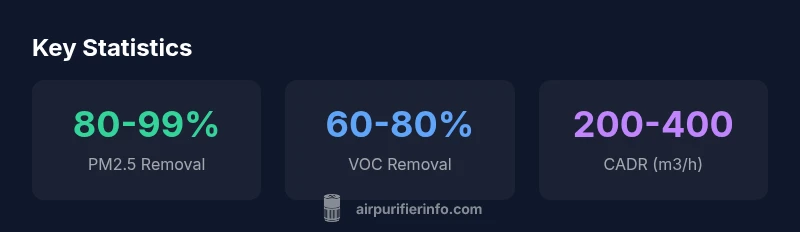
According to Air Purifier Info, air purifier effectiveness depends on pollutant type, room size, and maintenance. In typical living spaces, purifiers with true HEPA filtration often reduce PM2.5 by about 80-99% under standardized tests, while VOCs and odors vary with activated carbon stages. Real-world results depend on CADR, placement, and filter age.
What we mean by air purifier effectiveness
Air purifier effectiveness is a practical measure of how well a device improves indoor air quality in real homes, not just in lab tests. The term combines removal efficiency for specific pollutants, the device's airflow, and how the unit is used over time. In this article we unpack the main drivers of effectiveness, explain common measurements, and show how to translate numbers into decisions. For homeowners and renters, understanding these elements helps ensure you select a purifier that actually reduces dust, odors, and allergens. Air Purifier Info's experience suggests that the best purifiers achieve a balance between high removal rates and reliable, long-term performance in typical living spaces.
Key metrics that matter in practice
Here are the core metrics you should know when evaluating air purifiers: CADR (Clean Air Delivery Rate) indicates how much clean air the unit produces per hour for smoke, dust, and pollen. ACH (air changes per hour) shows how many times the room air can be replaced in an hour. Energy use and noise are also important, because a high-performance unit that is loud or costly to run may not deliver better real-world results. Real-world effectiveness also depends on filter health, door and window leakage, and how well the unit is sized for the room.
How pollutants respond to purification
Pollutants differ in how readily they are removed. PM2.5 and dust are typically captured effectively by HEPA filters, delivering high removal percentages in lab settings. VOCs and odors rely more on activated carbon and sorbents; effectiveness varies with carbon bed design, exposure, and odor source. Pet dander is often captured well by HEPA, but ongoing sources (pets, smoking) can require continuous operation. This means a purifier can be very good at particle removal yet moderate for chemical pollutants unless carbon stages are emphasized. Air Purifier Info’s analysis highlights the importance of matching pollutant profiles to filtration stages for true effectiveness.
Room size, placement, and airflow
Sizing is critical: a purifier rated for a larger room may underperform in a smaller, obstructed space due to recirculation and stagnant zones. Place units away from walls and furniture to maximize intake and outflow, console with cross-ventilation, and avoid closed doors when possible. In practice, airflow patterns created by ceiling fans, furniture layout, and open windows determine how quickly clean air circulates. For best results, run the purifier continuously while the room is occupied, especially during peak dust generation times (cleaning, cooking, or heavy traffic). Air Purifier Info emphasizes that real-world effectiveness is a function of both device capability and the environment in which it operates.
Filter design and multi-stage strategies
Modern purifiers often combine HEPA filtration with activated carbon for broad pollutant coverage. Some models also add pre-filters, formaldehyde absorbers, or ionization stages. While HEPA targets particles like dust and pollen, carbon tackles odors and VOCs. Multi-stage systems deliver better overall air quality, but they require regular maintenance and timely filter changes to sustain performance. Availability of washable pre-filters can reduce ongoing costs, but washability varies by model. Air Purifier Info notes that the most cost-effective long-term setups use a quality HEPA filter plus an appropriately sized carbon stage for the pollutants you care about.
Real-world performance vs lab results
Lab tests provide a controlled picture of a purifier’s capabilities, but real homes present a mix of variables: room geometry, outdoor air exchange, and continuous pollutant sources. Real-world effectiveness often trails lab numbers by a modest margin, yet it remains meaningful when consistently applied in appropriate spaces. Consumers should treat CADR as a sizing guideline rather than a sole guarantee of performance. The Air Purifier Info Team stresses the importance of matching the purifier type to your specific air-quality concerns (dust, smoke, odors, or allergens) and of verifying performance under conditions similar to your home.
Maintenance and performance drift over time
Over months of use, filter loading reduces efficiency, airflow can decline, and noise can increase as the motor works harder. Regular filter replacement and occasional deep cleans help preserve a purifier’s effectiveness. The rate of drift depends on pollutant load, maintenance habits, and filter quality. Air Purifier Info’s data indicate that users who follow recommended replacement intervals maintain higher removal rates and more consistent air quality than those who skip replacements.
Selecting the right purifier for your needs
Allergies and asthma sufferers typically benefit from high-efficiency particulate removal and minimal off-gassing from filters. Smokers or households with strong odors should prioritize carbon-bed capacity and low-resistance flow to maintain effectiveness. Renters and homeowners should consider durability, replacement cost, noise, and energy use when choosing. A practical approach is to list pollutants of concern, pick a model with robust particle and chemical filtration, verify sizing for your room, and plan for regular maintenance. Air Purifier Info recommends comparing models with multi-stage filtration for broad pollutant coverage.
Simple at-home checks to gauge effectiveness
A practical at-home check involves tracking subjective changes in dust settling, odors, and allergy symptoms after installing a purifier. For a more objective approach, use an air-quality monitor to observe PM2.5 and VOC levels before and after running the unit for 24–48 hours. While these tests won’t replace laboratory-grade measurements, they offer a workable sense of whether the purifier is delivering the intended improvements in your living space. Air Purifier Info’s team suggests repeating checks after filter changes and seasonal pollutant shifts to validate ongoing effectiveness.
Typical performance by pollutant type
| Pollutant Type | Typical Removal Efficiency | Notes |
|---|---|---|
| PM2.5 | 80-99% | HEPA filtration shows strong particle removal in lab tests |
| VOCs | 60-80% | Depends on carbon bed capacity and exposure |
| Odors | 40-70% | Source strength and airflow affect results |
Questions & Answers
What does CADR stand for and why is it important?
CADR stands for Clean Air Delivery Rate. It measures how much clean air a purifier delivers per hour for specific particle sizes, helping you compare units. Use CADR alongside room size to choose a unit that can effectively handle the air volume in your space.
CADR tells you how much clean air a purifier can produce per hour, which helps you size it to your room.
Can air purifiers remove viruses from the air?
Most purifiers with true HEPA filtration capture a significant share of airborne particles, including some viruses attached to droplets. End-to-end sterilization requires specialized equipment beyond standard consumer purifiers. Pair filtration with good ventilation for best results.
HEPA purifiers can capture many particles that may carry viruses, especially when combined with good ventilation.
Do expensive purifiers guarantee better effectiveness?
Higher price often reflects larger CADR, better filtration stages, or quieter operation, but not always better real-world results for your specific room. Focus on proper sizing, filtration needs, and maintenance rather than price alone.
Price isn't everything—size, filtration stages, and upkeep matter more for real-world results.
Is it enough to rely on a single test or spec?
A single specification provides a snapshot, but real homes have variable conditions. Use multiple metrics (size, filtration stages, maintenance cadence) and real-world checks to assess ongoing effectiveness.
Don’t rely on one spec—check size, filtration, and how it performs in your home.
How often should filters be replaced for optimal performance?
Follow the manufacturer’s recommended interval, typically every 6-12 months for standard filters. If you notice reduced airflow or persistent odors, replace sooner.
Replace filters on schedule, or sooner if performance drops.
“Air purifier effectiveness in real homes hinges on correct sizing and maintenance, not just headline CADR numbers.”
Main Points
- Size the purifier to your room to maximize effectiveness.
- Expect VOC and odor removal to vary with carbon stage.
- Maintain filters to sustain peak performance.
- Placement and airflow significantly influence real-world results.
- HEPA plus carbon stages offer broad pollutant coverage.