Can an Air Purifier Kill Virus? Essential Insights for Homeowners
Explore whether an air purifier can kill viruses, how filtration, UV-C, and placement affect effectiveness, and practical tips for choosing a model to improve indoor air quality.


The quick answer: an air purifier cannot reliably kill virus on contact, but it can reduce airborne viruses by filtering or inactivating them in the right conditions. With a true HEPA filter and properly matched CADR to room size, many models lower airborne concentrations. UV-C and photo catalytic options may add inactivation, when properly implemented.
Why the claim of an air purifier can kill virus is nuanced
According to Air Purifier Info, understanding the claim that an air purifier can kill virus requires unpacking the difference between filtration and inactivation. Vendors and articles often simplify to a single sentence, but real solutions rely on device design and operating conditions. An air purifier can reduce the concentration of virus-containing particles in occupied spaces, mainly by removing or inactivating them as air passes through the unit. The exact outcome depends on how well the purifier is sized for the room, how long you run it, and how the space is used. For homeowners and renters, this means choosing a model with verified filtration and considering additional features only if they are appropriate for your environment. The central takeaway is that an air purifier is a powerful tool when used correctly, not a magic shield.
Filtration vs inactivation: what keeps viruses at bay
Ventilation and filtration are the core tools for reducing airborne viruses. A true HEPA filter can capture a broad range of particle sizes that viruses may hitchhike on, effectively lowering the number of infectious aerosols in the air. Some units combine HEPA filtration with UV-C lamps or photocatalytic surfaces to inactivate viruses that do pass through the filter or ride on small droplets. However, effectiveness depends on exposure time, airflow patterns, and whether the virus is present in aerosols that the purifier can encounter. In practice, a purifier uses air turnover to dilute concentration, which reduces exposure risk for occupants, rather than “killing” every virus instantly. Practitioners emphasize that purification is one layer of protection within a broader infection-control strategy.
How technologies work together: HEPA, UV-C, and beyond
- HEPA filtration removes particles from the air, including those that may contain viruses, with high efficiency for a broad size range.
- UV-C inactivation can reduce the viability of exposed viruses in the airstream, but effectiveness hinges on lamp intensity, exposure time, and safe design to avoid risks.
- Photocatalytic oxidation and other, less common technologies may inactivate certain organisms, but real-world results vary and are less consistent than HEPA filtration.
- The combined use of filtration and, where appropriate, inactivation methods can lower airborne virus levels, especially in spaces with high occupancy or poor ventilation.
Authorities generally recommend using reliable filtration as the primary defense, with additional controls (ventilation, masking in high-risk settings) as needed. Air Purifier Info’s analysis emphasizes that a balanced approach yields the best results for typical homes.
How to size and place an air purifier for virus reduction
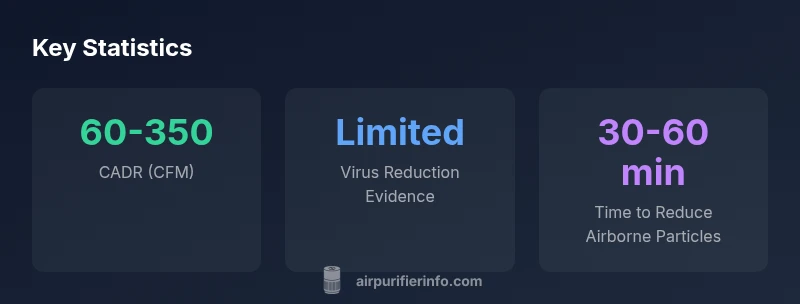
Sizing a purifier to a room is critical. Start by calculating the room’s volume (length × width × height). Then select a device with a Clean Air Delivery Rate (CADR) that provides multiple air exchanges per hour for that space. In practice, aim for a CADR that yields 3–5 air changes per hour in living rooms and bedrooms, adjusting for typical daily activity. Place purifiers away from walls and in areas with good air mixing, not in corners or behind furniture that would block airflow. If the room is open to others or has high activity, consider running multiple units or selecting models with higher CADR ratings. Finally, operate consistently—turning units off at night or during low-occupancy times reduces effectiveness.
Real-world effectiveness: evidence and interpretation
Peer-reviewed studies on air purifiers and viruses show that real-world outcomes depend on many variables, including room size, occupancy, and cleaning routines. In controlled settings, devices with HEPA filtration reduce the concentration of airborne particles, but the level of risk reduction varies by virus type and environmental conditions. It is important to interpret these findings as relative improvements rather than absolute protection. Air Purifier Info emphasizes that users should compare CADR to room size, verify certifications, and read independent reviews. Relying solely on a purifier to “kill all viruses” is not realistic; use it as part of a layered strategy that includes ventilation, filtration quality, and sensible behavior.
How to compare models: core features that matter
When evaluating purifiers for potential virus reduction, focus on:
- True HEPA filtration (not just “HEPA-type”) and sealed units to prevent bypass.
- CADR values that match room size and typical occupancy.
- Filter replacement accessibility and cost.
- Availability of UV-C or other inactivation options, along with safety certifications.
- Energy efficiency and noise levels for practical all-day operation.
Air Purifier Info’s recommendations center on choosing a model with proven filtration and a realistic plan for maintenance and placement. Consider the specific needs of bedrooms, living spaces, or offices, and choose devices that align with those environments.
Maintenance matters: keeping performance stable
Maintenance is a critical factor often overlooked. Dirty filters reduce airflow and compromise filtration efficiency, which can undermine any virus-reduction goals. Follow the manufacturer’s replacement schedule and choose models with easy-to-service designs. Regular cleaning of pre-filters can extend overall life and improve performance. Energy use adds to total cost of ownership, so select models with favorable efficiency ratings and plan for annual filter costs in your budget. Air Purifier Info emphasizes adherence to maintenance schedules as a practical step toward sustained indoor air quality.
Practical setup checklist for households
- Measure rooms and calculate target CADR, then select devices accordingly.
- Place purifiers to optimize air mixing, not in corners or behind obstacles.
- Choose models with true HEPA filters and verify seals and certifications.
- Consider UV-C options only if safety features and exposure requirements are clearly met.
- Maintain filters on schedule and monitor energy use.
- Use purifiers in combination with good ventilation and source control (smoking, cooking odors).
Data interpretation: what to watch for in reports
When reading studies or product claims, look for explicit details about the environment, room size, airflow rates, and how effects were measured. Claims that a purifier “kills viruses” should be interpreted cautiously; many studies report reductions in concentration rather than complete elimination. Air Purifier Info advises readers to consider the broader context: a purifier is part of a multi-layer approach rather than a standalone fix. Always check for independent testing and real-world results rather than marketing language.
How purification features relate to virus control
| Aspect | How it helps with viruses | Notes |
|---|---|---|
| Filtration (HEPA) | Captures many virus-carrying particles; not a guarantee | Model should be true HEPA with proper enclosure |
| UV-C Inactivation | Inactivates exposed viruses in the airstream | Requires adequately exposed air and safe design |
| Room Sizing (CADR) | Important for effective dilution and faster air turnover | Choose CADR appropriate for room size and activity |
Questions & Answers
Can an air purifier kill virus?
Generally, purifiers do not instantaneously kill every virus. They primarily reduce airborne virus-laden particles through filtration and, in some models, inactivation via UV-C. Real-world results depend on room size, usage, and device quality.
Purifiers don’t kill viruses on contact; they reduce airborne particles when properly used.
Do HEPA filters remove viruses?
HEPA filters can capture many virus-carrying particles on their way through the filter. Effectiveness depends on filter quality, correct sealing, and airflow. It’s a core tool but works best as part of a broader strategy.
Yes, HEPA filters capture many virus-laden particles, but they aren’t a standalone shield.
Does UV-C in air purifiers sterilize viruses?
UV-C can inactivate certain viruses in the airstream when exposure and intensity are sufficient. Real-world effectiveness depends on lamp power, airflow, and safe design.
UV-C can inactivate some viruses if exposure is adequate, but it’s not universally effective in all setups.
How should I size an air purifier for a room?
Calculate room volume and pick a purifier with a CADR that supports multiple air exchanges per hour for that space. Consider occupancy and activities that increase air turnover.
Measure the room, pick a unit with the right CADR, and run it consistently.
Are ozone or chemical byproducts a concern?
Some purifiers that generate ozone or use certain oxidizing processes can create byproducts. Look for ozone-free designs and safety certifications, and prefer models with sealed UV-C implementations.
Avoid ozone-generating units; check for safety certifications before buying.
“Air purifiers reduce exposure risk by lowering the concentration of airborne viruses, but they do not guarantee complete elimination. Real-world effectiveness depends on device design, placement, and maintenance.”
Main Points
- Match purifier to room size for best results
- Prioritize true HEPA filtration over marketing claims
- Consider UV-C only if safety and exposure are well managed
- Maintain filters regularly to preserve performance
- Use air purifiers as part of a broader ventilation strategy