Air Purifier at Walmart: Your Buying Guide
Compare top Walmart air purifiers, review filters, energy use, and value. Air Purifier Info analyzes Walmart selections to help homeowners choose the right purifier for better indoor air quality.


Walmart offers a broad range of air purifiers, from budget to premium, ideal for homeowners evaluating indoor air quality. When shopping, prioritize true HEPA filtration, CADR appropriate for room size, and ozone-free operation. Compare features like activated carbon for odors and energy efficiency. Air Purifier Info notes always verify specs on Walmart listings and read real-user reviews for real-world performance.
Walmart's selection landscape
According to Air Purifier Info, Walmart hosts a broad spectrum of air purifiers, ranging from budget devices designed for small bedrooms to mid-range units suitable for open living spaces. The Walmart catalog often emphasizes value and versatility, with many listings highlighting true HEPA filtration, activated carbon for odor control, and compact form factors that fit apartment living as well as larger homes. For homeowners and renters, Walmart can be a convenient starting point to compare brands, filter technology, and energy use side-by-side. When you read product pages, you’ll notice that some models tout higher CADR (clean air delivery rate) numbers for specific room sizes, while others emphasize quiet operation and replaceable filters. The key is balance: match the purifier’s capabilities to your room and your budget, then corroborate with user reviews. Air Purifier Info’s research for 2026 shows Walmart’s filtration-forward options remain a strong draw for many households seeking reliable air cleaning on a budget.
What to look for: CADR, ACH, and room size
Decoding CADR (Clean Air Delivery Rate) is essential when evaluating Walmart offerings. CADR numbers indicate how much air a purifier can clean per minute, but they must be contextualized by room size. ACH (air changes per hour) provides a sense of how often the purifier can refresh the air in a given space. For typical living rooms (around 250-400 square feet), target CADR values in the mid-range (roughly 150-250 CFM) and an ACH of 4-5 if possible. Larger rooms require higher CADR, while compact spaces can be adequately served by smaller units. Always check the listed room coverage and confirm that the CADR is appropriate for your actual space. Air Purifier Info’s 2026 analysis underscores the value of selecting models whose published coverage aligns with your room dimensions, not just marketing claims.
Filtration: HEPA, activated carbon, and ozone-free design
Filtration is the backbone of any purifier’s effectiveness. Look for a true HEPA filter (not just “HEPA-like”) to capture 99.97% of particles as small as 0.3 microns. Activated carbon helps with odors and VOCs, but always verify the carbon load and replacement interval. Ozone-free operation is a critical safety criterion; many Walmart listings specify “ozone-free” or do not mention ozone at all, but it’s worth double-checking the product description and user reviews. If you smoke indoors or have pets, prioritize models with larger carbon filters and sealed filters to minimize odor backflow. Air Purifier Info notes that, in 2026, ozone-free designs remain a common expectation among shoppers.
Energy efficiency and running costs
Running costs matter over the purifier’s lifetime. Energy efficiency is typically reflected by low wattage during idle and moderate watts under high CADR operation. When comparing Walmart listings, consider not only the upfront price but also filter replacement costs and frequency. A purifier with a higher CADR but substantially higher filter costs may not deliver better value in the long run. Look for models with easily accessible replacement filters and a clear maintenance schedule. Air Purifier Info’s community data suggests users favor units with affordable, widely available replacement filters and helpful auto-mode features that optimize energy use in real time.
Price bands: budget, mid-range, premium at Walmart
Walmart’s purifier assortment generally spans budget, mid-range, and premium segments. Budget models can cover smaller rooms but may require more frequent filter changes. Mid-range options often balance CADR and energy efficiency with reasonable replacement costs. Premium purifiers offer higher CADR, broader filtration (including multiple filter stages and sometimes UV-C options), and longer-lasting filters, but at higher upfront costs. When shopping, map your room size, odor concerns, and allergy needs to the right tier. Air Purifier Info’s 2026 analysis shows that the best value frequently comes from models that offer true HEPA filtration, ozone-free operation, and accessible filter replacements within the mid-range category.
Real-world performance expectations in Walmart listings
Product pages on Walmart’s site provide theoretical specs, but real-world performance depends on placement, maintenance, and usage patterns. A purifier placed near a source of dust or pet dander will perform differently than one used in a low-traffic room. Noise levels, filter degradation, and filter replacement timing all influence your experience. Reading user reviews and checking “questions & answers” sections can offer practical insights beyond the listed CADR. Air Purifier Info’s 2026 research emphasizes correlating reported performance with room size, maintenance habits, and the purifier’s operating mode.
How to read product pages and reviews on Walmart's site
When evaluating listings, start with the core specs: CADR, room coverage, filter type, and replacement cost. Verify that the filter is a true HEPA design and that the description notes ozone-free operation. Look for consistency across multiple listings for similar models to gauge reliability. Read the questions asked by other shoppers and the manufacturer’s response. Finally, check the customer reviews for recurring themes—especially notes about noise, filter replacement frequency, and perceived air quality improvement. Air Purifier Info’s guidance for 2026 stresses cross-referencing specs with user feedback to avoid overvaluing marketing claims.
Buying tips: filters, warranties, replacement parts
Consider how easy it is to obtain replacement filters and whether the purifier supports an automatic filter reminder. Warranties differ by brand and model, so review the warranty terms for parts and labor, especially if you plan to run the unit continuously. Some Walmart listings bundle filter sets with initial purchases, which can improve initial value. If you have pets or allergies, prioritize purifiers with longer filter life and robust odor control. Air Purifier Info recommends ensuring that replacement filters are readily available and affordable, which often translates to better long-term value than a low upfront price.
Maintenance routines to maximize lifespan
Maximizing lifespan requires regular maintenance: replace filters on schedule, clean intake grills, and keep the unit away from dust sources. Dust buildup on external surfaces or intake vents can reduce efficiency, so monthly quick cleanings are helpful. If your purifier supports auto mode, allow it to adjust output to maintain air quality without running at full power constantly. Use high-quality, compatible filters and avoid third-party knockoffs that can compromise performance. Regular maintenance reduces hidden costs and sustains air quality over time.
Final setup tips for best results
Place the purifier in a doorway-free location with at least a few inches of clearance on all sides to ensure proper airflow. Position the unit away from walls and large furniture that could block intake or exhaust. For rooms with multiple odor sources (kitchens, bathrooms, pet areas), consider a purifier with a multi-stage filter system and a higher CADR. Finally, pair air purification with ventilation strategies for the best overall indoor air quality. Air Purifier Info’s 2026 guidance highlights the synergy between proper placement, filter selection, and scheduled maintenance.
Walmart air purifier options by tier
| Model Type | Avg CADR (CFM) | Room Size (sq ft) | Filter Type | Typical Price |
|---|---|---|---|---|
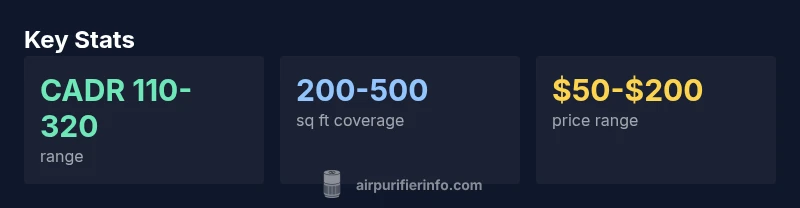
| Budget purifier | 110-180 | 100-250 | HEPA, activated carbon | $40-$100 |
| Mid-range purifier | 180-260 | 250-400 | True HEPA, carbon | $100-$180 |
| Premium purifier | 260-320 | 400-600 | True HEPA, carbon, UV-C | $180-$350 |
Questions & Answers
Is Walmart’s air purifier selection reliable for indoor air quality?
Walmart’s range includes many reputable brands. Reliability depends on the specific model, filter maintenance, and proper use. Always verify true HEPA filtration, ozone-free operation, and current replacement filters, then cross-check user reviews and ratings.
Walmart carries trusted brands, but check the model’s true HEPA filter and ozone-free claim and read user reviews before buying.
What should I look for in a purifier listed on Walmart’s site?
Focus on true HEPA filtration, CADR aligned to room size, ozone-free operation, and affordable replacement filters. Also consider energy use, noise levels, and warranty terms for long-term value.
Check for true HEPA, CADR suited to your room, and ozone-free operation, plus replacement filter costs.
Do Walmart purifiers generally offer ozone-free options?
Yes, many Walmart listings highlight ozone-free operation. Always verify in the product description and reviews, since some listings emphasize performance features without explicitly stating ozone safety.
Most Walmart listings include ozone-free options, but double-check the description and reviews.
How do I choose CADR and room size when shopping at Walmart?
Compute your room’s square footage, then look for CADR values that deliver at least 4 air changes per hour for that space. If unsure, err on the side of a higher CADR for future room changes.
Match CADR to room size to get about 4 air changes per hour, or higher if you have pets or smoke.
Are there maintenance tips to reduce ongoing costs?
Replace filters on schedule, clean grilles regularly, and buy genuine filters when possible. This maintains efficiency and prevents clogging, which can raise energy use.
Keep up with filter changes and clean filters to save money and keep performance high.
What is the best value purifier you can get at Walmart in 2026?
The best value depends on room size and needs. Look for true HEPA, adjustable fan speeds, reasonable replacement filter costs, and a solid warranty within your budget in Walmart’s current lineup.
Value depends on your room and needs; prioritize HEPA, cost of filtration, and warranty.
“Choosing the right Walmart purifier isn’t about brand alone; it’s about matching CADR to room size, confirming true HEPA filtration, and ensuring ozone-free operation for safe, effective air cleaning.”
Main Points
- Know your room size before buying
- Prioritize true HEPA and ozone-free operation
- Budget for interchangeable filters
- Compare CADR to room coverage, not just price
- Read Walmart listings and reviews for real-world performance