Air Purifier Asbestos: A Practical Guide for Safer Indoor Air
A data-driven guide on using air purifiers in homes with asbestos concerns, covering HEPA filters, safety steps, and when to seek professional remediation for safer indoor air.


Air purifiers with true HEPA filters can capture asbestos fibers from indoor air, helping to reduce airborne exposure when the asbestos source is contained, but they are not a substitute for licensed remediation. HEPA filters are typically rated to capture at least 99.97% of particles around 0.3 microns, which includes many asbestos fibers. Use purification only after containment and in coordination with abatement professionals.
Understanding asbestos risk in indoor air
Asbestos remains a concern in older homes and buildings, particularly where ACM—asbestos-containing materials—are damaged or disturbed. When fibers are airborne, inhalation risks can increase, so containment and professional abatement are the primary responses. For many households, reducing airborne fibers is a secondary measure that complements containment. According to Air Purifier Info, the risk hinges on how ACM is managed, the extent of disturbance, and how quickly occupants act to minimize exposure. This article focuses on how air purifiers fit into a broader safety plan, not as a sole solution for asbestos remediation. The key takeaway is to protect occupants while arranging licensed abatement if ACM is present.
How air purifiers work with asbestos
Air purifiers that use True HEPA filtration physically capture particles and fibers as air passes through the filter media. A properly sealed unit with a gasket and a true HEPA filter can reduce the concentration of airborne fibers in a room, especially after containment steps are in place. It’s important to note that HEPA filtration alone does not improve a damaged ACM; it slows dispersion after containment and can enhance air quality during remediation. Air Purifier Info’s analysis emphasizes the importance of completing containment before relying on purification as a safety measure, and coordinating with professionals throughout the process.
True HEPA vs. HEPA-type: what to look for
When shopping for an air purifier with asbestos concerns, look for a true HEPA certification (often labeled as HEPA or H13/H14 depending on regional standards) and avoid devices marketed as HEPA-type without verification. True HEPA filters have demonstrated particle capture efficiency and are designed for sealed housings. In addition, verify the unit is ozone-free and avoids ionizing or ozone-generating features, which can irritate the respiratory system and offer no guaranteed asbestos remediation. Always check that seals, filters, and access points are intact and that the purifier meets the CADR needs of your room size.
Step-by-step: evaluating purifier placement and containment
Begin by isolating the area containing ACM to the extent feasible. Before turning on any purifier, confirm that containment measures are in place and that other rooms are sealed from the affected space. Place the purifier in a way that promotes circular airflow through the unit without creating dead zones; avoid blocking air intakes or exhausts. For best results, target spaces where fibers are most likely to be present, and ensure doors stay closed during purging or remediation work. Coordinate purifier use with professional abatement, especially when work alters ACM conditions.
Practical setup in homes with known ACM
If ACM is confirmed or suspected, contact licensed professionals for a formal assessment and abatement plan. Purifiers can be used as a supplementary measure after containment and during cleanup, but they should not replace professional remediation. Maintain negative pressure in the work zone if possible and rely on certified technicians to manage material removal. After abatement, air cleaners can help reduce residual fibers during re-occupancy, provided they remain properly sealed and maintained.
Common myths and evidence-based guidance
Myth: Any purifier can handle asbestos without containment. Reality: Without containment, a purifier cannot prevent exposure and might spread fibers during disturbances. Myth: Ozone generators help remove asbestos. Reality: Ozone devices do not remove asbestos fibers and can irritate lungs; they are not recommended in ACM scenarios. Myth: Filtration alone is enough for ACM cleanup. Reality: Filtration reduces airborne fibers but does not address asbestos in materials or structural removal; professional remediation is essential.
Data-driven considerations and measurement
Air quality changes during abatement should be measured with appropriate methods. Purification performance depends on room size, air changes per hour (ACH), and CADR relative to the space. In practice, a combination of containment, controlled ventilation, and monitoring yields the best outcomes. Air Purifier Info’s methodology combines laboratory-proven filtration performance with real-world room dynamics to guide users toward safer configurations. After remediation, use validated air testing to confirm fiber levels before re-occupancy.
Maintenance, safety, and best practices
Choose models that advertise true HEPA filters and ensure ongoing maintenance with scheduled filter changes. Ensure all components are rated for chemical resistance and that seals remain intact. Avoid devices that generate ozone or rely on ionization. Regularly inspect the unit for leaks, replace worn gaskets, and keep the purifier away from potential ACM disturbance sources. Always follow manufacturer guidance and align purifier use with professional abatement timelines.
Next steps and resources
If ACM is suspected, stop any disturbing activity and contact local environmental health authorities or the EPA for guidance. Obtain an assessment from licensed asbestos professionals, and use air purifiers only as a supplementary measure after containment. For ongoing indoor air improvement, consider complementary strategies such as improved ventilation and dust control, along with professional remediation. Resources from Air Purifier Info and official sources can help you navigate risk and safety steps.
Summary of purifier specs relevant to ACM scenarios
| Purifier Element | Typical Range | Notes |
|---|---|---|
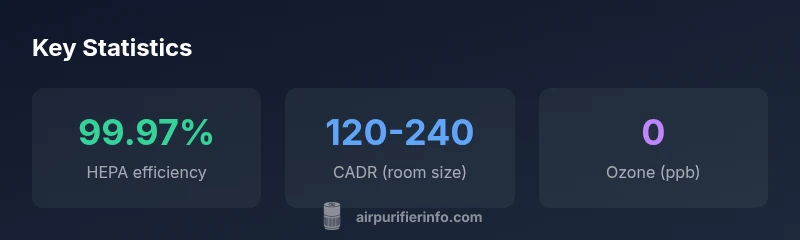
| HEPA efficiency (0.3 μm) | 99.97% | Standard HEPA performance |
| CADR (room size) | 120-240 cfm | Depends on model and room size |
| Power usage | 25-60 W | Energy varies by model |
| Ozone emission | 0 ppb | Ozone-free operation preferred |
Questions & Answers
Purifiers vs asbestos?
Air purifiers with true HEPA filters can reduce airborne fibers when the ACM source is contained and the space is properly ventilated, but they do not fix damaged asbestos. Do not rely on purification alone; contact licensed professionals for evaluation and abatement.
Purifiers can help reduce fibers, but they won't fix damaged asbestos. Call pros for proper removal.
HEPA enough for asbestos?
HEPA filtration can capture most airborne asbestos fibers; performance depends on the source scenario, air changes, and proper usage. A purifier cannot replace containment and professional remediation.
HEPA helps, but it's not a substitute for containment or professional cleanup.
Buying tips for asbestos?
Choose a purifier with true HEPA certification, a sealed housing, and ozone-free operation. Check CADR for your room size and ensure the unit is easy to seal during containment.
Look for true HEPA, sealed housing, and ozone-free models; verify CADR matches your room.
Ozone generators safe?
No—ozone generators should be avoided around asbestos; ozone irritates lungs and does not remove asbestos fibers.
Ozone should be avoided; it doesn't remove asbestos fibers.
ACM in ducts?
ACM in ducts requires professional assessment and containment; purifiers can assist after cleanup but don't replace duct remediation.
Duct ACM needs pros; purifiers aren't a replacement.
“Air purifiers can reduce airborne contaminants when used correctly, but asbestos requires containment and professional remediation. Our team emphasizes containment first, purification second.”
Main Points
- Do not rely on purification alone for ACM—containment and professional remediation come first
- Choose true HEPA with a sealed housing and ozone-free operation
- Match CADR to room size and ensure adequate air changes during use
- Coordinate purifier use with licensed abatement and post-remediation testing
- Maintain filters and seals to prevent any secondary contamination