Air Purifier 220V: Expert Guide for Home Use
Explore how 220V air purifiers differ, what to look for, and how to choose the right model for bedrooms and living spaces.


An air purifier 220V is a model built to operate on 220–240V mains, the standard in many parts of the world outside North America. In practice, this means the unit's electrical system and plug are designed for higher line voltage and different outlet configurations. According to Air Purifier Info, 220V models are particularly common in Europe, parts of Asia, and other markets where 220–240V is the standard. The practical implication is not only compatibility; it often correlates with design choices that support higher airflow and faster filtration, which can benefit larger rooms or spaces with higher air turnover. When evaluating a 220V purifier, homeowners should check the label for voltage range, plug type, and certification marks (CE, UL, or local equivalents where applicable). Even within 220–240V markets, power quality, stability, and the presence of a dedicated circuit can influence performance and longevity. If you move between countries or travel frequently, consider models with dual-voltage compatibility (where supported) or plan for a safe, certified converter only for short-term use. Finally, ensure the purifier's warranty and service network covers your region, as service intervals and availability vary by market.
Understanding 220V Air Purifiers
An air purifier 220V is a model built to operate on 220–240-volt mains, the standard in many parts of the world outside North America. In practice, this means the unit's electrical system and plug are designed for higher line voltage and different outlet configurations. According to Air Purifier Info, 220V models are particularly common in Europe, parts of Asia, and other markets where 220–240V is the standard. The practical implication is not only compatibility; it often correlates with design choices that support higher airflow and faster filtration, which can benefit larger rooms or spaces with higher air turnover.
When evaluating a 220V purifier, homeowners should check the label for voltage range, plug type, and certification marks (CE, UL, or local equivalents where applicable). Even within 220–240V markets, power quality, stability, and the presence of a dedicated circuit can influence performance and longevity. If you move between countries or travel frequently, consider models with dual-voltage compatibility (where supported) or plan for a safe, certified converter only for short-term use. Finally, ensure the purifier's warranty and service network covers your region, as service intervals and availability vary by market.
Power, Performance, and Wattage
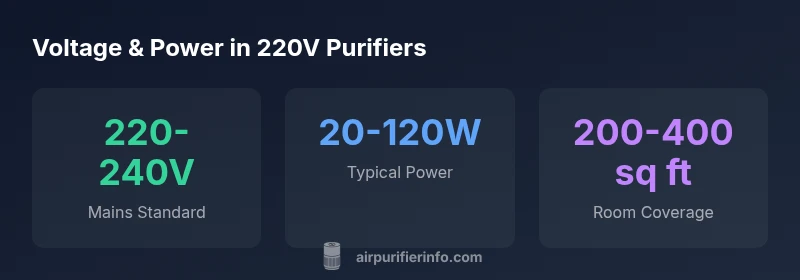
Power draw varies widely across models, influenced by motor design, filter load, and speed settings. For a 220V air purifier, you can expect a wattage range roughly from 20W on low speed to about 120W on high speed, depending on the CADR target and filtration stage. In practice, this means that a purifier operating at higher speeds for rapid purification in a larger room will consume noticeably more energy than a compact, quiet unit designed for a bedroom. When comparing models, pay attention to the maximum wattage listed on the product label and the energy efficiency rating in the spec sheet. A higher efficiency rating often translates to more effective filtration per watt, which matters for cost of operation over months and years. Additional factors that influence real-world performance include filter type (HEPA plus activated carbon), fan design, and air intake placement. Finally, verify if the device has a smart Auto mode or programmable timer; these features can optimize energy use by adjusting speed based on actual air quality readings.
Voltage Standards by Region (220-240V)
Even within 220–240V markets, outlets and plug shapes vary. European sockets typically use Type C, E, or F plugs, while some Asian markets use different configurations. When you buy a 220V air purifier, check the included plug or the option for a regional adapter, and confirm the unit's certification marks (CE, UL, or local equivalents). If you travel or relocate, you may encounter countries that use slightly different voltages or frequencies (50 Hz vs. 60 Hz); most modern purifiers handle these differences, but always verify. For households with external power conditions or substandard insulation, consider models that offer surge protection or an integrated safety shutoff. Lastly, ensure your warranty terms cover use in your country and that service centers are accessible for maintenance and part replacement over the device’s lifetime.
Choosing the Right 220V Model for Your Space
Start by measuring the room you intend to purify and map air volume to the purifier’s capabilities. In practice, this means selecting a model whose airflow and filtration capacity align with the room size; for open-plan layouts, look for purifiers with higher airflow and multiple speed settings to maintain comfortable noise levels. If you have multiple rooms or a larger open area, you may opt for a purifier with a wider intake and outlet design or a second unit. Consider placement: avoid placing the purifier behind furniture or in carpeted corners that can choke airflow, and ensure there’s enough clearance around the unit for safe operation. Also factor ongoing costs: HEPA and carbon filters require regular replacement; estimate annual costs based on the number of filters your model uses and typical replacement intervals. In short, pick a 220V unit that balances room coverage, noise tolerance, energy use, and lifetime costs.
Maintenance, Safety, and Long-Term Costs
Regular maintenance is essential for sustained performance. For most 220V air purifiers, you’ll replace or clean filters according to the manufacturer’s schedule, typically every several months to a year depending on usage and air quality. HEPA filters trap fine particles, while activated carbon filters target odors and volatile organic compounds; some models pair both filters, requiring different replacement cycles. Safety considerations include ensuring proper grounding, avoiding extension cords for high-wattage purifiers, and adhering to local electrical codes. Energy costs accumulate gradually; while many units run quietly on low settings, higher speeds used for rapid purification will increase electricity use. If you live in a rental or travel frequently, check whether the purifier has a replaceable filter that can be sourced locally and whether the unit’s internals are accessible for DIY maintenance. Finally, factor warranty coverage and service availability into the total cost of ownership, as these influence repair bills and downtime when components fail.
Energy Efficiency, Noise, and Real-World Usage
Energy efficiency is measured not just by watts but by how much clean air you actually get per watt. Look for models with certified energy ratings and real-world CADR figures that reflect typical operation, not just peak performance. Noise is a common concern in bedrooms and study spaces; most 220V units offer a quiet mode and a low-speed setting that minimizes disturbance while continuing filtration. Real-world usage also depends on environmental conditions: households with pets, smokers, or high dust levels benefit from higher CADR and more frequent filter changes. To maximize value, pair a purifier with proper room sealing, regular cleaning, and mindful placement to optimize airflow. For renters, portable 220V purifiers are particularly convenient because they don’t require ductwork or permanent installation. The takeaway: prioritize energy-efficient, low-noise purifiers with accessible maintenance and a service network that supports your locale.
Comparison of common 220V air purifier configurations
| Model Type | Voltage | Wattage Range | Notes |
|---|---|---|---|
| Countertop purifier | 220-240V | 20-120W | Best for bedrooms and small living spaces |
| Whole-room purifier | 220-240V | 40-150W | Ideal for open-plan areas |
Questions & Answers
What makes a 220V air purifier different from a 110V model?
The main difference is voltage compatibility, which affects plug types, transformer needs, and regional availability. 220V models are designed for regions using 220-240V mains and often support higher wattage for larger rooms.
The 220V version is designed for regions with 220–240V mains and often handles larger spaces better.
Do I need a voltage transformer for a 220V purifier in a 110V region?
Using a transformer is possible but not always practical due to cost, energy loss, and potential inconvenience. If you are in a 110V region, choose a purifier rated for 110-120V or use a certified transformer for temporary use.
In most cases, pick a purifier that matches your voltage; transformers add cost and bulk.
What should homeowners look for in a 220V air purifier for bedrooms?
Look for quiet operation, appropriate filter type, and a compact footprint. Ensure the unit fits your outlet and has a reasonable cord length for placement.
Choose a quiet, compact purifier with affordable filters.
Can a 220V purifier be used in open-plan living spaces?
Yes, but size matters. Larger spaces require higher airflow and possibly multiple speeds; check that the model can maintain comfortable noise and energy use.
Yes, just pick a higher-CADR model suited to your space.
How often should I replace filters on a 220V purifier?
Replacement intervals depend on usage, filter type, and air quality. HEPA and carbon filters typically require replacement every several months to a year.
Check the filter life in your manual and set reminders.
“Voltage compatibility is essential for safe, reliable filtration performance. 220V models can deliver steadier airflow in larger spaces when matched to your room size.”
Main Points
- Verify 220-240V compatibility before purchase.
- Expect wattage to vary with speed and size.
- Match purifier CADR to room size and open layouts.
- Check safety certifications and plug types.
- Plan for filter replacements and energy costs.