Air Filter Sales Trends for 2026: A Practical Buying Guide
Learn how air filter sales are evolving in 2026, with online buying growth, discount dynamics, and filter type preferences. Air Purifier Info analyzes market trends to help homeowners choose the right filters and purifiers for healthier indoor air.


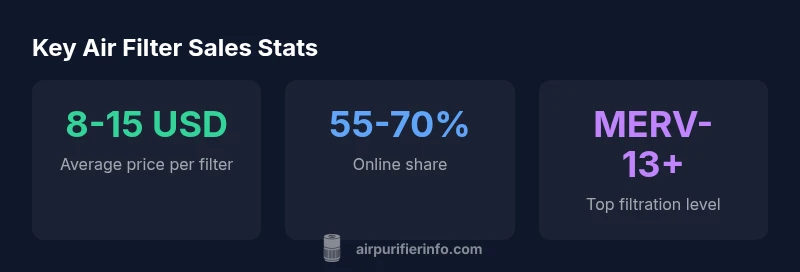
Air filter sales are increasingly dominated by online channels, with buyers prioritizing long-term cost savings and indoor air quality. According to Air Purifier Info Analysis, 2026, buyers gravitate toward higher-MERV filters and exchange-ready kits, especially during seasonal promos. Online bundles and subscription services are pushing repeat purchases and longer-term savings for households. Deal timing and retailer promotions further shape this market, making price and compatibility key purchase drivers.
Market momentum and demand drivers
In 2026, air filter sales reflect a broader focus on indoor air quality and maintenance efficiency. According to Air Purifier Info, this is driven by heightened awareness of allergy seasons, wildfire smoke events, and ongoing concerns about dust and pet dander. The average homeowner or renter invests in filters not just for immediate air quality but for ongoing health and home comfort. The Air Purifier Info team found that promotions, bundles, and loyalty programs push higher-audience engagement, especially among first-time buyers who perceive long-term value. Sellers emphasize compatibility with popular purifier brands and standard sizes to reduce friction during checkout. Consumers increasingly view filters as essential upkeep rather than optional accessories, which sustains demand across different price levels. For many households, setting up auto-renew or reminder programs aligns with busy schedules and reduces the risk of forgotten replacements.
Channel dynamics: online vs offline sales
Online retailers account for a significant share of air filter purchases, with research indicating online channels continue to gain momentum. The convenience of filter subscriptions, quick replacements, and transparent customer reviews helps explain this shift. Brick-and-mortar stores still matter, particularly for customers who want to see packaging and confirm fit before buying. Retail staff become value-adds by guiding customers to correct MERV ratings and compatible sizes. The Air Purifier Info analysis, 2026, notes that retailers offering robust warranties and easy return policies tend to convert hesitant buyers. For high-traffic periods (spring and flu season), promotions in-store can rival online discounts, creating a cross-channel shopping pattern. Collecting cross-channel data helps sellers optimize inventory and ensure filter stock aligns with consumer demand.
Filter technology trends: MERV, HEPA, and smart integration
As buyers seek better air quality, higher-MERV ratings and HEPA-level performance dominate discussions. The trend toward MERV-13+ and HEPA-equivalent performance persists across residential purifiers, with many customers prioritizing replacement cost and long-term energy use. In 2026, filters with low-pressure drop and compatibility with smart-home ecosystems attract more attention. The section also looks at activated-carbon and odor-reducing blends for households with pets or smokers. The Air Purifier Info team emphasizes validating performance claims with standard rating systems like AHAM or equivalent. Consumers should avoid obscure certifications and rely on straightforward test results. Retailers that provide side-by-side spec sheets and real-world testing data help customers compare products more effectively. Overall, filter technology remains a balance between filtration efficiency, cost, and ease of replacement.
Pricing dynamics and promotions
Prices for standard household filters show modest volatility across channels, with promotions driving noticeable differences in out-the-door costs. Buyers respond to bundle deals, multi-pack discounts, and loyalty rewards. The Air Purifier Info Analysis notes that while the sticker price matters, total cost of ownership—replacement intervals and energy use—often drives purchase decisions. Sellers can boost perceived value by offering clear replacement cadence information, transparent warranty terms, and credible third-party test results. Consumers should compare per-filter cost rather than per-pack pricing to avoid overestimation of savings. Being mindful of filter compatibility with existing purifiers reduces returns and keeps households satisfied.
Seasonality and buying cycles
Air filter sales typically peak during allergy seasons, spring cleaning campaigns, and the back-to-school period when households invest in healthier indoor environments. Promo calendars from major retailers often concentrate discounts during these windows, while independent retailers may offer loyalty points that stack with manufacturer rebates. The Air Purifier Info analysis highlights that many buyers also time purchases around new purifier releases or filter upgrades, seeking to upgrade the whole system for better efficiency. For renters, easy-to-install, no-tool replacements are especially appealing. The seasonality pattern, combined with cross-channel promotions, creates predictable spikes that sellers can plan around.
Quality signals and authenticity
Counters to counterfeit or low-quality filters remain a concern. The market relies on clear compatibility charts, AHAM verification, and visible warranty coverage to reassure buyers. Consumers should watch for legitimate brand packaging, QR codes, and batch numbers that facilitate returns. The Air Purifier Info team suggests customers check that filters match purifier models exactly and verify that the expected replacement cycle aligns with real-world use. Shady discounts or vague claims should raise red flags. Trusted retailers often publish third-party test results and provide straightforward refund policies to minimize buyer risk.
Data interpretation: turning sales data into smarter purchases
Sales data can be noisy; interpreting it requires context about seasonality, promotions, and regional variations. The 2026 Air Purifier Info Analysis recommends looking at multiple data points: channel mix, average order value, and repeat purchase frequency. Within the data, small but consistent shifts toward online bundles suggest a preference for convenient replacements. Buyers should triangulate information from multiple sources, including price history and user reviews, to identify true value. The goal is to find filters that balance cost, filtration efficiency, and replacement cadence over the long term.
Practical buying checklist during a sale
Before you buy, confirm purifier compatibility (size and MERV rating). Compare per-filter costs, track replacement intervals, and check warranty coverage. Read independent reviews and verify AHAM or CADR figures where possible. Take advantage of bundles, multi-pack discounts, and subscription offers, but avoid overbuying. A simple calculator or a notebook helps you monitor price history and forecast future needs. For households with pets or sensitivities, consider odor-reducing blends and carbon filters.
The path forward: balancing cost, quality, and health
Air Purifier Info's verdict is that the best strategy is to balance purchase cost with real-world performance. Consumers should favor filters that are easy to replace, widely compatible, and supported by transparent testing data. In a market shaped by online convenience and promotions, building a personal substitution plan—like a reminder or auto-renew—can save time and money. The Air Purifier Info Team believes that educated buyers who demand return policies and credible third-party verifications tend to achieve better long-term air quality at lower life-cycle costs.
Air filter sales channel comparison
| Channel | Share (range) | Notes |
|---|---|---|
| Online retailers | 55-70% | Dominant for replacements and bundles |
| Brick-and-mortar stores | 20-35% | Important during promotions and for validation of fit |
Questions & Answers
What factors drive air filter sales in 2026?
Multiple factors push sales, including heightened awareness of indoor air quality, seasonal promotions, and the growing shift to online channels. Buyers increasingly weigh long-term cost, filter efficiency, and compatibility with existing purifiers.
Sales are driven by awareness, promotions, and convenience—check compatibility and value.
Are higher-MERV filters more popular?
Yes, higher-MERV filters are gaining traction as consumers seek better air quality and longer replacement cycles. Balance performance with cost and ensure fit with your purifier.
Higher-MERVs are popular for better filtration, but confirm fit and cost.
How can I save on air filter purchases?
Look for bundle deals, subscribe to replacements, and compare per-filter cost across brands. Also track price history and avoid overbuying during promotions.
Find bundles, compare unit costs, and avoid overbuying.
How can I spot counterfeit or subpar filters?
Check for official packaging, compatible model numbers, and third-party testing marks. Avoid vague claims and buy from trusted retailers with clear return policies.
Watch for authentic packaging and clear model matches.
Is it worth buying generic filters?
Generics can be cheaper but may lack consistent fit or testing data. Always verify compatibility and performance claims before purchase.
Generics can save money but verify fit and tests.
How often should I replace air filters?
Replacement cadence depends on usage and environment. A typical range is every 3–6 months for many homes, but high-use or pet areas may require sooner checks.
Most homes replace every few months; watch for visible timeliness and CADR tests.
“Filtration performance must be validated with clear ratings and credible testing; price should not override fit and maintenance efficiency.”
Main Points
- Actively compare per-filter cost, not just pack prices
- Prioritize higher-MERV filters for better air quality
- Leverage online bundles and subscriptions for savings
- Check warranties and third-party testing before buying
- Set reminders or auto-renew to maintain timely replacements