Air Filter Before or After Regulator: A Clear Choice
Compare placing an air filter before or after a regulator in pneumatic systems. Learn trade-offs, installation tips, and when each setup suits home workshops and hobbyists for improved air quality and tool longevity.


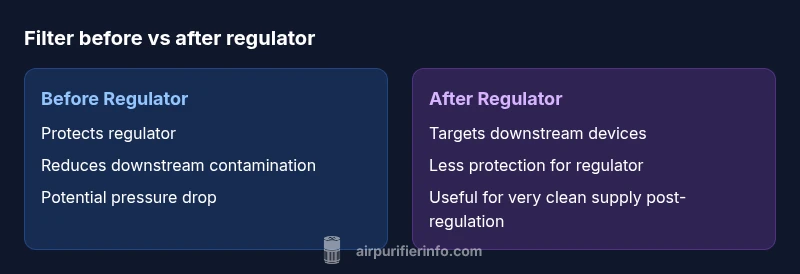
In most pneumatic setups, placing the air filter before the regulator is the recommended configuration. It protects the regulator from particulates and moisture, stabilizes downstream pressure, and reduces wear on downstream components. Filtering after the regulator is only advisable in niche cases where downstream equipment requires pristine, post-regulation air.
Why placement matters in pneumatic systems
Air purification sequencing matters not just for performance but for the longevity of both the regulator and downstream devices. When you place an air filter before or after the regulator, you change how contaminants, moisture, and oil are handled by the system. For homeowners and hobbyists who rely on portable compressors for painting, dust collection, or DIY pneumatics, getting this order right reduces maintenance, improves air quality in tools, and minimizes pressure variability. According to Air Purifier Info, clean intake air is essential to extend seal life and reduce wear on moving parts. In practical terms, the decision hinges on two factors: incoming air quality and the criticality of downstream equipment. If your compressor lives in a dusty garage, upstream filtration tends to pay off; if downstream tools are particularly sensitive to moisture, downstream filtration can be justified in controlled installations. The rest of this article walks through the logic, common configurations, and concrete guidelines to help you choose confidently about the air filter before or after regulator arrangement.
Core differentiator: before vs after regulator
The core difference boils down to where filtration happens in relation to pressure regulation. Placing the filter before the regulator targets the source air quality, reducing particulates and moisture before the air is compressed and stabilized. Conversely, placing a filter after the regulator focuses filtration on the already-regulated air that reaches downstream tools and circuits. This affects regulator wear, downstream cleanliness, and maintenance schedules. In essence, upstream filtration prioritizes protecting the regulator and upstream lines, while downstream filtration prioritizes the air delivered to tools. For many users, the upstream-first approach delivers broader system protection and easier maintenance planning, while downstream-only filtration can be appropriate when the supply is reliably clean.
Upstream filtration (before regulator): advantages
Upstream filtration offers several tangible benefits. First, it protects the regulator itself by removing abrasive particles before compression, which can extend regulator life and reduce seal wear. Second, it minimizes moisture and oil carryover into the regulator, aiding stable pressure and reducing fluctuations that can affect tool performance. Third, it simplifies maintenance by addressing dust and moisture at the source, potentially reducing downstream filter clogging. Finally, for compact home setups with limited vertical space, a single upstream filter can serve multiple downstream components, making the overall layout cleaner and easier to service. In short, upstream filtration is the generally recommended starting point for most DIY and small-shop systems.
Downstream filtration (after regulator): advantages
Downstream filtration targets the air after it’s been regulated, which can be valuable in niche scenarios. If downstream equipment is highly sensitive to humidity or oil aerosols, a dedicated downstream filter can improve performance and tool longevity. It also allows you to tailor filtration to specific tools—some may tolerate rough air poorly, while others demand ultra-clean air. However, this approach does not protect the regulator from contaminants in the incoming air, which can increase wear over time if the upstream supply is dirty. In practice, downstream filtration is commonly used as a supplement to upstream filtration in larger or more specialized systems to deliver pristine air to critical downstream devices.
Impact on regulator life and maintenance
Regulator life is closely tied to the quality of the air reaching it. When a filter sits upstream, it acts as a shield, reducing particulates, condensate, and oil that could scratch seals or interfere with the regulation mechanism. This generally translates to less wear on the regulator, fewer seal replacements, and more stable pressure output. Downstream filtration, while beneficial for downstream devices, does not provide the same protective effect for the regulator itself and can lead to a false sense of security if the incoming air quality is poor. Maintenance planning should reflect the chosen configuration: upstream-first setups often require inspecting and replacing upstream elements on a schedule aligned with intake air quality, while downstream-only systems should still monitor condensate and filter performance downstream.
Assessing your system: how to measure quality before deciding
To choose the right configuration, start by evaluating your incoming air quality. Check for particulates, moisture, and oil carryover using simple indicators: condensate in lines, visible moisture in filters, and pressure stability under load. If you frequently see condensate or dust in compressed air before the regulator, an upstream filter is advisable. Conversely, if your processes demand ultra-clean air just after regulation and the incoming air is relatively clean, a downstream filter can be added to target downstream equipment. Finally, consider the layout and taps in your system: a compact workshop with many tools may benefit from upstream protection plus selective downstream filtration for critical devices.
Practical installation tips for residential and small-shop setups
For home setups, start with a single high-quality upstream filter placed close to the compressor intake. Ensure easy access for maintenance and drain condensate regularly. Use clear labeling to indicate upstream and downstream sections, and mount filters vertically to promote drainage. If you notice frequent filter clogging or regulator fluctuations, re-evaluate the air intake path and consider adding a downstream filter only for the most sensitive downstream tools. In larger or more demanding environments, a combination approach can be effective: upstream filtration to protect the regulator and main lines, plus downstream refinements for select devices. When in doubt, start with the upstream filter and monitor performance over a few weeks.
Common configurations and trade-offs
Various configurations exist, but the most common choice in hobbyist setups is upstream filtration followed by regulation and a downstream lubrication or filter element if needed. In more demanding environments, some users install both upstream and downstream filters in a staged approach: upstream filtration to preserve the regulator, then downstream filtration to polish the air for sensitive tools. The trade-offs include upfront cost, additional space, and potential pressure drop. The key is to balance protection, maintenance practicality, and the performance requirements of your tools. Always ensure compatibility with your regulator’s pressure range and downstream devices’ cleanliness needs.
Case studies: typical outcomes in real-world examples
Case study A: A small workshop with a dusty garage environment installed a single upstream filter before the regulator. After the change, the regulator maintained stable pressure with fewer adjustments, and tool wear decreased over several months. Condensate in the downstream lines reduced as well, confirming the upstream protection had a meaningful impact. Case study B: A hobbyist who used a clean-room-like air source added a downstream filter after a regulator for a sensitive spray gun. The downstream device performed exceptionally, but the regulator saw more wear than expected because the incoming air contained some particulates. The takeaway is that the upstream filter often provides broader protection, while downstream emphasis should be reserved for specialized, post-regulation requirements.
Maintenance checklist for either configuration
- Inspect upstream filter for clogging and condensate weekly in dusty environments.
- Drain condensate from all traps and filters regularly.
- Check regulator output for fluctuations during load changes and adjust if necessary.
- Replace filters when visual inspection indicates heavy soiling or after the manufacturer’s recommended interval.
- Verify downstream devices’ performance after changes to filtration sequencing.
- Keep a spare set of seals and lubricants compatible with your regulator and tools.
Cost considerations and ROI of filtration sequencing
Upstream filtration typically reduces regulator wear and maintenance costs over time, improving system reliability and potentially extending tool life. The initial cost includes the upstream filter and basic plumbing; downstream upgrades add cost but can offer targeted benefits for sensitive tools. For homeowners and hobbyists, the ROI comes from fewer downtime events, longer regulator life, and cleaner compressed air for your most critical devices. When budgeting, consider not only the filter price but also installation effort, maintenance frequency, and potential energy savings from more stable pressure.
Comparison
| Feature | Filter before regulator | Filter after regulator |
|---|---|---|
| Primary protection target | Protects regulator and upstream lines (before) | Protects downstream components (after) |
| Moisture control emphasis | Early removal of moisture from supply (before) | Moisture control for downstream tools (after) |
| Pressure stability impact | Can improve stability by removing contaminants before regulation | Post-regulation filtration can introduce minor pressure fluctuations if the filter clogs |
| Maintenance considerations | Often simpler maintenance with upstream filter in a single stage | May require additional filtering downstream for targeted devices |
| Best-use scenario | New or dusty air supply; protect regulator first | Known clean source; downstream devices needing very clean air |
What's Good
- Protects regulator life by removing particles early
- Improves consistency of downstream pressure
- Nova: Simplifies maintenance when upstream supply is dirty
- Reduces intake of moisture and oil into the regulator
What's Bad
- May require an extra filter if the upstream air is very dirty
- Can add initial cost and some pressure drop
- Not ideal if downstream equipment requires post-regulation filtration specifically
Place the filter before the regulator in most residential and small‑shop setups to protect the regulator and stabilize downstream air.
Upstream filtration generally offers broader protection for the entire system and reduces regulator wear. Downstream filtration can be added for specific downstream devices, but it does not shield the regulator from incoming contaminants. Start upstream and only add downstream filtration when dictated by tool requirements.
Questions & Answers
Should I always place the filter before the regulator?
In most cases, yes. Upstream filtration protects the regulator and upstream lines, helping to maintain stable pressure and extend regulator life. Exceptions exist for specialized downstream needs where post-regulation filtration is used for targeted devices.
Generally yes—filter before the regulator protects the regulator and keeps your whole system cleaner. Only consider downstream filtration if your downstream tools require extra post-regulation cleanliness.
Can I place filters both before and after the regulator?
Yes, in larger or more critical systems, you can install filters both upstream and downstream. This provides broad protection for the regulator while delivering ultra-clean air to sensitive downstream equipment.
Absolutely. A dual-filter setup can protect the regulator and still give clean air to critical downstream tools.
How often should I replace the filter element?
Follow the manufacturer’s guidance and base it on usage, environment, and observed contamination. In dusty or humid environments, more frequent changes are common.
Change filters as recommended by the maker and sooner if you notice clogging or performance changes.
What about moisture removal?
Moisture control is a major reason to use filtration upstream. If moisture remains a problem after regulation, a downstream filter can be added for targeted devices, but won’t replace upstream protection.
Moisture control is best addressed upstream, with downstream filtration added if needed for specific tools.
Does regulator life depend on air quality?
Yes. Cleaner input air reduces wear on seals and mechanisms, extending regulator life. A well-chosen filtration sequence minimizes particulate contact with moving parts.
Cleaner air means longer-regulator life and steadier performance.
Are there safety concerns with wrong placement?
Wrong placement can lead to regulator wear, unstable pressure, and contaminated air reaching sensitive tools. Always align filtration sequencing with the equipment’s requirements.
Yes—place filters to protect the regulator and downstream devices as needed for safety and reliability.
Main Points
- Choose upstream filtration to shield the regulator from particulates.
- Use downstream filtration when downstream devices demand extra cleanliness.
- Expect some upfront cost and a possible small pressure drop.
- Test air quality after installation to confirm stable pressure.
- Follow a regular maintenance schedule to keep filters effective.